Wood Veneer — Real Wood Surface and Repair Basics Guide
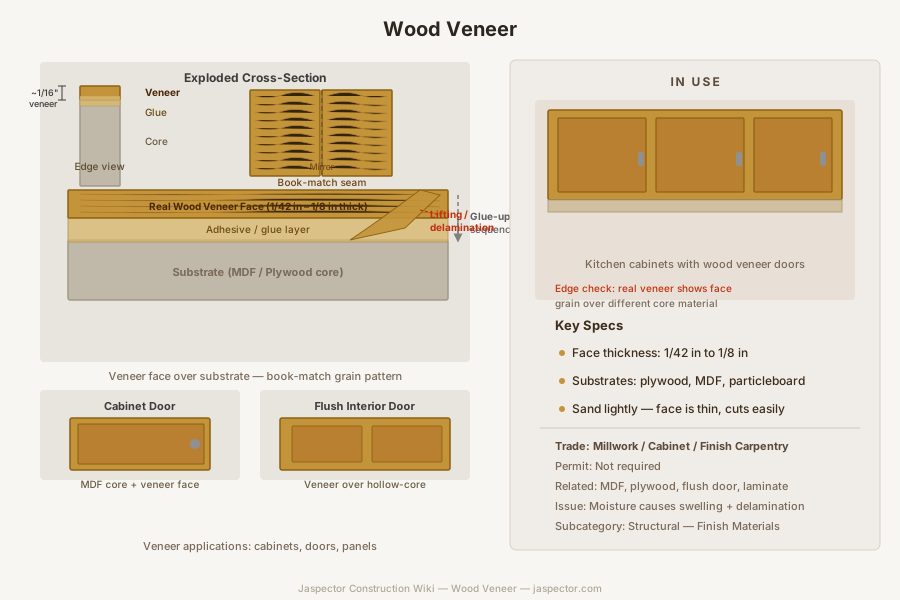
Wood veneer is a thin decorative layer of real wood bonded to a substrate such as plywood, MDF, particleboard, or engineered panel products.
What It Is
Veneer gives furniture, cabinets, doors, and wall panels the appearance of solid wood without requiring thick lumber throughout the piece. Grain matching and finish quality are major parts of its visual value.
Types
Common types include paper-backed veneer, raw veneer sheets, wood-on-wood veneer, rotary-cut veneer, plain-sliced veneer, quarter-sawn veneer, and factory-applied architectural veneer panels.
Where It Is Used
Wood veneer is used on cabinet doors, furniture, architectural wall panels, flush doors, shelving, and millwork. It is common anywhere a stable panel core is preferred but a real-wood finish is still desired.
How to Identify One
Identify veneer by looking at exposed edges, damaged corners, or unfinished back sides. If the face grain appears real wood but the edge reveals a different core material underneath, the visible surface is likely veneer.
Replacement
Replacement ranges from re-gluing a lifted corner to patching or re-veneering a full panel. Water damage, swelling in the substrate, or widespread delamination usually makes localized repair less successful.
Frequently Asked Questions
Wood Veneer — FAQ
- Is wood veneer real wood?
- Yes. Veneer is real wood, just sliced very thin and bonded to another material. It differs from laminate, which is a synthetic surface.
- Can peeling wood veneer be repaired?
- Small loose areas often can be reglued and clamped if the substrate is still sound. If the core has swollen from water damage, the repair is much less likely to hold.
- How do I tell veneer from solid wood?
- Check the edge and the grain pattern. Veneer will often show a thin face layer over a different core, while solid wood has continuous grain through the thickness.
- Can wood veneer be sanded and refinished?
- Lightly, sometimes. Veneer is thin, so aggressive sanding can cut through the face layer and expose the substrate below.
- Why does veneer bubble or lift?
- Moisture, heat, failed adhesive, or movement in the substrate can cause delamination. The longer it is left unaddressed, the harder it is to make the repair invisible.
Have a question about your project? Get personalized answers from our team — $9/mo.
MembershipAlso in Structural
- Access Panel Access & Openings
- Attic Hatch Access & Openings
- Construction Adhesive Adhesives & Sealants
- J-Bolt Anchorage
- Expansion Anchor Anchors & Fasteners
- Molly Bolt Anchors & Fasteners
- Baffle (Attic Rafter Vent) Attic & Roof
- Attic Hatch Cover Attic Access