Whole-House Fan — Cooling Use, Noise, Replacement Guide
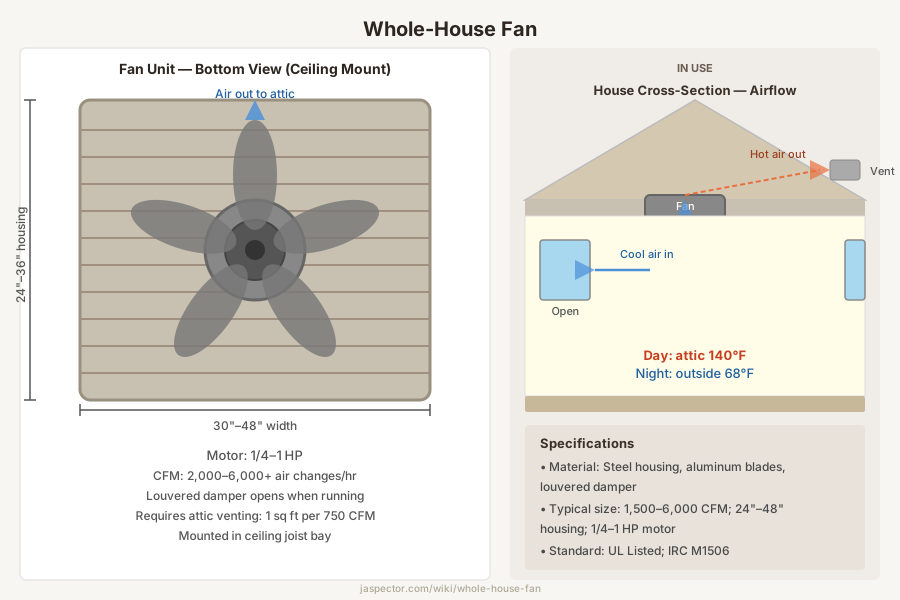
A whole-house fan is a large ventilation fan that pulls cooler outdoor air through open windows and exhausts warm indoor air into the attic and out through attic vents.
What It Is
It is used for rapid evening and overnight cooling when outdoor temperatures are lower than indoor temperatures. Unlike air conditioning, it does not refrigerate the air; it relies on ventilation and temperature difference.
Types
Common types include traditional belt-drive ceiling-mounted whole-house fans, direct-drive models, and insulated-door systems designed to reduce leakage when the fan is off.
Where It Is Used
Whole-house fans are usually installed in the ceiling between the living space and attic, or in some cases in a gable wall with dedicated ducting. They work best in dry climates with cool nights and adequate attic venting.
How to Identify One
Identify one by the large ceiling grille or shutter and the fan assembly mounted above it in the attic. Excessive noise, rattling shutters, poor airflow, or attic dust entering the home can point to maintenance or installation problems.
Replacement
Replacement involves matching fan size to house square footage and confirming the attic has enough net free vent area to exhaust the air safely. Old noisy belt-drive units are often replaced with quieter insulated models.
Frequently Asked Questions
Whole-House Fan — FAQ
- Is a whole-house fan the same as an attic fan?
- No. A whole-house fan pulls air through the living space, while an attic fan mainly exhausts hot attic air. They serve related but different ventilation purposes.
- When should I use a whole-house fan?
- Use it when outdoor air is cooler and drier than indoor air, typically in the evening, overnight, or early morning. Windows should be opened first so fresh air can move through the house.
- Can a whole-house fan replace air conditioning?
- In some climates it can reduce or delay AC use, but it is not a full replacement everywhere. Hot, humid nights limit how effective it will be.
- Why is my whole-house fan so loud?
- Older belt-drive units, loose shutters, poor isolation, or dirty blades can make them noisy. Newer insulated direct-drive models are usually much quieter.
- Does a whole-house fan need attic venting?
- Yes. The attic needs enough vent area to let the exhausted air escape. Without that, airflow is poor and pressure problems can develop.
Have a question about your project? Get personalized answers from our team — $9/mo.
MembershipAlso in HVAC
- Air Handler Air Distribution
- Register Air Distribution
- Return Air Grille Air Distribution
- HVAC Filter Air Filtration
- Heat Strip Air Handler Components
- Heating Coil Air Handler Components
- Furnace Blower Air Movement
- Air Filter (HVAC) Air Quality & Filtration