Waterproofing Membrane — Uses, Types, and Repairs Guide
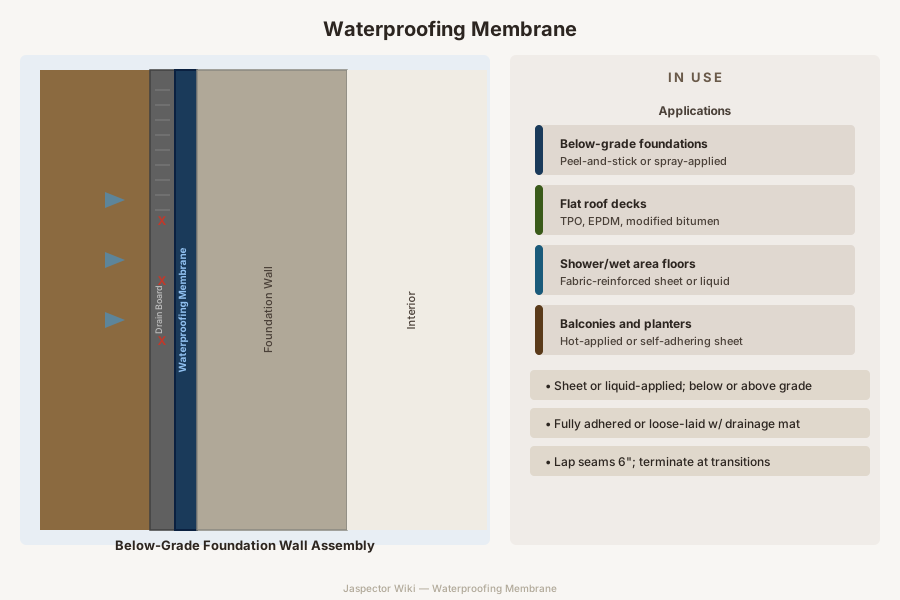
A waterproofing membrane is a sheet or liquid-applied barrier used to stop water from passing into foundations, roofs, decks, or wet-area building assemblies.
What It Is
Unlike a basic water-resistant coating, a true waterproofing membrane is intended to create a continuous barrier across the substrate, seams, penetrations, and transitions. It is a key part of many below-grade, roof, and tile-backer waterproofing systems.
Types
Common types include self-adhered sheet membranes, torch-down or peel-and-stick roofing membranes, liquid-applied elastomeric coatings, shower pan membranes, and foundation waterproofing sheets or sprays.
Where It Is Used
Waterproofing membranes are used on foundation walls, balconies, flat roofs, shower walls and floors, window transitions, and other assemblies exposed to bulk water. The membrane usually works with drains, flashings, or protection boards rather than by itself.
How to Identify One
You identify a membrane by looking behind finish layers during construction or repair. Sheet products have visible overlaps and seams, while liquid-applied products cure into a continuous rubbery coating over concrete, sheathing, or backer board.
Replacement
Replacement ranges from patching a seam or puncture to removing finish materials and installing a new waterproofing system. Because failures often involve hidden substrate damage, replacement should address the underlying leak path and not just the visible stain.
Frequently Asked Questions
Waterproofing Membrane — FAQ
- Is waterproofing membrane the same as housewrap?
- No. Housewrap is usually a weather-resistant barrier for walls, while a waterproofing membrane is designed to stop bulk water in more demanding conditions. The products may look similar in places, but they serve different performance levels.
- Where is waterproofing membrane used in a home?
- Common locations include shower assemblies, foundation walls, low-slope roofs, balconies, and some window or deck transitions. It is used anywhere liquid water control is critical.
- Can a torn waterproofing membrane be patched?
- Sometimes, if the damage is local and the manufacturer allows a patch detail. The repair must restore continuity at seams and penetrations, or water can still get behind the assembly.
- Why does membrane failure lead to hidden damage?
- Because the membrane is usually buried behind tile, siding, roofing, or soil. Water can bypass the failed area for a long time before stains or rot become visible inside the home.
- Is liquid-applied membrane as good as sheet membrane?
- Both can work well when installed correctly. The better choice depends on the substrate, detailing complexity, exposure conditions, and whether the system requires factory seams or a field-applied coating.
Have a question about your project? Get personalized answers from our team — $9/mo.
MembershipAlso in Exterior
- Extension Ladder Access & Safety
- Concealed Hinge Cabinet Hardware
- Board and Batten Cladding
- EIFS (Exterior Insulation Finish System) Cladding
- Hardboard Siding Cladding
- Shake Siding Cladding
- Siding Cladding
- Stone Veneer Cladding