Wall Tie — Cavity Masonry Connector Spacing and Corrosion
A wall tie is a metal connector that links two separate wythes of masonry in a cavity wall, transferring lateral loads between the layers while allowing the cavity to remain open for drainage and thermal performance.
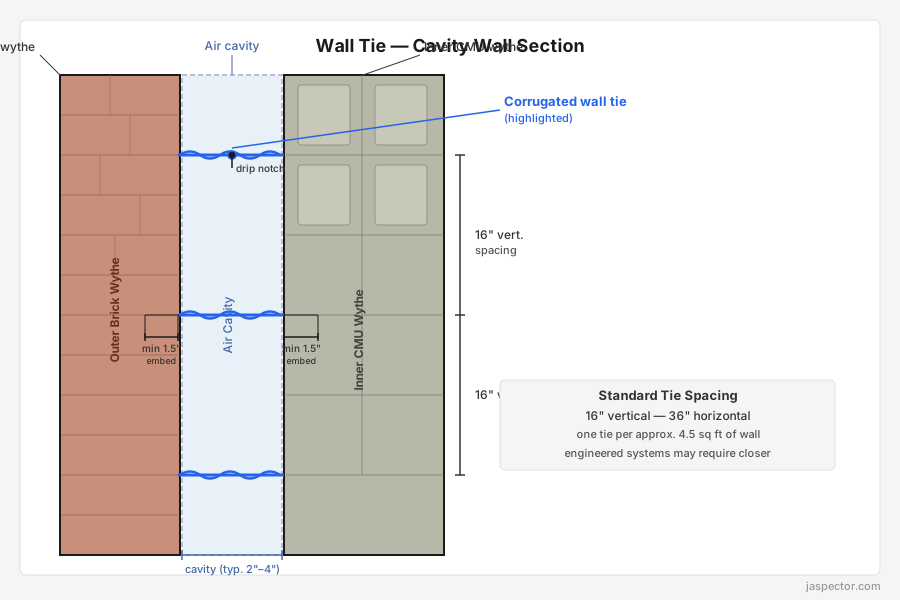
What It Is
Cavity walls consist of two masonry wythes — typically an outer brick veneer (nominal 4-inch wythe) and an inner backup wall of CMU block, concrete, or wood framing with sheathing — separated by an air space of 1 to 4.5 inches. That cavity improves moisture management by providing a drainage plane and enhances thermal performance, but the two wythes must be mechanically linked to resist wind suction, wind pressure, and seismic lateral forces. Wall ties perform that connection, acting as structural bridges across the cavity.
Correct tie selection, spacing, embedment depth, and corrosion resistance are critical to long-term wall performance. Per TMS 402 (Building Code Requirements for Masonry Structures) and most local codes, ties must be embedded a minimum of 1.5 inches into each mortar bed joint. Standard residential spacing calls for one tie per 2.67 square feet of wall area — typically achieved with vertical spacing of 16 inches on center and horizontal spacing of 32 inches on center, or equivalent. Maximum spacing must not exceed 36 inches horizontally. Ties should be installed with a slight downward slope toward the outer wythe or incorporate a drip notch or crimp at the midpoint to prevent water from tracking inward along the tie surface into the backup wall.
Wall tie corrosion is one of the most serious and underdiagnosed masonry failures in residential construction. As ties corrode, they expand — iron oxide (rust) occupies roughly six times the volume of the original steel — and this expansion forces apart the mortar bed joints, eventually pushing the outer wythe away from the building. Once the tie system has lost structural capacity, the outer brick veneer can collapse under wind loading.
Types
Corrugated metal ties (22-gauge galvanized corrugated strips) are common in residential brick veneer on wood framing, attached to the wood studs or sheathing with nails. Two-piece adjustable ties allow the inner and outer wythes to be laid independently at different rates and are preferred in commercial cavity wall construction where the backup wall is erected first. Wire Z-ties (bent from 3/16-inch diameter galvanized wire) are used in double-wythe masonry walls where both wythes are load-bearing. Stainless steel ties (Type 304 or Type 316) are specified for coastal environments, below-grade applications, and anywhere corrosion resistance is critical. Seismic ties with welded cross-wires or heavier gauge construction meet higher performance requirements for Seismic Design Categories D, E, and F.
Where It Is Used
Wall ties are used in all cavity masonry wall systems: exterior brick veneer on residential and commercial buildings, double-wythe masonry backup walls, parapet walls exposed to wind on both faces, masonry retaining walls with drainage cavities, and multi-story masonry facades. They are installed during new construction as each course of masonry is laid and are completely hidden once the wall is complete. Retrofit ties are also installed during repair of existing walls where original ties have corroded.
How to Identify One
Wall ties are not visible on a finished wall because they are embedded within the mortar joints and concealed by the brick face. They become apparent during construction, during masonry repair or demolition, or when corrosion pushes out the brick face or mortar joint. Horizontal cracks in mortar joints at regular vertical intervals (every 16 inches, corresponding to tie locations), bulging or displaced outer wythe bricks, and rust staining bleeding through mortar joints are all classic indicators of corroding or failed wall ties.
Replacement
Retrofit wall tie replacement is specialized masonry work. New ties are installed by drilling through the outer brick wythe and into the backup wall, then setting stainless steel or galvanized helical retrofit anchors with chemical (epoxy or polyester resin) or mechanical expansion fixings. Retrofit ties are typically installed on a grid of 16 inches vertical by 24 to 32 inches horizontal to match or exceed the original tie density. The scope of repair must address the entire affected wall section, not just visibly damaged spots, because tie corrosion is systemic — if ties have failed in one area, adjacent ties in the same exposure conditions are likely compromised. A structural engineer's assessment, a building permit, and an experienced masonry contractor are typically required.
Frequently Asked Questions
Wall Tie — FAQ
- What happens when wall ties corrode?
- Corroded ties expand as they rust — iron oxide occupies roughly six times the volume of the original steel — pushing apart the mortar joints and eventually dislodging brick. The outer wythe can bulge, crack, or separate from the building. This is a structural safety concern that requires professional assessment.
- How long do wall ties last?
- Galvanized ties typically last 30 to 50 years, but service life depends heavily on the cavity moisture environment and the quality of the galvanizing. Stainless steel ties (Type 304 or 316) can last the life of the building, which is why they are specified for coastal and high-moisture applications.
- Does wall tie replacement require a permit?
- Yes, in most jurisdictions. Repairing a cavity wall tie system involves structural masonry work that affects the lateral load path of the building envelope. A building permit and inspection are typically required, and a structural engineer's assessment may be needed to determine the scope.
- Are wall ties the same as brick ties?
- The terms overlap. Brick tie typically refers to ties used in wood-frame brick veneer systems where the outer brick is non-structural cladding. Wall tie is a broader term covering all masonry cavity wall connections, including double-wythe structural masonry. Both serve the same lateral load transfer function.
- How do inspectors find failed wall ties?
- Signs include horizontal cracking in mortar joints at regular intervals, rust staining bleeding through joints, bulging or displaced brick, and hollow-sounding areas when tapped. Invasive inspection methods include drill sampling, borescope examination of the cavity, and full wall investigation by removing select bricks.
Have a question about your project? Get personalized answers from our team — $9/mo.
MembershipAlso in Masonry
- Epoxy Anchor
- Masonry Anchor
- Arch Brick Brick Masonry
- Brick Ledge Brick Masonry
- Corbel Brick Masonry
- Face Brick Brick Masonry
- Tuckpointing Mortar Brick Masonry
- Smoke Chamber Chimney Masonry