Wainscot Panel - Interior Wall Trim and Paneling Guide
A wainscot panel is a finished wall panel installed on the lower portion of an interior wall to add protection, texture, and architectural trim detail.
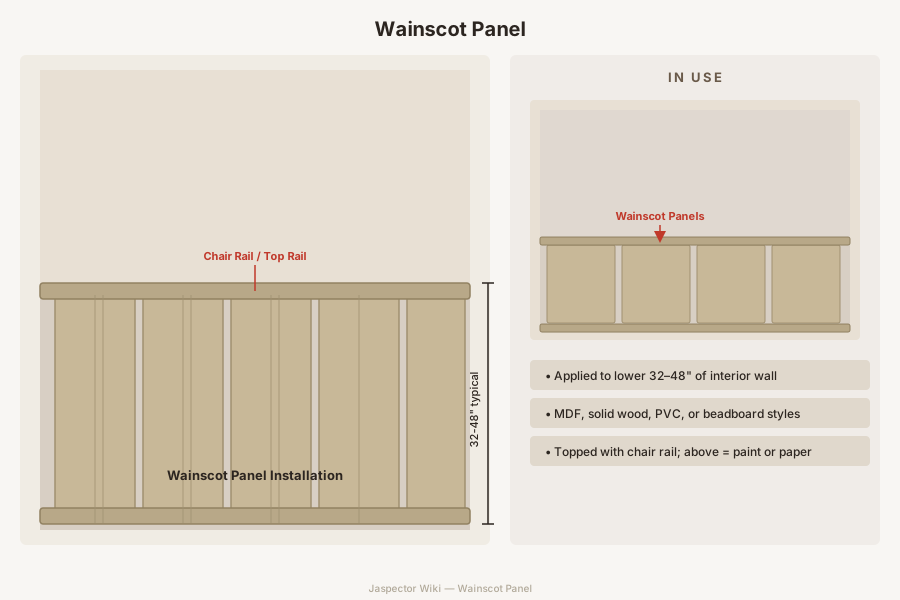
What It Is
Wainscot panels are part finish material and part trim assembly. They create a durable lower wall surface that helps protect against scuffs, chair impacts, and everyday wear while giving the room a more refined architectural look. The term wainscoting refers to the entire lower-wall treatment, which typically includes the panel material itself, a cap rail or chair rail along the top, a baseboard along the bottom, and any intermediate stiles, rails, or moldings that frame individual panel sections.
Depending on the style, the panel may be a single four-by-eight-foot sheet product with routed grooves, separate applied moldings built up over a smooth plywood or MDF backer, or individual tongue-and-groove beadboard planks installed vertically. The height of the wainscot typically ranges from 30 to 42 inches on walls with standard 8-foot ceilings, though taller installations of 48 to 54 inches are common in rooms with 9- or 10-foot ceilings. Most designers aim for roughly one-third of the wall height.
Wainscoting has been used in residential construction for centuries, originally to protect plaster walls from furniture damage. Modern wainscot panels serve a primarily decorative and protective function, and the wide range of materials and styles makes them adaptable to almost any interior design direction.
Types
Beadboard wainscot features narrow vertical planks or sheet goods with a characteristic rounded groove between each plank. It creates a casual, cottage, or farmhouse look and is popular in kitchens, bathrooms, and mudrooms. Individual planks are typically 3.5 to 5.5 inches wide, while sheet beadboard comes in 4-by-8-foot panels.
Raised-panel wainscot uses framed panels where the center sits proud of the surrounding stiles and rails, creating a more formal appearance. Flat-panel or Shaker-style wainscot uses a recessed or flush center panel within a simple square-edged frame for a cleaner, more contemporary look. Board-and-batten wainscot uses flat boards with narrow vertical battens covering the seams.
Materials include solid wood such as poplar, maple, or oak, medium-density fiberboard for paint-grade applications, plywood backer panels, cellular PVC for wet areas, and factory-finished composite panels.
Where It Is Used
Wainscot panels are used in dining rooms, hallways, mudrooms, bathrooms, stairwells, entry foyers, and home offices. They are especially common where homeowners want extra wall durability or a more traditional interior trim treatment.
In bathrooms and laundry rooms, PVC or marine-grade plywood wainscot is preferred because it resists moisture better than MDF or particleboard-based products. In formal dining rooms and living areas, painted MDF or stain-grade hardwood panels are typical. Stairwells often use wainscot to protect high-traffic wall areas where people brush against the surface.
How to Identify One
A wainscot panel covers only the lower section of the wall and is usually capped with a chair rail, flat cap molding, or ledge trim along its top edge. The treatment stops well below the ceiling, leaving the upper wall finished with paint, wallpaper, or a contrasting texture.
The panel surface may show vertical beadboard grooves, framed rectangular sections with raised or flat centers, board-and-batten seams, or a smooth painted face. Running your hand along the wall, you can usually feel the transition from the wainscot material to the drywall or plaster above the cap rail.
Replacement
Replacement is needed when the panel material swells from moisture, delaminates at the edges, cracks from impact, warps away from the wall, or no longer matches surrounding trim after a remodel. MDF wainscot in bathrooms or below-grade rooms is particularly prone to moisture damage at the bottom edge where water can wick up from a wet floor.
Before installing new panels, the moisture source should be identified and corrected. Simply replacing swollen panels without addressing a leaking toilet or condensation problem will result in the same failure. When replacing individual sections, matching the exact profile, groove spacing, and paint finish is usually the hardest part. If a close match is unavailable, replacing an entire wall of wainscot for visual consistency may be more practical than patching with a slightly different profile.
Frequently Asked Questions
Wainscot Panel — FAQ
- What is the difference between wainscot and beadboard?
- Wainscot is the broader wall treatment, while beadboard is one style of panel often used to create it. A wainscot assembly can be beadboard, flat panel, raised panel, or several other trim layouts.
- How high should a wainscot panel be?
- Many are installed around one-third of the wall height, but the right height depends on the room, ceiling height, and trim style. The visual proportion matters more than using one fixed dimension.
- Can damaged wainscot panels be replaced individually?
- Often yes, especially with sheet-style or modular panel systems. Matching the exact profile, paint finish, and trim spacing is usually the hardest part.
- Is wainscot paneling good for bathrooms?
- It can be, but the material has to match the moisture level. MDF and wood need careful detailing, while PVC or properly sealed products hold up better in damp spaces.
- Do I need a permit to install wainscot panels?
- Interior finish trim work usually does not require a permit by itself. Requirements can change if the project is part of a larger remodel involving electrical, plumbing, or wall alterations.
Have a question about your project? Get personalized answers from our team — $9/mo.
MembershipAlso in Interior
- Euro Hinge Cabinet Hardware
- Soft-Close Hinge Cabinet Hardware
- L-Bead Drywall & Plaster
- Skirt Board Stairs & Railings
- Stair Nose Stairs & Railings
- Panel Molding Trim & Millwork
- Picture Molding Trim & Millwork