Vinyl Siding — Installation, Buckling Causes, and Replacement
A vinyl siding panel is a PVC exterior cladding system installed in overlapping horizontal panels that interlock at their top and bottom edges to protect a house from weather while providing a low-maintenance finished facade.
What It Is
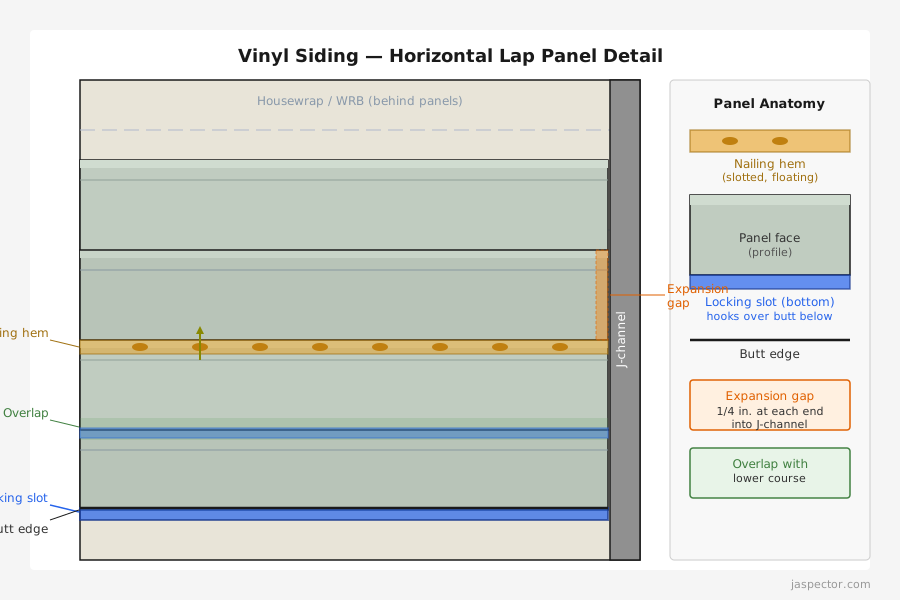
Vinyl siding panels are extruded PVC profiles shaped to mimic wood lap siding, with each panel typically 12 to 12.5 feet long and representing one or two courses of simulated clapboard (single 4-inch, single 5-inch, double 4-inch, or double 5-inch exposure profiles). Each panel has a nailing hem at the top — a slotted flange with elongated oval holes through which nails attach the panel to the wall sheathing — and a locking slot at the bottom that hooks over the butt edge of the panel below. This interlocking system holds the panel securely while still allowing it to expand and contract with temperature swings.
The floating installation detail is critical to long-term performance: nails are driven through the center of the oval nail slots and left approximately 1/32 inch proud of the nailing hem, never pulled tight. Over-nailing restricts thermal movement — vinyl expands approximately 3/8 inch per 12-foot panel across a 100-degree-Fahrenheit temperature range — and causes buckling, warping, and audible popping noises on hot days. Panels must also have a 1/4-inch expansion gap at each end where they enter J-channel or F-channel trim accessories to prevent compression buckling in summer heat.
A continuous housewrap weather-resistive barrier (WRB) behind the siding manages any water that penetrates past the panels. Vinyl siding is not a sealed waterproof layer; it is a drainage-plane cladding that relies on lapped joints, the WRB, and proper window and door flashing for true moisture control. Failed flashing or torn housewrap behind vinyl siding is one of the most common causes of hidden wall rot.
Types
Horizontal lap siding in plain (clapboard) and Dutch-lap (with a decorative notch at the top of each exposure) profiles is the most common residential type. Vertical panels and board-and-batten profiles are used for accents and gable ends. Shingle-look panels replicate cedar shake texture for upper stories and dormers. Insulated vinyl siding adds a contoured expanded polystyrene (EPS) foam backer bonded to the back of each panel, increasing rigidity, impact resistance, and R-value by R-2 to R-3.5. Thickness ranges from 0.040 inches (economy grade) to 0.055 inches (premium grade); thicker panels are more durable, more impact-resistant, and hold color better against UV exposure.
Where It Is Used
Vinyl siding is used on single-family houses, garages, additions, gable ends, dormers, soffits (using dedicated soffit panels), and manufactured homes. It is one of the most common re-siding choices in the United States because it is lightweight (approximately 60 pounds per 100 square feet), does not require painting, resists insect damage, and installs relatively quickly compared to wood or fiber cement. It is found in every climate zone but performs best when installed with proper expansion allowances and moisture management details.
How to Identify One
Vinyl siding has a characteristic hollow sound when tapped, lightweight interlocking panels that flex slightly under hand pressure, and a hemmed lower edge that hooks into the course below. Corners, windows, and door perimeters are finished with separate accessory trim pieces (J-channel, corner posts, undersill trim) rather than mitered wood. The panel surface shows a simulated wood-grain texture that is consistent and repeating. Faded panels that have lost their original color uniformly, cracked panels that show white stress marks, or bubbled and distorted panels that do not spring back when pressed indicate UV degradation or heat damage.
Replacement
Individual cracked, wind-blown, or impact-damaged panels can be unzipped from the course above using a zip tool, removed by pulling the nails from the nailing hem, and replaced with a new panel that locks into the course below and is renailed through the hem. This spot repair takes 15 to 30 minutes per panel. Widespread cracking, heat buckling from window reflection, or impact damage across large areas often justifies a full re-siding project. When re-siding, replace the housewrap, upgrade flashing details at all windows and doors, and inspect the wall sheathing for moisture damage before installing new panels.
Frequently Asked Questions
Vinyl Siding — FAQ
- Why is my vinyl siding buckling or warping?
- The most common cause is panels nailed too tightly, preventing thermal expansion. Heat reflecting from low-E windows onto the siding can also create enough temperature to distort panels beyond their design limit. Loose nailing, proper expansion gaps, and shade or window film on nearby glazing address the root causes.
- Can one piece of vinyl siding be replaced?
- Yes. A zip tool unlocks the panel above the damaged piece, the damaged panel is removed, a new panel is snapped in and nailed, and the upper panel is re-locked. Color matching is the main challenge — faded existing siding rarely matches new replacement panels perfectly.
- How long does vinyl siding last?
- Quality vinyl siding installed properly typically lasts 20 to 40 years. Heavy UV exposure, physical impact, improper nailing, and heat damage from window reflection are the primary causes of early failure. Thicker panels (0.046 inches or more) resist impact and UV better than economy grades.
- Do I need a permit to replace vinyl siding?
- Spot repairs generally do not require a permit. Full re-siding projects frequently do, especially if the scope includes removing existing siding, replacing housewrap or sheathing, or modifying flashing at openings. Check with your local building department before starting.
- Is vinyl siding waterproof?
- No. Vinyl siding is a drainage-plane cladding that sheds most rain but is not a sealed waterproof layer. Water management depends on the housewrap, window and door flashing, and drainage details behind the panels. Failed flashing or housewrap behind vinyl siding is a common cause of wall rot that is not visible from the outside.
Have a question about your project? Get personalized answers from our team — $9/mo.
MembershipAlso in Exterior
- Extension Ladder Access & Safety
- Concealed Hinge Cabinet Hardware
- Board and Batten Cladding
- EIFS (Exterior Insulation Finish System) Cladding
- Hardboard Siding Cladding
- Shake Siding Cladding
- Siding Cladding
- Stone Veneer Cladding