Vapor Retarder — Perm-Rated Moisture Control Layer
A vapor retarder is a material rated by perm class that slows the diffusion of water vapor through a wall, roof, floor, or ceiling assembly.
What It Is
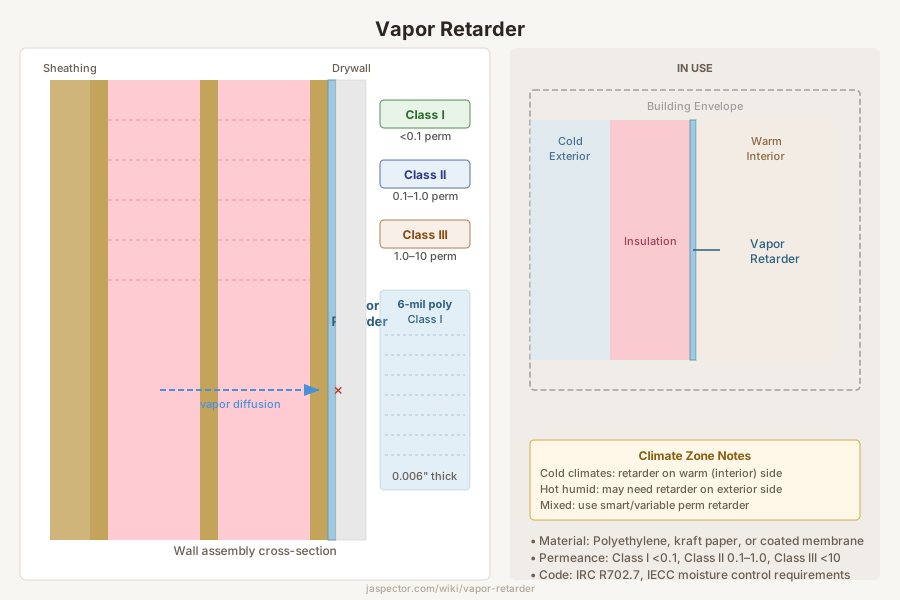
A vapor retarder is any material used to reduce, rather than necessarily stop, water vapor diffusion through building materials. In residential construction, vapor retarders are classified by permeance, commonly as Class I, Class II, or Class III materials.
This matters because buildings need different amounts of vapor control depending on climate, insulation strategy, and how the assembly is expected to dry. A stronger vapor retarder is not always better if it traps moisture that should be allowed to escape.
Types
Class I vapor retarders are very low-permeance materials such as polyethylene sheet. Class II products include kraft-faced insulation and some coated membranes, while Class III materials include standard latex-painted drywall in many assemblies.
Where It Is Used
Vapor retarders are used in walls, ceilings, roof assemblies, crawl spaces, and floors over unconditioned spaces. The chosen class depends on local climate, code requirements, and whether the assembly needs inward or outward drying potential.
How to Identify One
Some vapor retarders are visible sheet materials, while others are part of another product, such as faced insulation or painted drywall. Identifying one usually requires looking at the assembly layers or product specifications rather than just surface appearance.
Replacement
Replacement is usually part of a larger wall, roof, or insulation repair because vapor retarders are embedded within assemblies. If moisture problems are present, the right fix is to review the whole assembly instead of simply adding a lower-perm layer at random.
Frequently Asked Questions
Vapor Retarder — FAQ
- What is the difference between a vapor retarder and a vapor barrier?
- Vapor retarder is the broader technical term for materials that slow vapor diffusion. Vapor barrier is commonly used for the strongest, lowest-perm materials, but everyday usage often blurs the distinction.
- What do Class I, II, and III mean?
- They describe how much water vapor a material allows to pass through. Class I is the most restrictive, Class II is moderate, and Class III allows more drying while still providing some vapor control.
- Can the wrong vapor retarder cause problems?
- Yes. If a low-perm layer is added in the wrong place, moisture can get trapped inside the assembly and lead to mold, rot, or insulation performance issues.
- Is painted drywall a vapor retarder?
- In many assemblies, standard painted drywall qualifies as a Class III vapor retarder. That is one reason some walls do not need a separate interior plastic sheet.
Have a question about your project? Get personalized answers from our team — $9/mo.
MembershipAlso in Structural
- Access Panel Access & Openings
- Attic Hatch Access & Openings
- Construction Adhesive Adhesives & Sealants
- J-Bolt Anchorage
- Expansion Anchor Anchors & Fasteners
- Molly Bolt Anchors & Fasteners
- Baffle (Attic Rafter Vent) Attic & Roof
- Attic Hatch Cover Attic Access