Vanity — Bathroom Sink Cabinet and Countertop Unit
A vanity is the bathroom cabinet and countertop assembly that supports a sink while providing storage and access to the plumbing connections below.
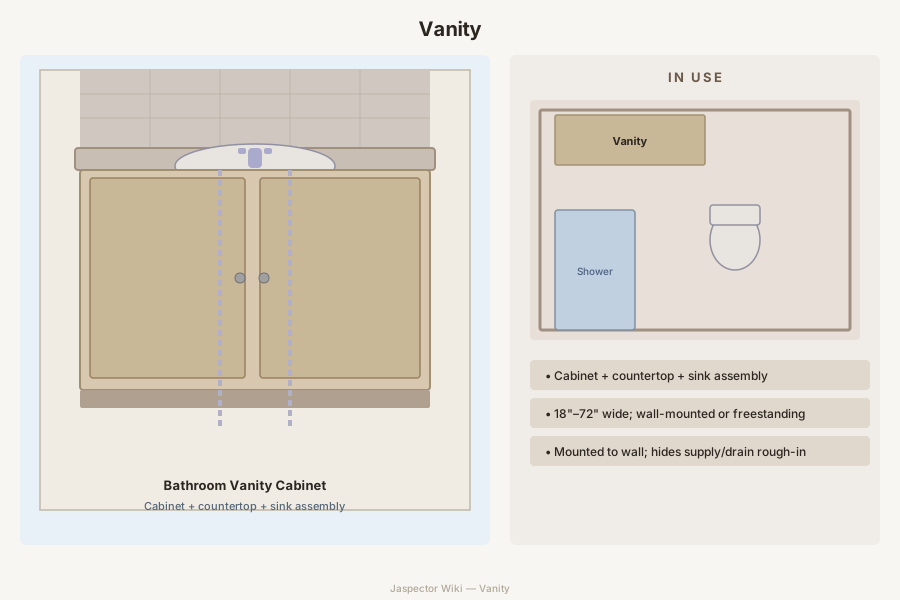
What It Is
In most homes, a vanity combines several parts into one fixture area: the cabinet box, countertop, sink, faucet, and the open or enclosed space around the drain and supply lines. It helps organize the bathroom while also hiding plumbing that would otherwise be exposed.
Vanities range from compact powder-room units to wide double-sink cabinets in primary bathrooms. Some are furniture-style pieces, while others are built as simple box cabinets fastened directly to the wall.
Types
Common types include freestanding vanities, wall-mounted vanities, single-sink vanities, and double-sink vanities. Countertop materials, sink styles, and cabinet construction vary widely depending on budget and design.
Where It Is Used
A vanity is used in bathrooms, powder rooms, and guest baths anywhere a sink is paired with storage or a finished cabinet base. It is usually positioned against a wall with nearby drain, vent, and water supply connections.
How to Identify One
Look for the cabinet or furniture-like base directly under a bathroom sink. Water damage at the floor, swollen side panels, delaminated bottoms, or staining inside the cabinet often point to slow plumbing leaks.
Replacement
Replacement may involve disconnecting the sink, faucet, trap, supply lines, countertop, backsplash, and cabinet fasteners. A vanity should be replaced when water damage, rot, loose mounting, or an incompatible layout makes repair impractical.
Frequently Asked Questions
Vanity — FAQ
- What is the difference between a vanity and a bathroom sink?
- The sink is only the basin and drain area, while the vanity is the larger assembly that supports it. A vanity usually includes the cabinet, countertop, and storage space around the sink.
- Why is the bottom of my vanity cabinet swelling?
- Swollen particleboard or plywood usually means water has been leaking or condensing inside the cabinet. The most common sources are trap leaks, supply line drips, faucet leaks, or caulk failure around the sink.
- Can a vanity be replaced without moving plumbing?
- Yes, if the new cabinet lines up with the existing drain and water supplies. Replacement gets more complicated when the new sink location, width, or drawer layout conflicts with the plumbing rough-in.
- Does a bathroom vanity need to be attached to the wall?
- Most do, even freestanding models. Fastening the vanity helps keep it level, stable, and secure when the countertop, sink, and faucet are in use.
Have a question about your project? Get personalized answers from our team — $9/mo.
MembershipAlso in Plumbing
- ADA Shower Seat Accessibility
- Fold-Down Seat Accessibility
- Backflow Preventer Backflow & Cross-Connection
- Pressure Vacuum Breaker Backflow Prevention
- Toilet Bath Fixtures
- Toilet Bowl Bath Fixtures
- Toilet Tank Bath Fixtures
- Toilet Tank Gasket Bath Fixtures