Tuckpointing Mortar — Brick Repointing and Mortar Selection
A tuckpointing mortar is a fresh mortar applied during joint repointing to replace deteriorated mortar in brick, stone, or block masonry walls.
What It Is
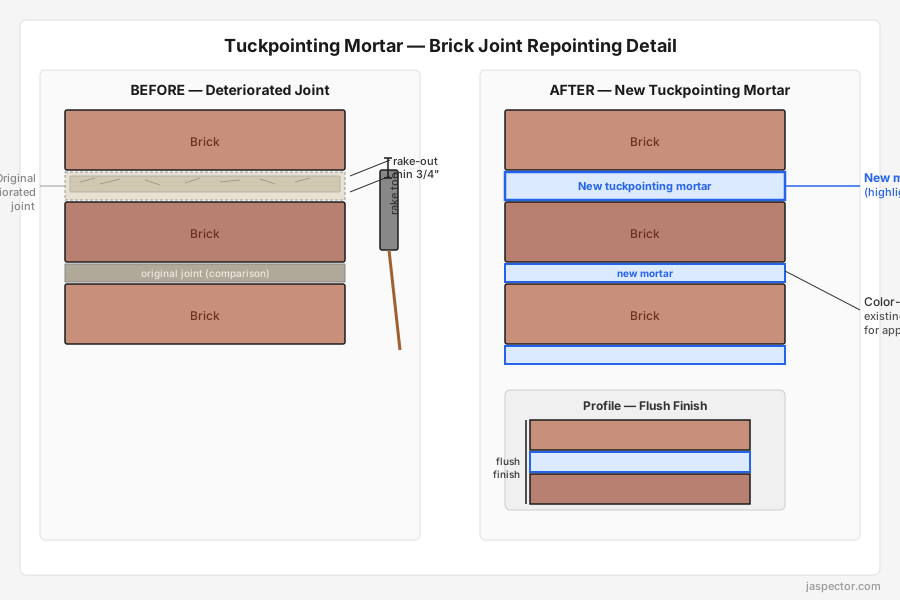
Over time, mortar joints in masonry walls weather, crack, and erode from rain, freeze-thaw cycling, and chemical exposure. Water that infiltrates deteriorated joints accelerates the damage and can reach the wall structure behind, rotting wood lintels, corroding steel shelf angles, and degrading the brick units themselves. Tuckpointing, also called repointing, is the process of raking out the old mortar to a depth of at least 3/4 inch (roughly 2 to 2.5 times the joint width) and packing in fresh mortar to restore the joint's structural bond and weather seal.
The mortar mix used must be compatible with the existing masonry units. Hard Portland cement mortars (Type M or Type S) should not be used on older, softer brick or natural stone because the mortar's compressive strength exceeds that of the masonry units, transferring movement stresses to the brick or stone and causing spalling, cracking, and permanent surface damage. Historic masonry built before the 1930s typically used lime-based mortars, and repointing these walls requires a mortar matched to the original in composition, compressive strength, color, and texture.
Types
Type S mortar has a compressive strength of approximately 1,800 psi and is used for below-grade foundation walls, retaining walls, and masonry in severe weather exposure. Type N mortar, at roughly 750 psi, is suitable for above-grade exterior joints and is the most common choice for residential repointing on modern brick. Type O mortar, at approximately 350 psi, is a softer mix appropriate for sheltered locations and interior masonry.
Lime putty mixes and natural hydraulic lime (NHL) mortars are used for historic preservation work on pre-1930s soft brick and natural stone. These mortars set slowly, remain slightly flexible over time, and allow moisture to pass through the joint rather than trapping it behind. Mortar color additives, including iron oxide pigments and carbon black, allow close matching of the new mortar to the existing joints so the repair blends in after a few months of weathering.
Where It Is Used
Tuckpointing mortar is used wherever masonry joints have deteriorated: exterior brick walls, chimneys, stone foundations, retaining walls, brick veneer on wood-framed buildings, and interior firebox joints in fireplaces. Chimneys are especially vulnerable because they are exposed to weather on all four sides and to flue gas condensation on the interior, so chimney joints often need repointing sooner than the surrounding wall.
Tuckpointing is also used preventively on joints that are still structurally sound but have eroded 1/4 inch or more from the brick face, catching the deterioration before water infiltration causes deeper damage to the wall assembly.
How to Identify One
Fresh tuckpointing mortar is typically slightly lighter in color and smoother in texture than the surrounding original joints, though the color difference diminishes as the new mortar cures and weathers over several months. In cross-section, the new mortar fills the raked-out recess to the full depth of the joint, usually with a flush, slightly concave, or V-tooled profile that matches the original joint style.
Areas that need repointing can be identified by running a key or awl along the mortar joints. Mortar that crumbles, sounds hollow when tapped, or is recessed more than 1/4 inch from the brick face has lost its weather seal and should be repointed. Efflorescence (white salt deposits) on adjacent brick faces is another indicator that water is moving through compromised joints.
Replacement
Tuckpointing mortar is itself the replacement material. The process is cyclical, as masonry joints will need repointing again over decades as the mortar weathers. Typical life between repointing cycles is 25 to 50 years depending on exposure, joint width, mortar composition, and maintenance history. South- and west-facing walls typically deteriorate faster due to greater sun and rain exposure.
The repointing process begins with raking out the old mortar to a minimum depth of 3/4 inch using a grinder with a diamond blade or a hand-held plugging chisel. The joint is then dampened, and fresh mortar is packed in thin lifts of about 1/4 inch at a time, allowing each lift to firm up before applying the next. The final surface is tooled to match the existing joint profile when the mortar is thumbprint-firm.
Frequently Asked Questions
Tuckpointing Mortar — FAQ
- How do I know if my brick needs repointing?
- Look for mortar joints that are recessed more than 1/4 inch from the brick face, crumbling or powdery mortar, joints where you can push a key or probe in easily, and water staining on the interior wall behind the masonry.
- Can I use regular Portland cement for tuckpointing old brick?
- Not usually. Hard cement mortars are too rigid for older, softer bricks and will cause the brick faces to spall. The mortar should be softer than the masonry units so it absorbs movement and weather cycling.
- Does repointing require a permit?
- Routine mortar joint repointing on a residential property generally does not require a permit. Work on a historic landmark building may require approval from the local historic preservation authority.
- How much does tuckpointing cost?
- Repointing typically costs $5 to $25 per square foot of wall area depending on joint width, condition, access, and region. Chimney repointing tends to cost more per square foot due to height and access requirements.
- How deep does old mortar need to be removed?
- A minimum of 3/4 inch depth is generally required for proper bonding of new mortar. Shallower removal results in a thin application that is prone to failure.
Have a question about your project? Get personalized answers from our team — $9/mo.
MembershipAlso in Masonry
- Epoxy Anchor Anchors & Fasteners
- Masonry Anchor Anchors & Fasteners
- Wall Tie Anchors & Fasteners
- Arch Brick
- Brick Ledge
- Corbel
- Face Brick
- Smoke Chamber Chimney Masonry