Truss — engineered framing assembly for structural spans
A truss is an engineered framing assembly made of connected members that spans an opening and carries loads to its supports.
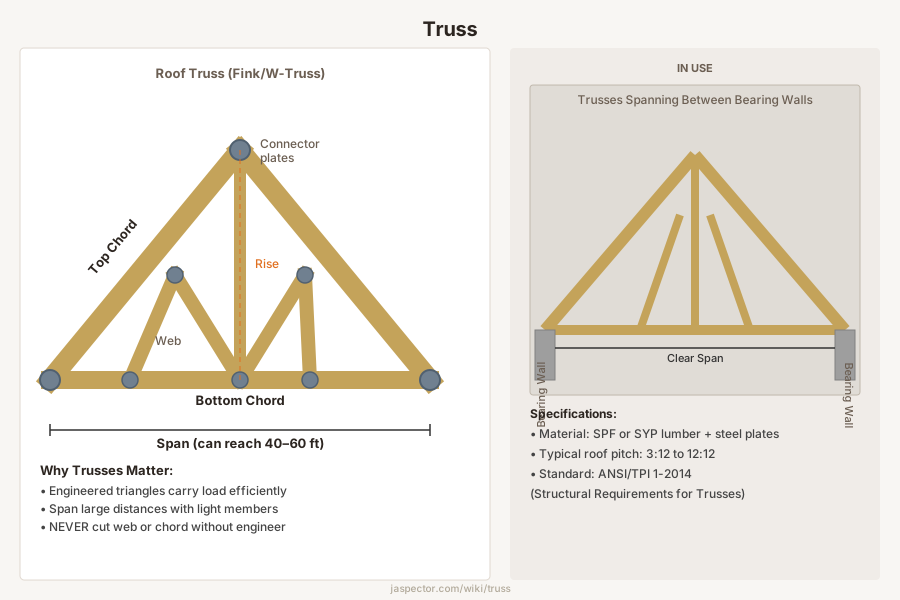
What It Is
A residential truss uses a network of straight members arranged in triangles to create a strong, efficient structural unit. Roof trusses and floor trusses are manufactured to carry specific loads and are designed as complete systems rather than cut-and-fit framing in the field.
Because the members work together structurally, altering a truss without engineering approval can weaken the assembly. Even small cuts, drilled holes, or removed webs can affect how loads are distributed.
Types
Common types include roof trusses, attic trusses, floor trusses, scissor trusses, mono trusses, and girder trusses. Each type is designed for a particular span, roof shape, or load condition.
Where It Is Used
Trusses are used in roofs over houses, garages, additions, porches, and in engineered floor systems. They span between bearing walls or beams and create large clear distances with relatively light framing members.
How to Identify One
Look in the attic, garage, or unfinished framing for repeated triangular assemblies made from lumber or metal-plate-connected members. A truss has internal web members, unlike a simple rafter-and-ceiling-joist roof frame.
Replacement
Replacement or repair is needed when a truss is cut, split, sagging, fire-damaged, insect-damaged, or overloaded. Repairs should follow an engineer's or truss manufacturer's design because field improvisation can create structural risk.
Frequently Asked Questions
Truss — FAQ
- Can I cut a truss to make room for storage or a new opening?
- Not without an engineered repair design. Trusses are engineered systems, and even small cuts can change load paths and weaken the structure.
- How is a truss different from a rafter?
- A truss is a factory-built assembly with webs and chords that acts as a complete structural unit. A rafter is one sloped framing member in a site-built roof frame.
- What are signs of truss damage?
- Cracked members, broken metal plates, sagging roof lines, water damage, and unauthorized cuts are common warning signs. Any of those issues deserve closer evaluation because truss repairs are not guesswork.
- Can a damaged truss be repaired?
- Often yes, but the repair should follow a stamped engineering detail or manufacturer guidance. Sistering lumber at random is not a reliable substitute for a designed truss repair.
Have a question about your project? Get personalized answers from our team — $9/mo.
MembershipAlso in Structural
- Access Panel Access & Openings
- Attic Hatch Access & Openings
- Construction Adhesive Adhesives & Sealants
- J-Bolt Anchorage
- Expansion Anchor Anchors & Fasteners
- Molly Bolt Anchors & Fasteners
- Baffle (Attic Rafter Vent) Attic & Roof
- Attic Hatch Cover Attic Access