Tile Backer Board — Moisture-Resistant Tile Substrate
A tile backer board is a rigid panel installed beneath ceramic tile or stone to provide a stable, moisture-resistant substrate that drywall cannot reliably offer.
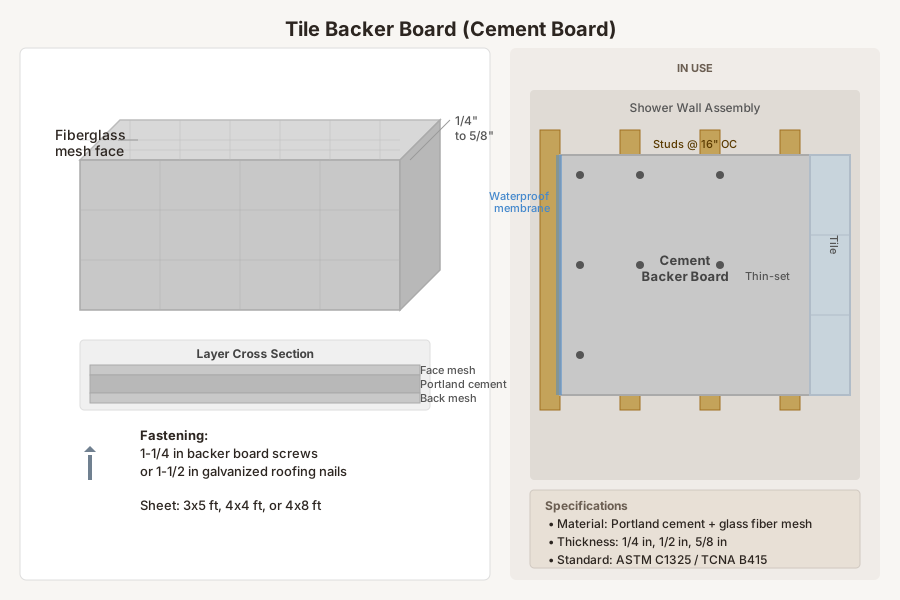
What It Is
Tile backer board forms the layer between framing or an existing surface and the finished tile. Unlike standard drywall, it does not deteriorate when exposed to water, making it the required substrate in showers, tub surrounds, and other wet areas.
The board transfers tile load evenly to the framing behind it and gives thin-set mortar a surface it can mechanically bond to. Without a proper backer, tiles can crack, debond, or allow water to reach structural framing.
Installation requires fastening the panel to studs or joists with corrosion-resistant screws, then taping and treating the joints with tile adhesive or alkali-resistant mesh tape and mortar before tiling begins.
Types
Cement board (such as Durock or HardieBacker) is the most common type and consists of a Portland cement core with fiberglass mesh facing. Glass mat gypsum board is lighter and cuts more easily but is best for dry or limited-moisture areas. Foam tile backer (such as Schluter Kerdi-Board) is a waterproof rigid foam with a polymer fleece surface that also acts as a membrane.
Where It Is Used
Tile backer board is used in shower walls and floors, tub surrounds, bathroom floors, laundry room walls, and kitchen backsplash areas where moisture exposure is expected. It is also used on countertops as a base for tile.
How to Identify One
Backer board exposed at edges looks gray or white with a fibrous or composite texture. Cement board has a rough, sand-like face; foam backer is lightweight and cream-colored. Knocking on a tiled wall that has proper backer produces a solid sound rather than the hollow ring of tile over drywall.
Replacement
Backer board is replaced when it has been damaged by water intrusion behind the tile, when a full tile tearout is performed, or when a substrate inspection reveals soft, crumbling, or delaminated material that can no longer hold fasteners.
Frequently Asked Questions
Tile Backer Board — FAQ
- Can I tile directly over drywall instead of backer board?
- Only in completely dry areas away from moisture. In bathrooms, showers, or anywhere water splash is possible, drywall absorbs moisture and eventually fails, pulling tiles with it. Backer board is required in wet locations.
- What is the difference between cement board and green board?
- Cement board has a Portland cement core and is fully waterproof, making it suitable for shower walls and wet floors. Green board is moisture-resistant gypsum drywall, not waterproof, and should not be used in direct water contact areas.
- Does tile backer board need to be waterproofed?
- Cement board itself resists moisture but is not a waterproofing membrane. Most tile industry standards call for a separate waterproofing layer — either a sheet membrane, liquid-applied membrane, or foam backer board — in showers and wet areas.
- How thick should tile backer board be?
- For walls, 1/2-inch is standard. For floors, 1/4-inch cement board is common when added over an existing subfloor to minimize height gain. Always check tile manufacturer requirements and local code for your specific application.
- Can backer board go over an existing tile floor?
- Sometimes, if the existing tile is well bonded, flat, and the added height is acceptable. However, loose or cracked tile beneath backer board creates an unstable base that will cause the new installation to fail.
Have a question about your project? Get personalized answers from our team — $9/mo.
MembershipAlso in Finish
- Mirror Accessories
- Mirror Clip Accessories
- Robe Hook Bathroom Hardware
- Soap Dish Bathroom Hardware
- Soap Dispenser Bathroom Hardware
- Toilet Paper Holder Bathroom Hardware
- Towel Bar Bathroom Hardware
- Towel Hook Bathroom Hardware