Thin-Set — Cement Mortar That Bonds Tile to Substrate
Thin-set is a cement-based mortar mixed with water or a latex additive and used as the primary adhesive to bond tile to a prepared substrate.
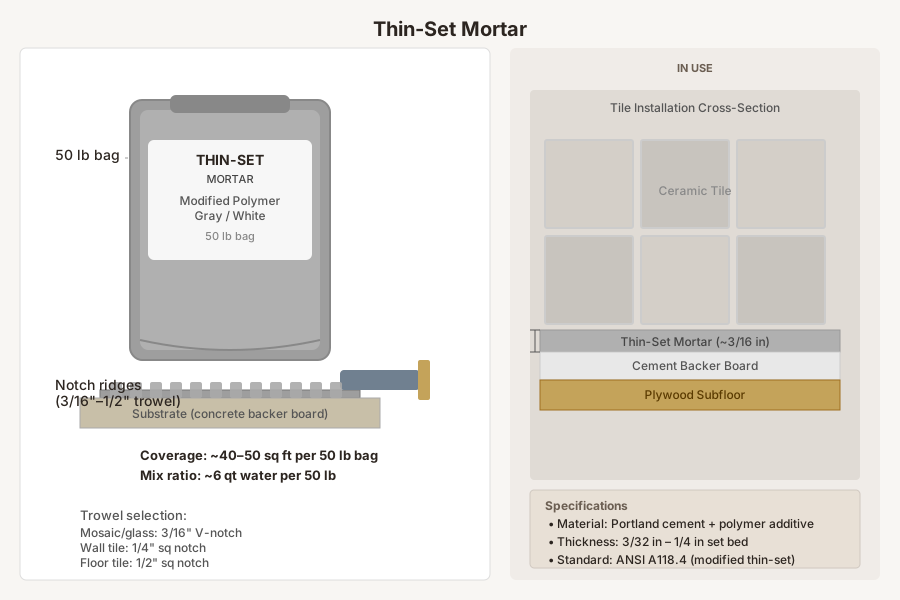
What It Is
Thin-set mortar is a blend of Portland cement, fine sand, and water-retention agents that bonds ceramic tile, porcelain, stone, and glass to floors, walls, and countertops. The term "thin-set" refers to the thin layer — typically 3/16 to 1/4 inch — applied between the tile and substrate, as opposed to the older thick-bed mud-set method.
When mixed to the correct consistency and applied with a notched trowel, thin-set creates mechanical contact between the tile back and the surface below. The mortar fills the trowel ridges and achieves the minimum 80 percent coverage indoors — or 95 percent in wet areas and for large-format tile — required for a durable installation.
Thin-set cures through a chemical hydration process, not drying. This means it can achieve full strength even in damp environments like showers, and covering it too quickly or disturbing tiles before initial set can compromise the bond.
Types
Unmodified thin-set contains only Portland cement, sand, and water-retention additives. Modified thin-set adds polymer latex — either dry-blended into the powder or added as a liquid admixture — which improves flexibility, adhesion, and resistance to moisture. Large-and-heavy-tile (LHT) mortar is a thick-bed modified mortar formulated for tiles larger than 15 inches or heavier than 15 pounds per square foot. Rapid-set thin-set uses accelerated chemistry to reach handling strength in one to two hours.
Where It Is Used
Thin-set is used under floor and wall tile on concrete slabs, tile backer board, uncoupling membrane, and mortar beds. It bonds tile in showers, bathrooms, kitchens, entryways, patios, pool surrounds, and commercial flooring.
How to Identify One
Fresh thin-set is a gray or white paste with a peanut-butter consistency. Cured thin-set visible at broken tile edges or repair sites appears as a hard gray layer bonded to both the tile back and the substrate. White thin-set is specified for glass tile and light-colored stone to prevent show-through.
Replacement
Thin-set is applied fresh each time tile is installed or reset. When loose tiles are repaired, old thin-set must be scraped off the substrate and the tile back to achieve a clean bond surface before new mortar is applied.
Frequently Asked Questions
Thin-Set — FAQ
- What is the difference between modified and unmodified thin-set?
- Modified thin-set contains polymer latex that improves flexibility and adhesion. Unmodified does not. Some waterproofing membranes and uncoupling membranes require unmodified thin-set so the membrane can bond properly — always check the membrane manufacturer's instructions.
- Can I use mastic instead of thin-set?
- Mastic can be used on dry wall installations in non-wet areas only. In showers, wet floors, or any area exposed to prolonged moisture, thin-set mortar is required because mastic softens and loses adhesion when continuously wet.
- How long does thin-set take to cure before grouting?
- Standard thin-set typically requires 24 hours before grouting, though rapid-set products can reach handling strength in a few hours. Grouting too soon can disturb tile alignment and weaken the bond.
- Why are my tiles hollow-sounding after installation?
- A hollow sound indicates insufficient mortar coverage beneath the tile — the trowel ridges did not collapse and bond fully. Poor coverage leads to cracked tile and debonding, especially in high-traffic or wet areas.
- What notch trowel size should I use?
- Trowel notch size is matched to tile size. Small tiles (under 4 inches) use a 3/16-inch V-notch. Medium tiles use a 1/4 x 1/4-inch square notch. Large-format tiles require a 1/2-inch or larger notch to achieve minimum coverage.
- Can thin-set be used to level an uneven floor?
- Standard thin-set is not a floor leveler. For significant depressions or humps, a self-leveling underlayment should be used first. Thin-set can fill minor voids during back-buttering, but it is not intended for leveling applications.
Have a question about your project? Get personalized answers from our team — $9/mo.
MembershipAlso in Finish
- Mirror Accessories
- Mirror Clip Accessories
- Robe Hook Bathroom Hardware
- Soap Dish Bathroom Hardware
- Soap Dispenser Bathroom Hardware
- Toilet Paper Holder Bathroom Hardware
- Towel Bar Bathroom Hardware
- Towel Hook Bathroom Hardware