Thermostat — wall control that runs heating and cooling
A thermostat is the control device that senses room temperature and tells a heating or cooling system when to turn on or off.
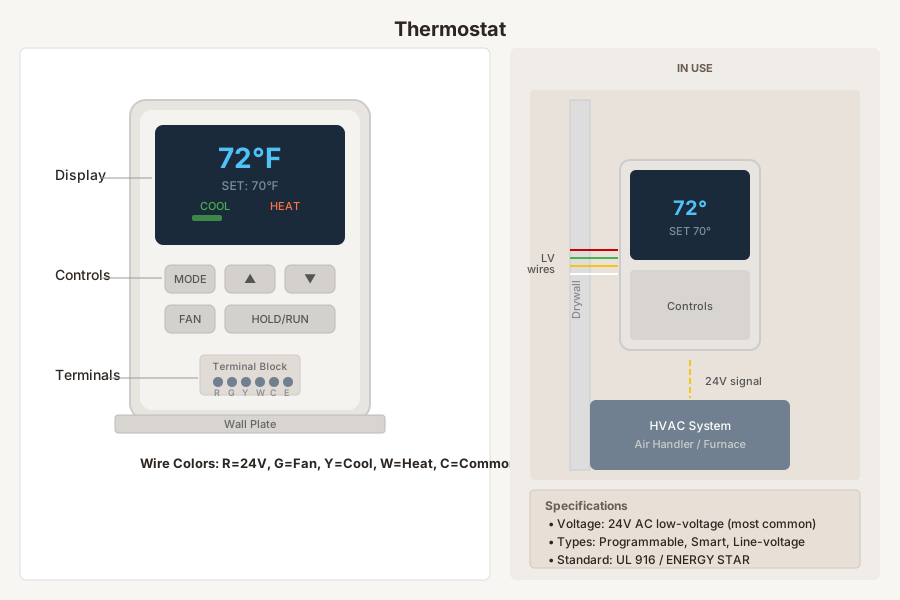
What It Is
A thermostat acts as the user interface and temperature sensor for the home's comfort system. It compares indoor temperature to the set point and sends signals to equipment such as a furnace, air conditioner, heat pump, or boiler.
Modern thermostats may also manage schedules, fan settings, humidity, or remote access. Even so, the basic job is simple: call for heating or cooling when the room drifts away from the desired temperature.
Types
Common types include mechanical thermostats, digital programmable thermostats, smart thermostats, line-voltage thermostats, and low-voltage HVAC thermostats. Heat-pump models have different wiring and setup needs than simple furnace-only models.
Where It Is Used
Thermostats are mounted on interior walls in living areas, hallways, and zones served by separate equipment. They are placed where they can sense a representative room temperature rather than direct sun, drafts, or appliance heat.
How to Identify One
Look for a wall-mounted control with temperature settings, a display, or adjustment lever. Removing the cover often reveals low-voltage terminals labeled with letters such as R, W, Y, G, and C.
Replacement
Replacement is needed when the thermostat reads inaccurately, stops communicating with the system, has a failed display, or no longer matches the equipment type. Wiring compatibility matters, especially when upgrading to a smart thermostat.
Frequently Asked Questions
Thermostat — FAQ
- Why does my thermostat say one temperature but the room feels different?
- The thermostat may be in a poor location, out of calibration, or affected by drafts, sunlight, or nearby supply air. Comfort can also vary if airflow or insulation issues cause other parts of the room to be warmer or cooler.
- Can I replace a thermostat myself?
- Many low-voltage thermostat swaps are straightforward if the wiring is labeled and the new unit matches the system type. Heat pumps, multi-stage systems, and missing common-wire setups are where mistakes become more likely.
- What does a C wire do?
- The C wire provides continuous low-voltage power to many digital and smart thermostats. Some older mechanical thermostats did not need it, which is why upgrade installations sometimes run into power issues.
- When should a thermostat be replaced instead of repaired?
- Replacement usually makes more sense when the display fails, buttons stop responding, the sensor is inaccurate, or the model no longer supports the equipment well. Basic settings problems can often be corrected without replacing the unit.
Have a question about your project? Get personalized answers from our team — $9/mo.
MembershipAlso in HVAC
- Air Handler Air Distribution
- Register Air Distribution
- Return Air Grille Air Distribution
- HVAC Filter Air Filtration
- Heat Strip Air Handler Components
- Heating Coil Air Handler Components
- Furnace Blower Air Movement
- Air Filter (HVAC) Air Quality & Filtration