Terminal Block — Wire Termination Strip and DIN Rail
A terminal block is a modular connector strip with screw or spring clamps that joins multiple electrical conductors at a common termination point.
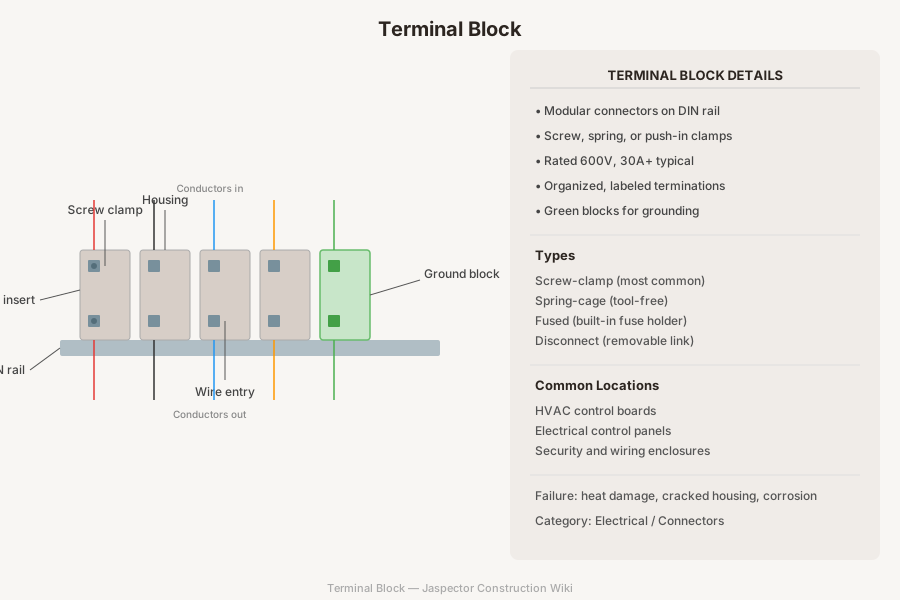
What It Is
A terminal block provides a secure, organized way to connect, distribute, and branch wiring without splicing conductors directly together. Each position on the block accepts one or more wires that are clamped by a screw, spring lever, or push-in mechanism against a conductive metal insert, usually tin-plated copper or brass. The insulating body is made from nylon, polycarbonate, or ceramic depending on the voltage and temperature rating.
Terminal blocks are mounted on 35 mm top-hat DIN rails (the industry standard rail profile) or screwed directly to enclosure surfaces. They are common in control panels, HVAC systems, and low-voltage wiring distributions where the ability to disconnect, test, and reconnect individual conductors without disturbing adjacent wiring is essential for maintenance and troubleshooting.
Types
Screw-clamp terminal blocks are the traditional type, using a flat-head or Phillips screw to compress a metal plate against the conductor. They are reliable and widely used but require a screwdriver for every connection. Spring-cage terminal blocks use a stainless steel spring that clamps the conductor when it is pushed in, providing vibration-resistant connections without tools. Push-in terminal blocks accept solid or ferrule-tipped stranded wire inserted directly into a port, making them the fastest to terminate.
Fused terminal blocks incorporate a small cartridge fuse holder into each position, providing individual circuit protection at the termination point. Ground terminal blocks have a metal mounting foot that bonds directly to the DIN rail, establishing a ground path through the rail to the enclosure. Disconnect terminal blocks include a removable knife-blade or test link that allows a circuit to be opened for measurement or isolation without removing the conductor from the clamp.
Where It Is Used
Terminal blocks are used in electrical control panels for motor starters and PLCs, HVAC control boards for furnace and air-handler wiring, security system enclosures for sensor and alarm zone terminations, structured wiring panels for low-voltage distribution, and industrial automation cabinets where hundreds of field wires converge.
In residential construction, terminal blocks appear most often inside HVAC equipment, boiler control panels, security and fire alarm panels, and home automation enclosures. In commercial buildings, they are found in elevator machine rooms, building management system (BMS) panels, and lighting control cabinets.
How to Identify One
Look for a row of modular connectors mounted on a metal DIN rail or panel surface, each with a screw or lever clamping mechanism and labeled wire entry points. The blocks are typically beige or gray for signal and power positions, green or green-yellow for grounding positions, and blue for neutral positions. Each block is about 5 to 10 mm wide and snaps onto the DIN rail side by side, forming a continuous strip that can be extended to any length.
Labeling strips or individual markers sit above or below each position, identifying the wire number or function. End plates and partition plates separate groups of terminal blocks into logical sections within the panel.
Replacement
Replacement is needed when a terminal block shows heat damage such as melted or discolored housing, cracked insulating body that exposes the internal conductor path, corroded contacts that increase resistance and generate heat, or when a screw clamp is stripped and no longer holds the conductor securely. Loose connections at terminal blocks are a leading cause of intermittent control faults and overheating in enclosed panels.
The replacement block must match the DIN rail size (typically 35 mm), conductor size range (marked on the block in AWG or mm2), voltage rating, and current rating of the original. Snap the old block off the rail, transfer each conductor to the corresponding position on the new block, and verify torque on screw-clamp types per the manufacturer specification.
Frequently Asked Questions
Terminal Block — FAQ
- What is the advantage of terminal blocks over wire nuts?
- Terminal blocks provide organized, labeled, and individually accessible connections that are easier to troubleshoot and reconfigure than bundled wire nut splices inside a junction box.
- Can terminal blocks handle line-voltage circuits?
- Yes, terminal blocks are rated for specific voltage and amperage ranges. Many industrial and residential control panel terminal blocks are rated for 600 volts and 30 amps or more.
- What is a DIN rail?
- A DIN rail is a standardized metal mounting rail used inside electrical enclosures. Terminal blocks and other modular components snap onto the rail for easy installation and removal.
- How do I know what size terminal block to use?
- Match the terminal block wire range to the conductor gauge being terminated, and verify the voltage and current ratings meet or exceed the circuit requirements.
- Are fused terminal blocks common in residential work?
- They are less common in standard residential wiring but appear in HVAC control panels, security systems, and structured wiring setups where individual circuit protection at the termination point is needed.
Have a question about your project? Get personalized answers from our team — $9/mo.
MembershipAlso in Electrical
- Range Outlet Appliance Circuits
- Appliance Whip Appliance Connections
- Dishwasher Cord Appliance Connections
- Dryer Cord Appliance Connections
- Range Cord Appliance Connections
- Generator Backup Power
- Transfer Switch Backup Power
- Box Cover Boxes