Tee — T-shaped fitting for branching pipe or duct runs
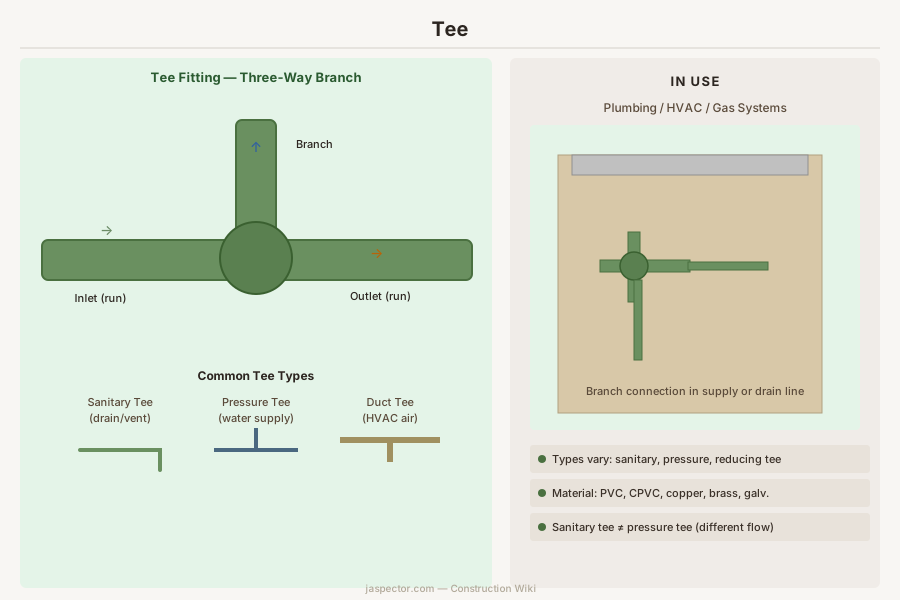
A tee is a T-shaped fitting with three openings that joins one pipe or duct run to another branch.
What It Is
A tee creates a branch connection off a straight run. In plumbing, it can split a water, drain, or vent line. In HVAC ductwork, it divides airflow into a side branch.
The fitting matters because branch size, sweep, and orientation affect flow, noise, and service access. A pressure tee for water piping is shaped differently from a sanitary tee used in drain and vent systems.
Types
Common types include straight tees, reducing tees, sanitary tees, threaded tees, solder tees, press tees, and duct tees. The correct type depends on whether the system carries water, waste, air, gas, or condensate.
Where It Is Used
Tees are used under sinks, inside walls, above ceilings, in basements, at water heater branches, in drain stacks, and in sheet-metal duct systems. They appear anywhere one run needs to feed or collect from another line.
How to Identify One
Look for a fitting shaped like the letter T, with one opening branching off the middle of a straight section. Plumbing tees are rigid fittings in metal or plastic, while duct tees are larger sheet-metal or flex-duct branch fittings.
Replacement
A tee is replaced when it cracks, corrodes, leaks at a joint, or is the wrong fitting for the system layout. Replacement usually means cutting the line apart and reconnecting all three sides with the correct material and fitting style.
Frequently Asked Questions
Tee — FAQ
- What does a tee fitting do?
- A tee lets one pipe or duct branch off from another run. It is how installers split flow to a fixture, vent, or room without bending a single line in two directions.
- Is a plumbing tee the same as a sanitary tee?
- No. A sanitary tee is shaped for drain and vent flow, while other tees are made for pressure piping or other uses. Using the wrong one can hurt drainage or violate code.
- Can a leaking tee be repaired without replacing it?
- Sometimes a threaded connection can be tightened, but glued, soldered, or cracked tees usually need replacement. The repair depends on the pipe material and whether the leak is in the fitting body or the joint.
- Why would a tee cause poor flow?
- A branch tee can create extra friction, turbulence, or clog points if it is undersized or poorly oriented. In drain lines, the wrong tee can also slow waste flow and lead to backups.
Have a question about your project? Get personalized answers from our team — $9/mo.
MembershipAlso in Plumbing
- ADA Shower Seat Accessibility
- Fold-Down Seat Accessibility
- Backflow Preventer Backflow & Cross-Connection
- Pressure Vacuum Breaker Backflow Prevention
- Toilet Bath Fixtures
- Toilet Bowl Bath Fixtures
- Toilet Tank Bath Fixtures
- Toilet Tank Gasket Bath Fixtures