Swale — What It Is, Where Used, and Replacement Guide
A swale is a shallow vegetated drainage channel that conveys and often infiltrates runoff across a site.
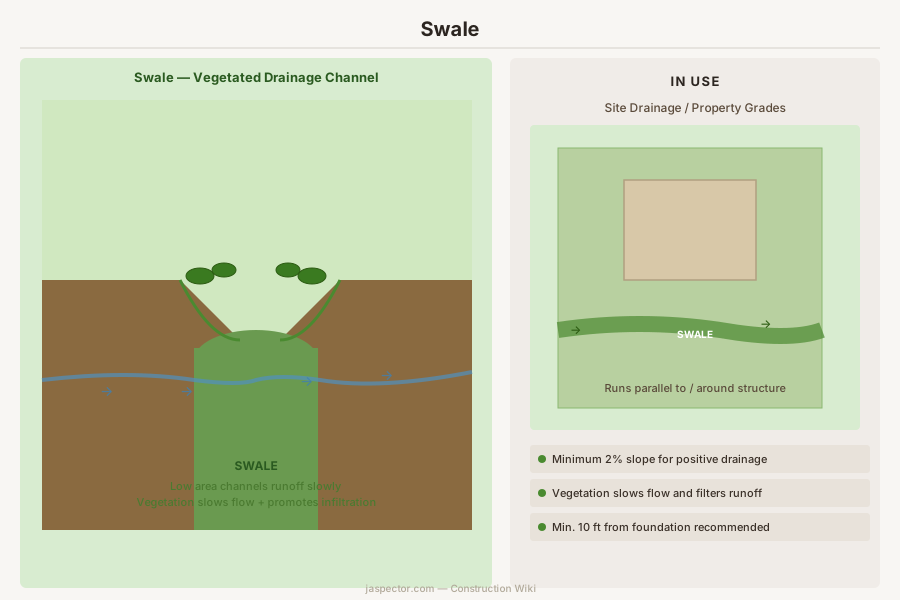
What It Is
A swale is designed to move water more slowly than a hard ditch or pipe, often letting some of it soak into the ground along the way. On residential properties, swales help guide runoff away from foundations, reduce erosion, and manage sheet flow across yards.
The shape and slope are important because the swale should drain without becoming a deep standing-water trench.
Types
Common types include grassed swales, bioswales with engineered soils and plantings, roadside drainage swales, and shallow landscape swales that blend into the yard. Some are intended mainly for conveyance, while others are designed for infiltration and water quality treatment.
Where It Is Used
Swales are used along property lines, at the base of slopes, beside driveways, in front yards, and in shared drainage corridors. They are common where runoff needs to be guided across a site without installing full underground drainage.
How to Identify One
Look for a broad, shallow depression in the landscape that has a gentle side slope and a visible flow path after rain. It often looks like a low grassy channel rather than a steep ditch.
Replacement
Swales are reshaped or rebuilt when they have eroded, filled with sediment, or no longer carry water the right direction. Correcting a swale often means regrading the surrounding yard, not just digging the channel deeper.
Frequently Asked Questions
Swale — FAQ
- What is the difference between a swale and a ditch?
- A swale is usually broader, shallower, and more integrated into the landscape than a ditch. It is often designed to slow and infiltrate runoff, not just move it quickly away.
- Can I fill in a swale in my yard?
- That is usually a bad idea unless the drainage is redesigned. Filling a swale can redirect water toward your house or a neighbor's property.
- Why does my swale stay soggy?
- The grade may be too flat, the soil may drain poorly, or the swale may be receiving more water than it was designed to handle. Compaction and sediment buildup can also reduce performance.
- Should a swale have grass or rock in it?
- Grass is common for slow, shallow flow, while rock may be added where erosion is a concern. The best surface depends on flow speed, maintenance, and the desired appearance.
Have a question about your project? Get personalized answers from our team — $9/mo.
MembershipAlso in Drainage
- Splash Block Downspouts
- Check Dam Erosion Control
- Rip Rap Erosion Control
- Silt Fence Erosion Control
- Drain Tile Foundation Drainage
- Footing Drain Foundation Drainage
- Perimeter Drain Foundation Drainage
- Downspout Gutters & Downspouts