Subpanel — What It Is, Where Used, and Replacement Guide
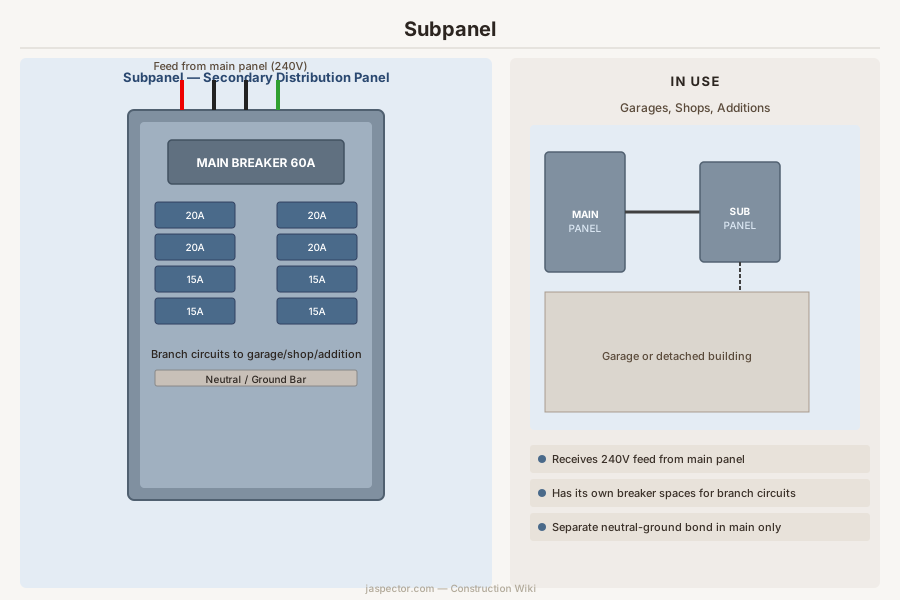
A subpanel is a secondary electrical panel that receives power from the main service equipment and distributes it to branch circuits in another area.
What It Is
A subpanel extends circuit capacity beyond the main panel and places breakers closer to the loads they serve. It is common when a garage, addition, workshop, or detached building needs more circuits than a single feeder run can provide conveniently.
Even though it looks similar to the main panel, a subpanel has different grounding and bonding rules that matter for safety.
Types
Common types include indoor load centers, outdoor-rated subpanels, garage and workshop subpanels, and panels sized by ampacity such as 60-amp, 100-amp, or larger feeder-fed units. Some also serve as transfer or distribution points for backup power systems.
Where It Is Used
Subpanels are used in garages, basements, additions, detached structures, and large homes where circuits are grouped away from the main service panel. They are also common near pools, workshops, and high-load equipment areas.
How to Identify One
Look for a breaker panel that is fed from another panel rather than directly from the utility service. A subpanel usually lacks the service disconnect role of the main panel and is often labeled for a specific area of the property.
Replacement
Replacement is needed when the panel is undersized, damaged, obsolete, or showing overheating, corrosion, or breaker compatibility issues. Replacement work should confirm feeder size, grounding, and neutral isolation are all correct for the installation.
Frequently Asked Questions
Subpanel — FAQ
- What is the difference between a main panel and a subpanel?
- The main panel is where service power enters and where the main disconnect is usually located. A subpanel is fed from the main panel and distributes power to additional branch circuits.
- Can a subpanel be installed in a detached garage?
- Yes, that is a common use. The feeder, grounding arrangement, and panel size all need to match the loads and current electrical rules.
- Why can a subpanel not have neutrals and grounds bonded together?
- In most residential setups, neutral-ground bonding is done at the service equipment, not downstream in a subpanel. Keeping them separate helps control fault current paths and avoid stray current on metal parts.
- When is a subpanel better than running one more circuit?
- A subpanel makes sense when multiple new circuits are needed in the same area. It is often cleaner and more expandable than running several long branch circuits from the main panel.
Have a question about your project? Get personalized answers from our team — $9/mo.
MembershipAlso in Electrical
- Range Outlet Appliance Circuits
- Appliance Whip Appliance Connections
- Dishwasher Cord Appliance Connections
- Dryer Cord Appliance Connections
- Range Cord Appliance Connections
- Generator Backup Power
- Transfer Switch Backup Power
- Box Cover Boxes