Subfloor — What It Is, Where Used, and Replacement Guide
A subfloor is the structural panel layer, usually plywood or OSB, that is fastened to floor joists and supports the finished flooring above.
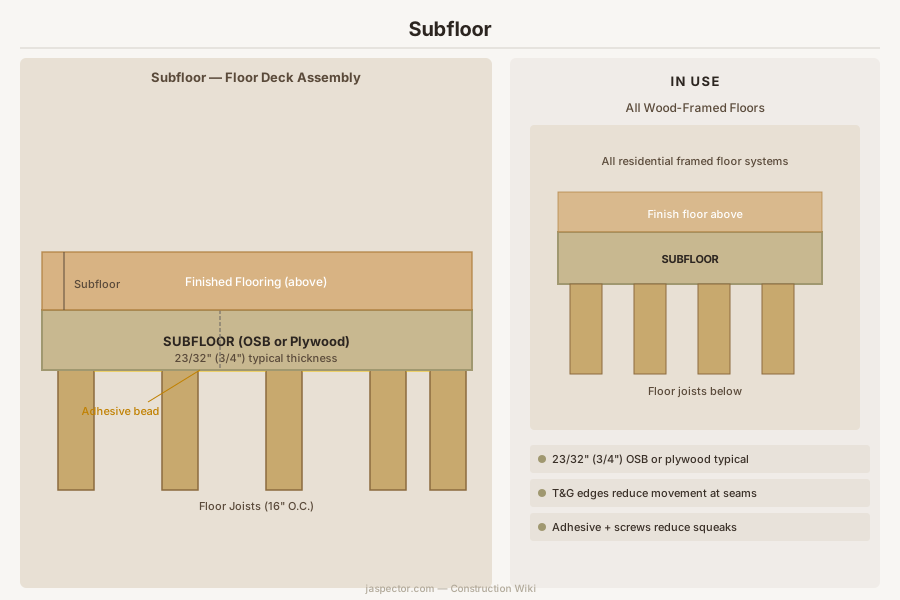
What It Is
The subfloor creates the structural deck of the floor system. It ties the joists together, distributes loads, and provides the flat base for underlayment and finish flooring.
When the subfloor is damaged or loose, homeowners often notice squeaks, soft spots, or flooring problems even if the finished surface is what first appears to be failing.
Types
Common residential subfloor materials include tongue-and-groove OSB, plywood panels, and specialty moisture-resistant panels. Thickness and edge profile depend on joist spacing, span ratings, and the floor finish planned above.
Where It Is Used
Subfloors are used on framed floors throughout homes, including upper stories, main levels over crawl spaces or basements, and raised additions. They are not used the same way on slab-on-grade floors, which rely on concrete instead.
How to Identify One
You may see the subfloor from below in an unfinished basement ceiling or from above when carpet, tile, or other flooring is removed. It is the large sheet material directly attached to the joists, below any underlayment or finish floor.
Replacement
Replacement is needed when the subfloor is water-damaged, delaminated, badly cut, or no longer holds fasteners securely. The repair has to restore structural capacity and provide a flat, well-fastened base for the flooring system above.
Frequently Asked Questions
Subfloor — FAQ
- What is the difference between a subfloor and underlayment?
- The subfloor is the structural layer attached to the joists, while underlayment is a thinner layer above it used to smooth or prepare the surface for finish flooring. Not all floors use a separate underlayment.
- Why does my floor feel soft near the bathroom?
- Water damage to the subfloor is a common cause, especially around toilets, tubs, and old plumbing leaks. The finish flooring may look intact even when the panel below has deteriorated.
- Can a squeaky subfloor be fixed without replacing it?
- Sometimes, if the issue is movement at fasteners or between the subfloor and joists. Extensive rot, swelling, or delamination usually needs panel replacement.
- Is OSB subfloor worse than plywood?
- Not necessarily. Both can perform well when installed correctly, but they respond differently to moisture and fastener hold. The condition of the specific floor matters more than the material alone.
Have a question about your project? Get personalized answers from our team — $9/mo.
MembershipAlso in Structural
- Access Panel Access & Openings
- Attic Hatch Access & Openings
- Construction Adhesive Adhesives & Sealants
- J-Bolt Anchorage
- Expansion Anchor Anchors & Fasteners
- Molly Bolt Anchors & Fasteners
- Baffle (Attic Rafter Vent) Attic & Roof
- Attic Hatch Cover Attic Access