Stone Tile - Natural Stone Finish for Floors and Walls
A stone tile is a cut piece of natural stone used as a finished surface on floors, walls, showers, patios, and other durable building surfaces.
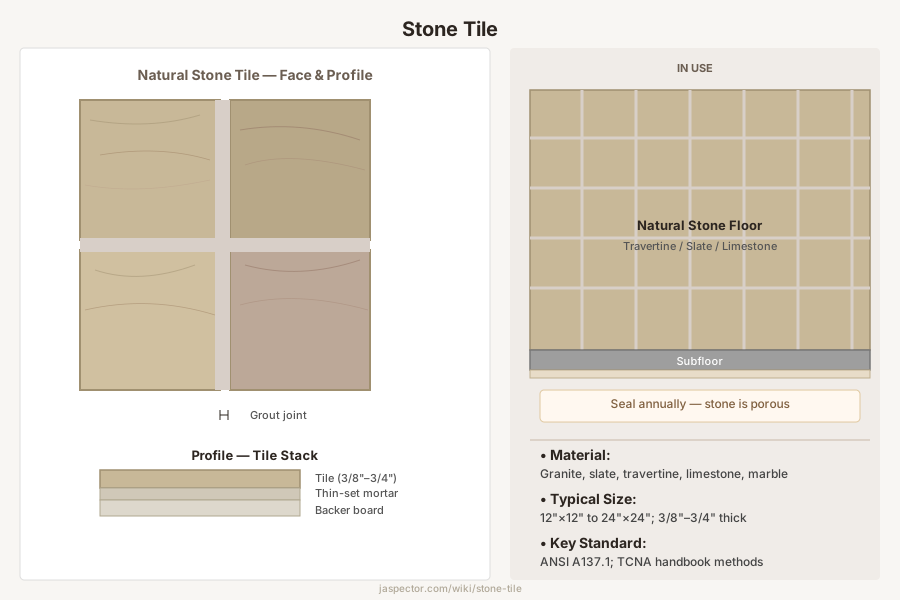
What It Is
Stone tile is made from natural materials such as marble, slate, travertine, limestone, or granite that are quarried and cut into repeatable sizes for installation. Unlike ceramic or porcelain tile, the color, veining, and porosity vary from piece to piece because the material is not factory-made.
That natural variation gives stone tile its appeal, but it also means the installer has to account for sealing, thickness differences, and substrate preparation more carefully than with many manufactured tiles.
Types
Common residential stone tile types include slate for textured floors and exteriors, marble for polished interior finishes, travertine for baths and patios, limestone for softer natural finishes, and granite for harder wear surfaces. Honed, polished, tumbled, and cleft finishes change how slippery, porous, and formal the tile feels.
Where It Is Used
Stone tile is used on entry floors, bathrooms, showers, kitchen backsplashes, fireplaces, patios, and some exterior walkways or walls. The exact stone has to match the environment because some varieties handle freezing, moisture, and traffic better than others.
How to Identify One
Look for natural variation in color, veining, fossil marks, or cleft texture that repeats less predictably than ceramic or porcelain. The tile edges may reveal solid stone rather than a glazed body, and many installations have a penetrating sealer to help resist staining.
Replacement
Replacement is needed when tiles crack, spall, stain deeply, or loosen because the substrate or setting bed has failed. Matching stone later can be difficult because quarry lots and natural color variation change over time, so pros often save extra tile from the original installation.
Frequently Asked Questions
Stone Tile — FAQ
- What is the difference between stone tile and porcelain tile?
- Stone tile is cut from natural rock, so every piece varies in color, veining, and porosity. Porcelain tile is factory-made, more uniform, and often needs less maintenance.
- Does stone tile need to be sealed?
- Many stone tiles do, especially marble, travertine, and limestone. Sealer helps slow staining and moisture absorption, but it does not make the surface maintenance-free.
- How do I know if stone tile needs replacing?
- Cracked pieces, loose tiles, hollow spots, repeated grout failure, and deep stains that cannot be cleaned are common signs. If the problem is widespread, the issue may be the substrate rather than just a few bad tiles.
- Is stone tile good for bathrooms and showers?
- It can be, but the stone type and finish matter. Some stones absorb water or etch easily, so shower installations need the right waterproofing, sealer, and cleaning approach.
- Is replacing a few damaged stone tiles usually possible?
- Often yes, if matching material is available and the surrounding tile is stable. On older floors, the harder part is usually finding stone that matches the original color and texture closely enough.
Have a question about your project? Get personalized answers from our team — $9/mo.
MembershipAlso in Structural
- Access Panel Access & Openings
- Attic Hatch Access & Openings
- Construction Adhesive Adhesives & Sealants
- J-Bolt Anchorage
- Expansion Anchor Anchors & Fasteners
- Molly Bolt Anchors & Fasteners
- Baffle (Attic Rafter Vent) Attic & Roof
- Attic Hatch Cover Attic Access