Stair Nose - Step Edge Nosing Guide for Home Stairs
A stair nose is the front edge treatment of a stair tread that projects slightly past the riser below and provides a durable, visible step edge.
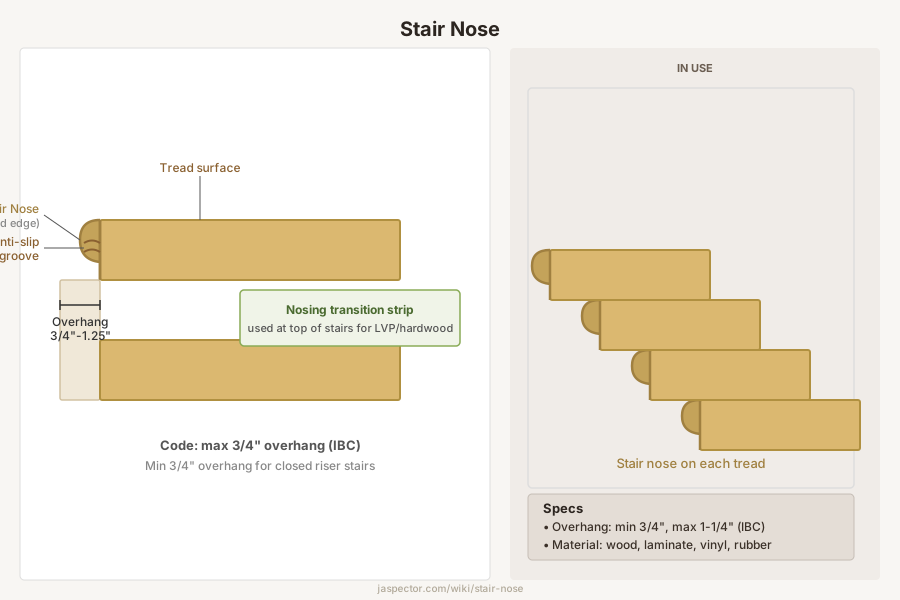
What It Is
The stair nose, often called stair nosing, defines the leading edge of the step where foot traffic is concentrated. The typical projection extends 3/4 inch to 1-1/4 inches beyond the face of the riser below.
On wood stairs, the nose may be integral to the tread or added as a separate trim piece. Solid treads are usually milled with a rounded bullnose profile. On laminate, vinyl plank, or tile, a dedicated nosing piece transitions the finish over the tread edge and conceals the substrate.
The International Residential Code (IRC) Section R311.7.5.3 addresses nosing projection, generally requiring 3/4 inch to 1-1/4 inches and limiting variation between nosings on a flight to 3/8 inch.
Types
Bullnose wood treads have the nosing milled directly into the front of the tread board and are the standard for traditional hardwood staircases. The rounded profile is typically shaped with a 1/2-inch to 3/4-inch radius and may include a cove detail underneath where the nosing meets the riser.
Metal anti-slip nosings are extruded aluminum or stainless steel profiles often filled with abrasive inserts such as carborundum or rubber. These are common on commercial stairs, exterior concrete steps, and institutional buildings where heavy foot traffic demands maximum traction.
Rubber stair nosings are flexible profiles that absorb impact and provide grip on concrete, vinyl, or tile stairs. They are frequently used in schools, hospitals, and multifamily buildings and are typically adhered with construction adhesive.
Flooring-matched nosing profiles are designed by laminate and luxury vinyl plank manufacturers to coordinate with specific product lines. These extrusions snap onto a metal track screwed to the tread edge and create a finished look matching the flooring color and texture.
Where It Is Used
Stair noses are used on interior and exterior stairs, finished wood staircases, commercial stairs, and flooring transitions at step edges. They are especially important where slip resistance, visibility, or finish durability is a concern.
In residential construction, nosings appear on main staircases, basement stairs, deck steps, and garage entry stairs. On exterior concrete or masonry stairs, metal or rubber nosings protect the front edge from freeze-thaw spalling and provide a color-contrasted edge for visibility in low light. Building codes and ADA guidelines call for visually contrasting nosings in certain commercial and public stairways to help users distinguish step edges.
How to Identify One
Look at the front edge of the tread where it overhangs the riser below or where a separate profile caps the tread edge. On a wood staircase, the nosing is the rounded or shaped portion that extends forward from the tread surface. On flooring-finished stairs, a separate trim piece with a visible seam or track at the tread edge indicates an add-on nosing.
Common signs of a failing stair nose include a hollow-sounding edge when tapped, visible cracks in the wood or finish, a worn-down anti-slip surface, or a nosing that rocks when stepped on. Chipped paint or finish wear at the front edge is usually the first sign that maintenance or replacement is due.
Replacement
Replacement is needed when the nosing comes loose, cracks, becomes slippery, or no longer matches a new floor covering. Because tread depth and edge profile affect stair safety and code compliance, replacement should preserve the intended dimensions of the step.
For solid wood treads, repair may involve filling chips with wood filler and refinishing, or replacing the entire tread if damage is structural. Separate nosing profiles on laminate or vinyl stairs can usually be removed by unscrewing the metal track and snapping in a new piece.
When replacing metal or rubber nosings on concrete or tile stairs, clean away old adhesive and fasteners before installing the new profile. On any stair, verify that the new nosing maintains consistent projection across all steps in the flight to avoid creating a trip hazard.
Frequently Asked Questions
Stair Nose — FAQ
- What does a stair nose do?
- It protects the front edge of the tread, improves visibility of the step edge, and often provides a safer footing surface. It also finishes the transition between the tread and the riser below.
- Is stair nosing required by code?
- Many stairs are designed with code rules for tread depth, riser height, and nosing projection, though the exact requirement depends on the stair type and local code. The important point is that the stair edge dimensions cannot be changed casually without affecting compliance.
- Why is my stair nose coming loose?
- Wear, weak fasteners, adhesive failure, and movement in the underlying tread are common causes. A loose nosing is more than cosmetic because it can become a trip hazard.
- Can you replace just the stair nose?
- Often yes, especially when the tread body is still sound and the nose is a separate trim piece. If the tread itself is damaged or the finish system is integrated, the repair may require replacing the whole tread.
- What is the difference between a stair nose and a stair tread?
- The tread is the full horizontal surface you step on. The stair nose is specifically the front edge treatment or projecting portion at the leading edge of that tread.
Have a question about your project? Get personalized answers from our team — $9/mo.
MembershipAlso in Interior
- Euro Hinge Cabinet Hardware
- Soft-Close Hinge Cabinet Hardware
- L-Bead Drywall & Plaster
- Skirt Board
- Panel Molding Trim & Millwork
- Picture Molding Trim & Millwork
- Wainscot Panel Wall Finishes & Trim