Spray Foam — What It Is, Where Used, and Replacement Guide
Spray foam is spray polyurethane foam insulation that is applied as a liquid and expands to seal and insulate cavities.
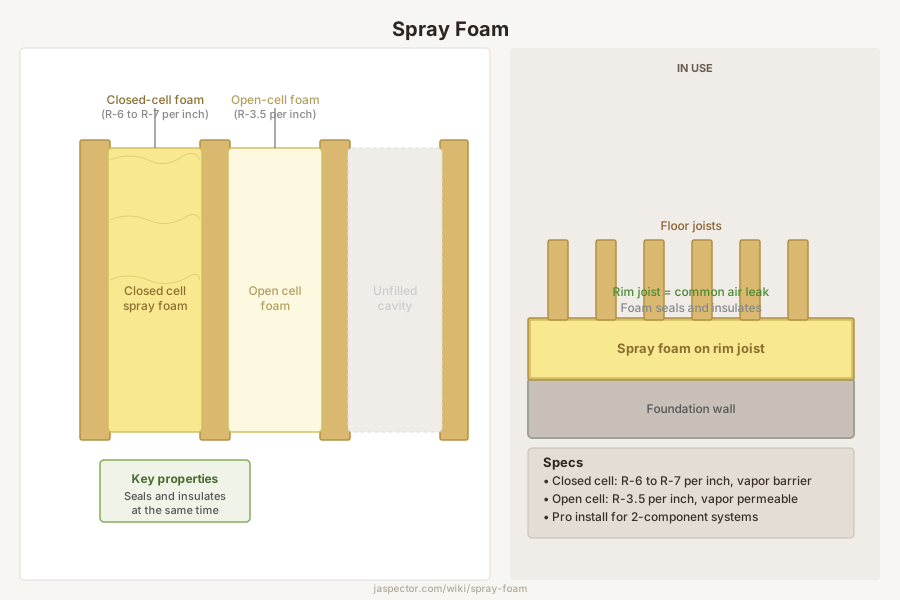
What It Is
Spray foam starts as two chemical components that react at the spray gun and expand into rigid or semi-rigid foam. The material fills gaps, adheres to many surfaces, and can reduce air leakage much more effectively than many loose or batt insulation systems.
Because it combines insulation and air sealing, installation quality matters a great deal. Poor mixing or poor thickness control can create odor, performance, and durability issues.
Types
The two main types are open-cell spray foam and closed-cell spray foam. Open-cell foam is lighter and vapor-open, while closed-cell foam is denser, adds more R-value per inch, and can also help with moisture control and rigidity.
Where It Is Used
Spray foam is used in wall cavities, rooflines, rim joists, crawl spaces, and around penetrations where air sealing is important. It is common in high-performance homes, retrofit air-sealing work, and complex framing areas.
How to Identify One
Look for expanded foam adhered to framing or sheathing, usually cream, white, or light yellow in color. Open-cell foam looks softer and more sponge-like, while closed-cell foam appears denser and more rigid.
Replacement
Replacement or removal is needed when the foam shrinks, pulls away from framing, was installed to the wrong thickness, or has odor or moisture issues. Repairs may involve trimming out failed areas and respraying rather than removing everything.
Frequently Asked Questions
Spray Foam — FAQ
- What is the difference between open-cell and closed-cell spray foam?
- Open-cell foam is lighter, softer, and usually less expensive, while closed-cell foam is denser and provides higher R-value per inch. Closed-cell also resists water better and can add stiffness.
- Can spray foam be installed in an existing house?
- Yes, but access matters. It is often added at rim joists, attics, crawl spaces, or exposed framing areas rather than fully closed wall cavities.
- Why is spray foam pulling away from studs?
- That can happen if the chemicals were off ratio, the substrate temperature was wrong, or the foam was sprayed too thick. Pull-away gaps reduce air sealing and should be evaluated.
- Does spray foam need a thermal barrier?
- Often yes, depending on where it is installed and local code requirements. Many installations need drywall or another approved ignition or thermal barrier over the foam.
Have a question about your project? Get personalized answers from our team — $9/mo.
MembershipAlso in Structural
- Access Panel Access & Openings
- Attic Hatch Access & Openings
- Construction Adhesive Adhesives & Sealants
- J-Bolt Anchorage
- Expansion Anchor Anchors & Fasteners
- Molly Bolt Anchors & Fasteners
- Baffle (Attic Rafter Vent) Attic & Roof
- Attic Hatch Cover Attic Access