Spacer — What It Is, Where Used, and Replacement Guide
A spacer is a small component used to maintain a consistent gap, offset, or alignment between two building materials or hardware parts.
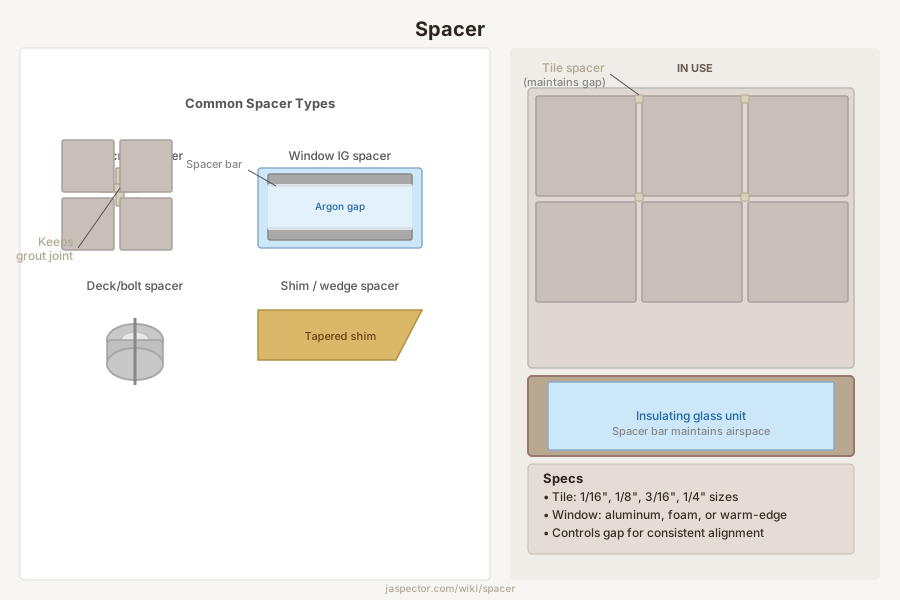
What It Is
Spacers are simple parts, but they solve important layout and installation problems by keeping materials separated at a controlled distance. Depending on the application, that gap may be needed for drainage, movement, fastener alignment, insulation performance, or a clean finished reveal.
Because the term is broad, the exact spacer can be plastic, rubber, metal, or composite and may be temporary or permanent.
Types
Examples include tile spacers, glazing spacers in insulated glass, deck board spacers, standoffs, and hardware bushings used to keep bolts or brackets properly positioned. The right type depends on load, weather exposure, and whether the gap has to remain after installation.
Where It Is Used
Spacers are used in tile setting, window assembly, cladding systems, cabinetry, decking, and many hardware installations. They appear anywhere a repeated gap or separation matters for performance or appearance.
How to Identify One
A spacer is usually a small insert, shim-like piece, ring, or block located between larger materials. You may only notice it during installation or after a repair exposes the joint or hardware assembly.
Replacement
Replacement is needed when a spacer cracks, compresses, goes missing, or no longer maintains the required gap. Using the wrong thickness can affect drainage, alignment, or the fit of the finished assembly.
Frequently Asked Questions
Spacer — FAQ
- Are spacers the same as shims?
- Not always. A shim is usually used to adjust level or plumb, while a spacer is meant to maintain a specific gap or separation. Some parts can serve both roles in practice.
- Why does the size of a spacer matter?
- Even a small thickness change can alter alignment, reveal lines, drainage paths, or hardware fit. In systems like tile or glazing, that can affect both appearance and performance.
- Can I reuse old spacers?
- Only if they are the correct type and still in good condition. Brittle plastic, compressed rubber, or corroded metal spacers should generally be replaced.
- Where would a homeowner most often see spacers?
- Tile jobs, deck board layouts, some cabinet hardware, and insulated glass windows are common places. Many spacers are hidden after installation, so they are more visible during construction or repair.
Have a question about your project? Get personalized answers from our team — $9/mo.
MembershipAlso in Structural
- Access Panel Access & Openings
- Attic Hatch Access & Openings
- Construction Adhesive Adhesives & Sealants
- J-Bolt Anchorage
- Expansion Anchor Anchors & Fasteners
- Molly Bolt Anchors & Fasteners
- Baffle (Attic Rafter Vent) Attic & Roof
- Attic Hatch Cover Attic Access