Soft-Close Hinge - Quiet Cabinet Door Hardware Guide
A soft-close hinge is a cabinet or door hinge with a built-in damping mechanism that slows the closing motion and prevents slamming.
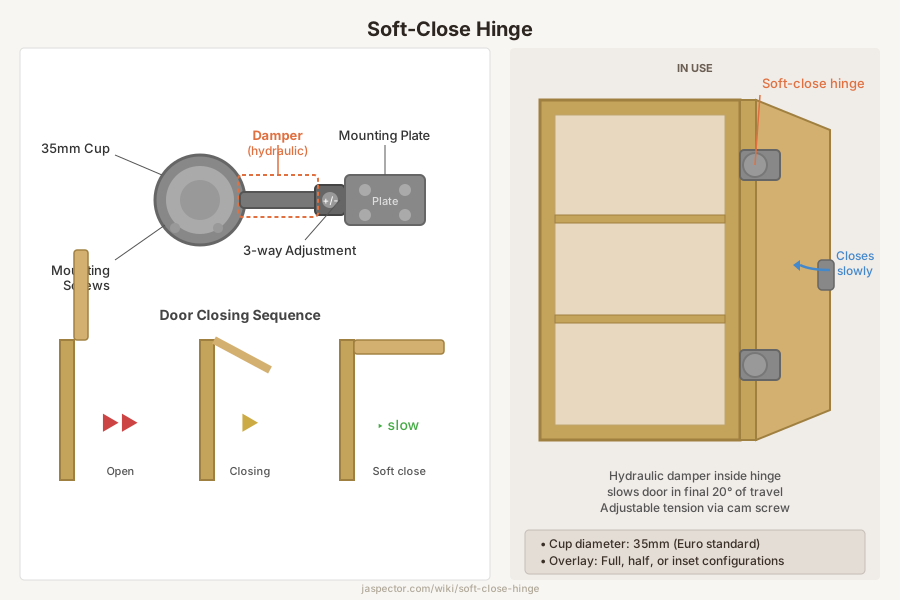
What It Is
On cabinets, a soft-close hinge usually looks similar to a concealed Euro hinge but includes an internal damper that catches the door during the last part of the swing. The result is quieter operation, less wear on the cabinet, and a more controlled feel in everyday use.
The soft-close feature is part of the hinge itself, not a separate bumper. If the damping mechanism fails, the door may still hang correctly but will lose its slow-closing action.
Types
Common versions include concealed cabinet soft-close hinges, face-frame soft-close hinges, inset and overlay models, and specialty wide-angle versions. The correct hinge depends on the cabinet construction, overlay, cup size, and opening angle.
Where It Is Used
Soft-close hinges are used on kitchen cabinets, bathroom vanities, laundry cabinets, built-ins, and other casework where quiet door action is desired. They are far more common on cabinetry than on full-size passage doors.
How to Identify One
Open the cabinet door and look for a concealed hinge with a damping cartridge or a marking indicating soft-close. When working properly, the door slows noticeably just before it reaches the closed position.
Replacement
Replacement is needed when the hinge loses damping, sags, bends, or no longer holds adjustment. Matching the overlay, bore pattern, and opening angle is critical because a hinge that almost fits can still leave the door crooked or unable to close fully.
Frequently Asked Questions
Soft-Close Hinge — FAQ
- What is the difference between a soft-close hinge and a regular hinge?
- A soft-close hinge contains a damper that slows the door before it shuts. A regular hinge lets the door close at normal speed unless a separate bumper or add-on damper is installed.
- Why did my cabinet soft-close stop working?
- The damping mechanism may be worn out, the hinge may be the wrong tension for the door weight, or the hinge alignment may be off. In many cases the hinge still swings normally but no longer slows the last part of the close.
- Can I replace one soft-close hinge or do I need to replace both?
- You can often replace just the failed hinge if the other one matches and is still working properly. On older cabinets, replacing both is often smarter so the door closes evenly and the finish hardware ages the same way.
- Are all soft-close hinges interchangeable?
- No. Cup size, overlay, arm geometry, opening angle, and mounting plate style all need to match the cabinet and door. A hinge that looks similar can still fit poorly.
- Can you add soft-close hinges to older cabinets?
- Often yes, if compatible hinges exist for the cabinet style and bore pattern. Some cabinets need new holes or adapter plates, so it is not always a direct swap.
Have a question about your project? Get personalized answers from our team — $9/mo.
MembershipAlso in Interior
- Euro Hinge
- L-Bead Drywall & Plaster
- Skirt Board Stairs & Railings
- Stair Nose Stairs & Railings
- Panel Molding Trim & Millwork
- Picture Molding Trim & Millwork
- Wainscot Panel Wall Finishes & Trim