Smoke Chamber — Fireplace Chimney Component and Repair
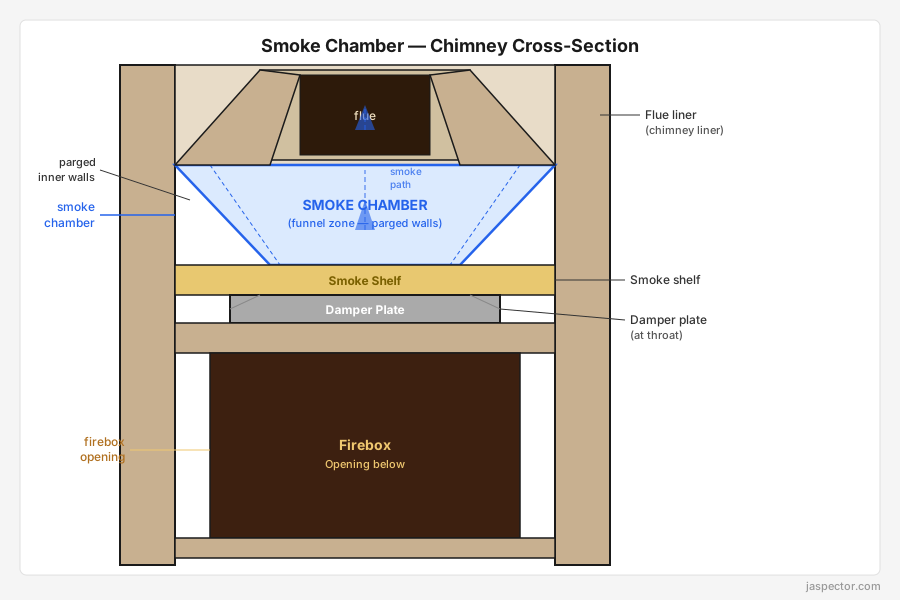
A smoke chamber is a funnel-shaped masonry cavity directly above a fireplace damper that compresses combustion gases and directs them upward into the narrower flue liner above.
What It Is
When combustion gases rise from the firebox, they pass through the throat at the damper and enter the smoke chamber. The chamber's sloped corbeled or parged walls narrow the opening from the full width of the firebox, typically 36 to 48 inches, to the smaller diameter of the flue liner above, typically 8 by 13 inches or 12 by 12 inches for a standard residential fireplace. This funnel shape accelerates the gas flow and helps maintain the draft that keeps smoke moving upward and out of the building.
The interior surfaces of the smoke chamber must be smooth and parged with refractory mortar rated for temperatures exceeding 1,800 degrees Fahrenheit so that turbulent edges do not disrupt airflow or create ledges where creosote can accumulate. NFPA 211, the standard for chimneys, fireplaces, and venting systems, requires that the smoke chamber walls be parged smooth with an insulating refractory mortar. Rough corbeled brick or deteriorated parging is a common cause of smoking problems, draft failure, and dangerous creosote buildup that increases chimney fire risk.
Types
Traditional corbeled smoke chambers are built by stepping each successive course of brick inward from both sides and from the rear wall until the opening narrows to the flue liner dimension. Each corbel step should not exceed 1 inch per course per NFPA 211 requirements. Poured or cast smoke chambers use a refractory castable material formed in place over a temporary mold, producing a smooth interior surface without the need for subsequent parging.
Prefabricated smoke chamber forms made of insulating refractory panels are available for new construction and provide a precision-shaped interior with consistent taper angles. In renovation work, spray-applied or trowel-applied UL-listed smoke chamber coating products, such as Chamber Tech 2000 or Smoktite, are used to resurface and seal deteriorated corbeled interiors.
Where It Is Used
Every conventional masonry fireplace has a smoke chamber between the damper and the bottom of the chimney flue liner. The chamber occupies the vertical space immediately above the throat, typically 12 to 24 inches tall, and transitions the wide firebox opening to the narrow flue. It is not visible from the room and can only be inspected by opening the damper and looking upward or by using a chimney-mounted video camera.
In Rumford-style fireplaces, which feature a taller, shallower firebox, the smoke chamber is proportionally narrower and the transition to the flue is more abrupt, making proper parging even more critical for draft performance.
How to Identify One
A chimney sweep or inspector can view the smoke chamber by opening the damper and looking upward with a flashlight or chimney camera. The tapered walls and the parging surface should be visible. On a well-maintained smoke chamber, the walls appear as smooth, light-colored refractory surfaces angling inward toward the flue opening at the top.
Spalled brick, cracked or missing parging, exposed corbeled steps with mortar ledges, or sections of mortar debris lying on the smoke shelf or in the firebox are signs of smoke chamber deterioration. Creosote glazing on rough surfaces indicates inadequate parging that is allowing combustion byproducts to accumulate in the chamber.
Replacement
The smoke chamber itself is rarely fully rebuilt unless the chimney is being reconstructed from the firebox up. More commonly, a deteriorated smoke chamber is repaired by applying a new layer of UL-listed smoke chamber parging compound over the existing surface, building up the interior to a smooth, code-compliant profile. This process typically involves wire brushing the existing surface, applying the refractory compound by trowel to a thickness of 1/2 to 1 inch, and smoothing the surface to eliminate ledges and rough spots.
The repair restores a smooth, heat-resistant interior without full demolition and can usually be completed in a single day by a certified chimney technician working through the damper opening. If the structural brick behind the parging is severely deteriorated or if the smoke chamber walls have shifted, partial or complete reconstruction of the chamber masonry may be necessary before resurfacing.
Frequently Asked Questions
Smoke Chamber — FAQ
- What does the smoke chamber do?
- It transitions the wide firebox opening into the narrower flue by funneling combustion gases upward. The tapered shape helps accelerate draft and prevents smoke from spilling back into the room.
- Why does a smoke chamber need to be smooth inside?
- Rough surfaces create turbulence that disrupts airflow, and ledges collect creosote. Smooth parged walls allow gas to move efficiently and reduce creosote accumulation.
- Can a damaged smoke chamber cause a house fire?
- Yes. Cracked or spalled smoke chamber walls can allow heat and combustion gases to reach combustible framing around the chimney. This is a recognized fire hazard that should be corrected before using the fireplace.
- Does smoke chamber repair require a permit?
- Parging an existing smoke chamber typically does not require a permit in most jurisdictions. Full chimney reconstruction or modifications to the firebox or flue generally do.
- How much does smoke chamber repair cost?
- Parging a standard smoke chamber runs approximately $400 to $1,000 depending on condition and access. Full reconstruction as part of a chimney rebuild costs significantly more.
Have a question about your project? Get personalized answers from our team — $9/mo.
MembershipAlso in Masonry
- Epoxy Anchor Anchors & Fasteners
- Masonry Anchor Anchors & Fasteners
- Wall Tie Anchors & Fasteners
- Arch Brick Brick Masonry
- Brick Ledge Brick Masonry
- Corbel Brick Masonry
- Face Brick Brick Masonry
- Tuckpointing Mortar Brick Masonry