Sill — definition, uses, identification, and replacement
A sill is the horizontal bottom member or ledge at the base of an opening or frame, commonly at a window or door.
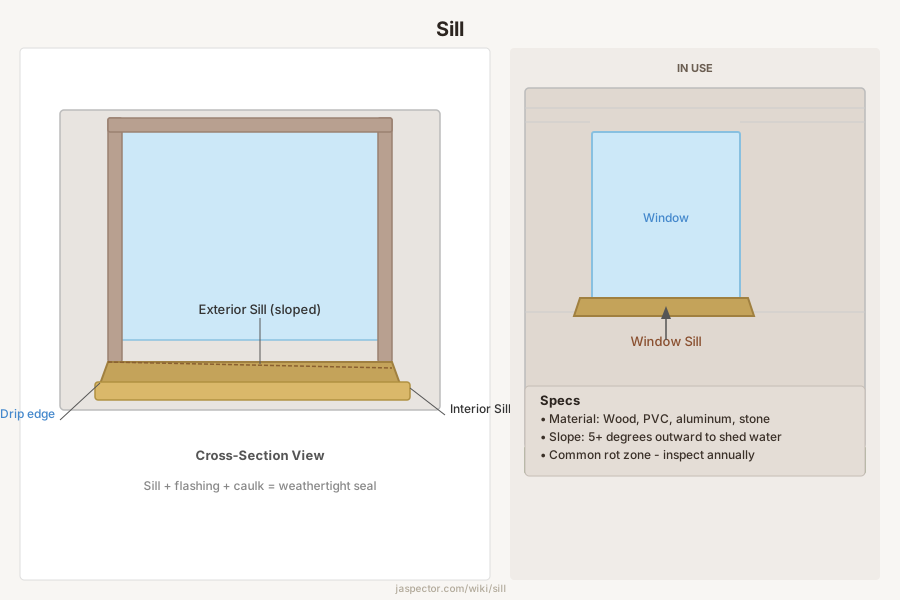
What It Is
In residential construction, sill can refer to the bottom piece of a window frame, the sloped interior or exterior ledge at the base of a window, or the rough-framing member under an opening. The common idea is that it forms the lower edge and helps support or direct water away from the opening.
Because the sill sits where water wants to collect, decay and leakage often start there first.
Types
Common forms include interior window sills, exterior sloped sills, rough-opening sill framing, and threshold-like bottom members at doors.
Where It Is Used
Sills are used at the bottom of windows and doors and at rough openings where the lower support member is part of the framing.
How to Identify One
Look for the bottom horizontal surface or member at the base of the opening. Water staining, soft wood, or peeling paint at this area are common clues.
Replacement
Replacement ranges from patching a damaged trim sill to rebuilding rotted framing and flashing at the opening.
Frequently Asked Questions
Sill — FAQ
- What does a sill do?
- A sill is the horizontal bottom member or ledge at the base of an opening or frame, commonly at a window or door. Sills are used at the bottom of windows and doors and at rough openings where the lower support member is part of the framing. In practical terms, it matters because in residential construction, sill can refer to the bottom piece of a window frame, the sloped interior or exterior ledge at the base of a window, or the rough-framing member under an opening. The common idea is that it forms the lower edge and helps support or direct water away from the opening.
- How can I tell if the sill needs attention?
- Soft spots, peeling paint, swelling, discoloration, or leaks below the opening are all sill-related warning signs. Look for the bottom horizontal surface or member at the base of the opening. Water staining, soft wood, or peeling paint at this area are common clues.
- Can a homeowner handle sill work, or should I call a pro?
- Minor trim-sill patching and repainting can be homeowner work. If the sill damage ties into hidden framing or flashing failure, the repair scope is larger than finish carpentry. If the issue involves hidden leaks, structural support, code compliance, or specialty tools, professional help is usually the better path.
- What should I match when buying a replacement sill?
- Match the material, profile, opening width, slope, and how the sill ties into flashing and trim. Taking the old part, measurements, or a manufacturer model number with you usually saves time and return trips.
Have a question about your project? Get personalized answers from our team — $9/mo.
MembershipAlso in Structural
- Access Panel Access & Openings
- Attic Hatch Access & Openings
- Construction Adhesive Adhesives & Sealants
- J-Bolt Anchorage
- Expansion Anchor Anchors & Fasteners
- Molly Bolt Anchors & Fasteners
- Baffle (Attic Rafter Vent) Attic & Roof
- Attic Hatch Cover Attic Access