Seam Tape - Membrane and Weather Barrier Joint Guide
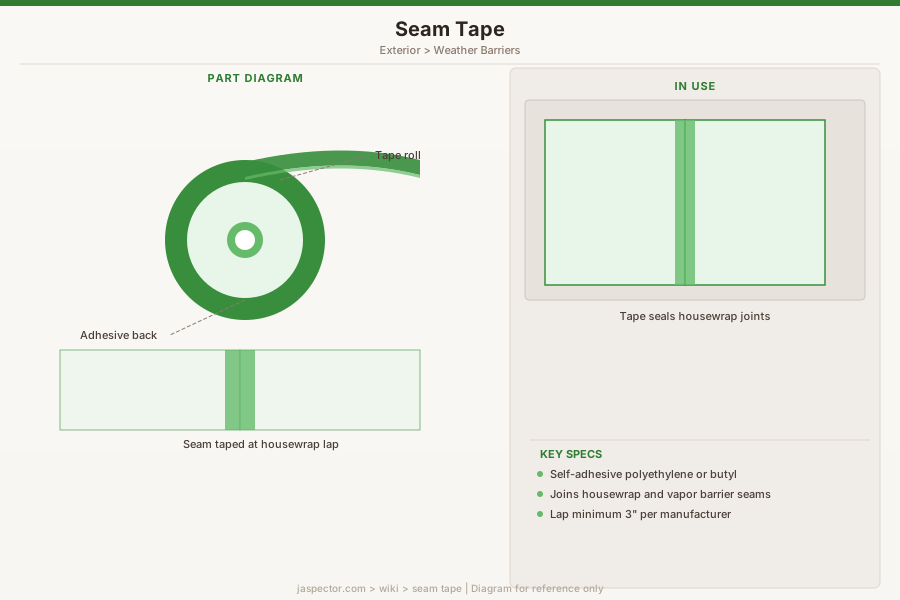
Seam tape is an adhesive tape used to seal joints between overlapping sheets of a building membrane, underlayment, or weather barrier.
What It Is
In construction, seam tape is used to close the gaps where two sheets of material meet so water, air, or vapor does not pass through the joint. The exact tape formulation varies by application, but the function is the same: preserve continuity across the seam.
Seam tape matters because many membrane systems fail first at laps and penetrations, not in the field of the sheet. A good weather barrier or roofing underlayment can perform badly if the wrong tape is used or if the surface is dirty when the seam is sealed.
Types
Housewrap and WRB seam tape is used to seal weather-resistive barrier laps on exterior walls.
Roofing membrane seam tape is used on systems such as modified bitumen, peel-and-stick membranes, and some synthetic underlayments.
Flashing and air barrier seam tape is formulated for specific substrates such as sheathing, foam board, or self-adhered membranes.
Where It Is Used
Seam tape is used on exterior wall weather barriers, roof underlayments, self-adhered flashing systems, air barriers, and some insulated sheathing products. It is typically found behind cladding or roofing rather than as a visible finish material.
How to Identify One
Seam tape is usually a narrow roll of pressure-sensitive adhesive tape installed over a lap joint. Product labels often specify compatible membranes, temperature range, and whether a primer is needed.
Replacement
Seam tape is replaced when it loses adhesion, wrinkles badly, peels away, or was installed on an incompatible substrate. The fix is usually to remove failed tape, clean and dry the surface, and apply the manufacturer-approved tape for that membrane system. Random tape substitutions are a common cause of repeat failure.
Frequently Asked Questions
Seam Tape — FAQ
- Can I use any construction tape as seam tape?
- No. Seam tape has to match the membrane or substrate it is intended for. Generic tape may stick at first and still fail early from temperature, UV exposure, or chemical incompatibility.
- Why is my seam tape peeling off?
- The usual causes are dust, moisture, cold installation temperatures, or the wrong tape for the material. If the substrate was not prepared correctly, even expensive tape can lose bond quickly.
- Is seam tape waterproof by itself?
- It is meant to make a seam water- and air-resistant as part of a larger assembly. It is not a substitute for correct laps, flashing, fastener detailing, and drainage design.
- Do I need to replace failed seam tape behind siding or roofing?
- If the failed tape is part of the weather barrier, yes, because open seams can let water or air reach the sheathing. Access may require removing cladding or roofing in the affected area.
- How long does seam tape last?
- Properly matched seam tape can last for years as part of a concealed assembly. Exposure before cladding, poor surface prep, and incompatible materials shorten service life fast.
Have a question about your project? Get personalized answers from our team — $9/mo.
MembershipAlso in Exterior
- Extension Ladder Access & Safety
- Concealed Hinge Cabinet Hardware
- Board and Batten Cladding
- EIFS (Exterior Insulation Finish System) Cladding
- Hardboard Siding Cladding
- Shake Siding Cladding
- Siding Cladding
- Stone Veneer Cladding