Run Capacitor - HVAC Motor Electrical Part Repair Guide
A run capacitor is an electrical component that stays in a motor circuit continuously to improve running efficiency, torque, and power factor while the motor is operating.
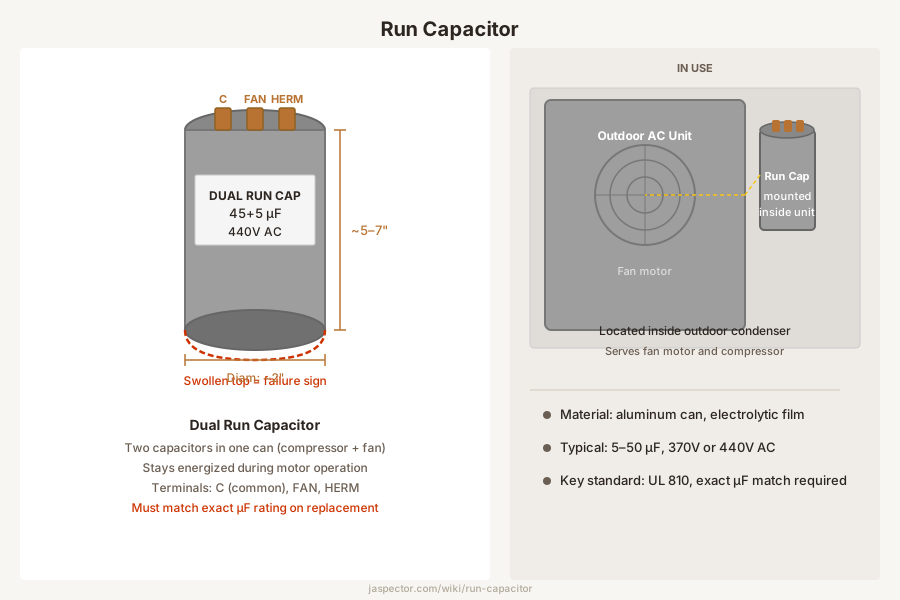
What It Is
A run capacitor is different from a start capacitor because it remains energized during normal operation instead of giving only a brief startup boost. In residential systems, it is most commonly found in air conditioner condensers, heat pumps, condenser fan motors, blower motors, and some well pumps. The capacitor creates a phase shift in the motor's auxiliary winding that produces a rotating magnetic field, which keeps the motor turning smoothly and efficiently.
Run capacitors are rated in microfarads (uF) and volts. Common residential values range from 5 uF for small fan motors to 60 uF or more for compressor motors, with voltage ratings of 370V or 440V AC. The microfarad rating must match the motor manufacturer's specification exactly, because a wrong value changes the motor's electrical characteristics and can cause overheating, reduced efficiency, or premature failure.
When a run capacitor weakens, the motor may still run but will draw more current, run hotter, and lose efficiency. That is why a failing run capacitor often shows up as a slow outdoor fan, a hard-starting compressor, audible humming, or repeated thermal overload tripping.
Types
Single run capacitors serve one motor, such as a condenser fan motor or a blower motor. They have two terminals and a single microfarad rating printed on the label.
Dual run capacitors combine two capacitors in one cylindrical can and are the most common type in outdoor condensing units. One section serves the compressor and the other serves the fan motor. The can has three terminals labeled C (common), FAN, and HERM (hermetic compressor). If either section fails, the entire dual capacitor is usually replaced.
Where It Is Used
Run capacitors are used in HVAC condensing units, heat pumps, furnace blower assemblies, air handlers, exhaust fans, and some pump motors. The most familiar residential example is the dual run capacitor inside an outdoor AC unit, typically mounted near the contactor and wired to both the compressor and the condenser fan motor.
In furnace and air handler applications, a single run capacitor supports the blower motor that moves air through the duct system. Older single-phase motors in pool pumps, well pumps, and commercial exhaust fans also rely on run capacitors for continuous operation.
How to Identify One
A run capacitor is usually a cylindrical or oval metal can mounted inside an equipment compartment with a bracket or strap. The label shows the capacitance in microfarads (uF), the voltage rating (370V or 440V), and the manufacturer's part number. Dual run capacitors are marked with three terminals: C, FAN, and HERM. Single run capacitors have two terminals or two wire leads.
A swollen or bulged top is the most recognizable sign of failure, caused by internal gas buildup from dielectric breakdown. Other failure indicators include leaking oil at the base or terminals, rust at the crimp seam, a cracked plastic insulator, or a capacitance reading more than 6 percent below the labeled value when tested with a multimeter. A completely failed capacitor will read zero or near-zero microfarads.
Replacement
A run capacitor must be replaced with the exact microfarad rating and an equal or higher voltage rating. A 440V capacitor can replace a 370V unit of the same microfarad value, but not the other way around. The microfarad value directly affects motor winding current and operating temperature.
Because the part can retain a dangerous electrical charge even after power is shut off, replacement should be done with proper lockout, capacitor discharge using an insulated resistor or discharge tool, and meter verification that the terminals read zero volts before handling. The wires must be reconnected to the correct terminals, especially on dual capacitors where swapping HERM and FAN leads will send the wrong capacitance to each motor. In most homes this is an HVAC service task rather than a casual DIY repair.
Frequently Asked Questions
Run Capacitor — FAQ
- What is the difference between a run capacitor and a start capacitor?
- A start capacitor gives a motor a brief high-torque boost during startup and then drops out of the circuit via a relay or centrifugal switch. A run capacitor stays in the circuit continuously while the motor operates and helps it run efficiently at the correct torque and power factor.
- How do I know if a run capacitor is bad?
- Common signs are a humming motor, a slow or stalled condenser fan, compressor overheating, or an outdoor unit that struggles to start. A bulged case or leaking oil is a strong visual clue, but the reliable check is a capacitance test with a multimeter with the power off and the capacitor discharged.
- Can I replace a run capacitor myself?
- The part itself is inexpensive and widely available, but the work is not risk-free because the equipment contains high-voltage components and the capacitor can hold a charge after power is removed. Safe replacement requires the exact microfarad rating, proper discharge procedure, and correct terminal wiring.
- Why does my AC keep failing run capacitors?
- Repeated failures usually point to excessive heat inside the equipment compartment, utility overvoltage, a failing motor drawing abnormal current, or physical vibration loosening connections. Replacing the capacitor without diagnosing the underlying cause often leads to another failure within months.
- How long does a run capacitor last?
- Many run capacitors last 8 to 15 years under normal conditions, but lifespan drops sharply in hot equipment compartments, coastal salt-air environments, and systems that run long cycles. In residential HVAC, capacitor failure is common enough that technicians treat it as a routine wear item during seasonal maintenance.
Have a question about your project? Get personalized answers from our team — $9/mo.
MembershipAlso in HVAC
- Air Handler Air Distribution
- Register Air Distribution
- Return Air Grille Air Distribution
- HVAC Filter Air Filtration
- Heat Strip Air Handler Components
- Heating Coil Air Handler Components
- Furnace Blower Air Movement
- Air Filter (HVAC) Air Quality & Filtration