Round Box — Circular Electrical Ceiling Box Explained
A round box is a circular electrical box used primarily for mounting ceiling light fixtures, wall-mounted devices, and junction points in residential and commercial wiring.
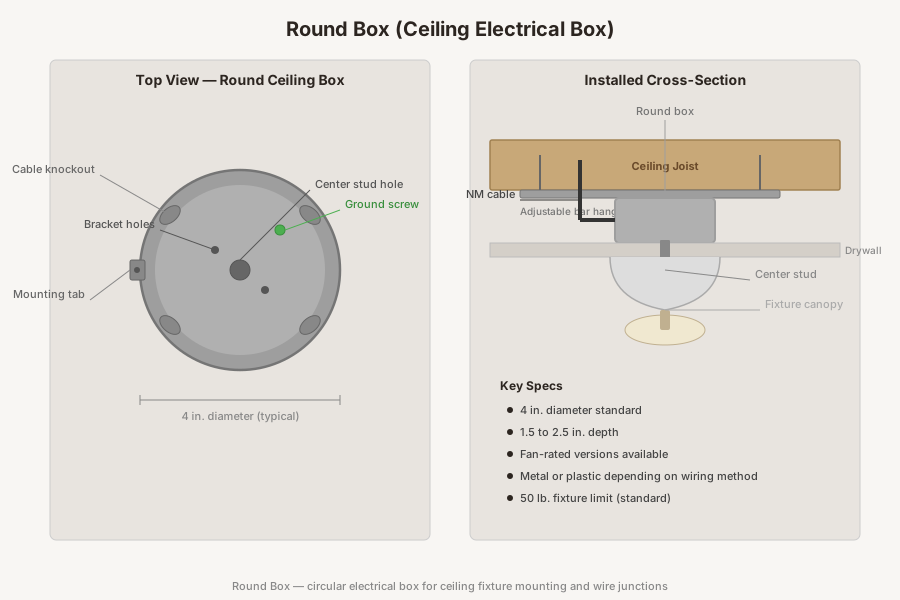
What It Is
A round box, also called a round ceiling box, is a circular metal or plastic electrical enclosure designed to house wiring connections and support light fixtures. It attaches to framing with nails, screws, or an adjustable bar hanger and provides a mounting point for the fixture canopy via a center stud or mounting bracket. Per NEC Article 314, the box must be rated for the weight of the fixture it supports and must have sufficient volume for the number of conductors it contains.
The internal volume of a round box is calculated according to NEC Table 314.16(A), and each conductor entering the box counts toward the fill allowance based on its gauge. A 14 AWG conductor requires 2.0 cubic inches of box volume, while a 12 AWG conductor requires 2.25 cubic inches. Overfilling a box creates unsafe conditions by crowding wire connections and generating heat.
Types
Standard round boxes are typically four inches in diameter and one-and-a-half to two-and-a-half inches deep, providing approximately 8 to 15.5 cubic inches of volume depending on depth. Shallow pancake-style rounds are only 1/2 inch deep and offer limited volume, making them suitable for retrofit situations where ceiling depth is restricted and only two conductors are present.
Fan-rated round boxes are reinforced with heavier gauge steel and listed to support ceiling fan loads of up to 70 pounds, including the dynamic forces generated by an operating fan. Metal round boxes are required when the wiring method involves armored cable (AC), metal-clad cable (MC), or conduit. Plastic nonmetallic round boxes are acceptable with NM cable in many residential applications where local code permits their use.
Where It Is Used
Round boxes are installed on ceilings and walls wherever a light fixture, smoke detector, or junction point is needed. Common residential locations include bedroom ceilings, hallway ceilings, closets, porches, bathrooms, and covered outdoor areas. In commercial buildings, round boxes serve as junction points in accessible ceiling spaces and as mounting locations for emergency lighting and exit signs.
In new construction, round boxes are typically nailed to ceiling joists before drywall installation. In remodel work, old-work round boxes with swing-out clamps or bar hangers that slide between joists are used to add fixture locations without opening the entire ceiling.
How to Identify One
A round box is circular when viewed from the front, distinguishing it from octagonal, square, or rectangular boxes. It has knockouts for cable entry around the perimeter and a center hole or bracket for fixture mounting. Behind a ceiling canopy, the round shape and mounting hardware are visible when the fixture is removed.
The box will have a UL listing label stamped or printed on the interior surface indicating its volume, maximum fixture weight rating, and whether it is listed for fan support. If no fan-rating label is present, the box should not be used to mount a ceiling fan.
Replacement
Replace a round box when it is physically damaged, undersized for the conductor count, or not rated for the fixture load being installed. Upgrading to a fan-rated box is required before installing a ceiling fan on a circuit that previously supported only a light fixture. The NEC does not permit mounting a fan to a box that lacks a fan-support listing, regardless of how securely the box appears to be attached to the framing.
When replacing a round box in a finished ceiling, an old-work fan-rated brace bar that expands between joists from inside the existing hole is the standard approach. The replacement box attaches to the brace and supports the new fixture without requiring access from above.
Frequently Asked Questions
Round Box — FAQ
- Can I hang a ceiling fan from a round box?
- Only if the round box is specifically listed and rated for ceiling fan support. Standard light fixture boxes are not strong enough for the weight and dynamic load of a fan and must be replaced with a fan-rated box.
- What is the difference between a round box and an octagonal box?
- An octagonal box has eight sides and is the most common ceiling fixture box in residential work. A round box is truly circular. Both serve similar purposes, but octagonal boxes are more widely stocked and may offer different mounting options.
- How much weight can a round ceiling box support?
- Standard round boxes are typically rated for fixtures up to 50 pounds when properly secured to framing. The exact rating is listed on the box or its packaging, and exceeding it risks the fixture falling.
- Do I need a metal or plastic round box?
- Metal boxes are required when using metal-sheathed cable or conduit wiring methods and in some jurisdictions for all fixture installations. Plastic boxes are acceptable with NM cable in many residential applications where permitted by local code.
- How do I secure a round box between joists?
- An adjustable bar hanger spans between joists and supports the box at any point along its length. The bar nails or screws to the joists, and the box attaches to a sliding bracket on the bar.
Have a question about your project? Get personalized answers from our team — $9/mo.
MembershipAlso in Electrical
- Range Outlet Appliance Circuits
- Appliance Whip Appliance Connections
- Dishwasher Cord Appliance Connections
- Dryer Cord Appliance Connections
- Range Cord Appliance Connections
- Generator Backup Power
- Transfer Switch Backup Power
- Box Cover