Retaining Wall — Soil-Holding Landscape Structure Guide
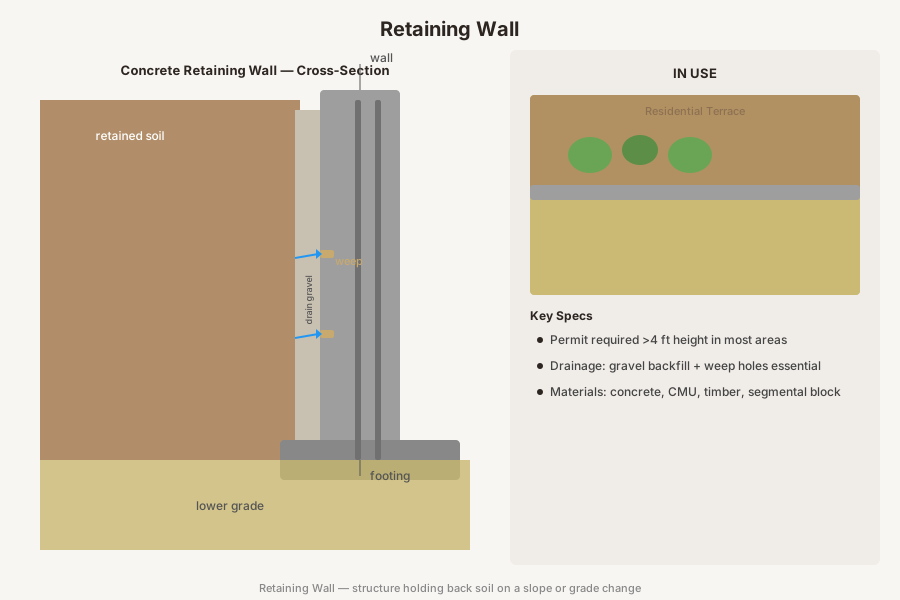
A retaining wall is a structure built to hold back soil where the ground changes elevation.
What It Is
Unlike a decorative garden border, a true retaining wall resists lateral earth pressure and often water pressure as well. Its performance depends on footing support, drainage, backfill, wall geometry, and the amount of surcharge load above it.
Types
Common types include gravity block walls, poured-concrete walls, cantilevered reinforced walls, timber walls, stone walls, and segmental block systems with geogrid reinforcement. The higher the wall, the more important engineered design becomes.
Where It Is Used
Retaining walls are used along sloped yards, driveways, walkouts, planters, hillside homes, and terraced landscaping. They also appear where grade must be held back from a structure, patio, or property edge.
How to Identify One
Look for a wall that is actively holding higher soil on one side. Leaning, bulging, open joints, soil washing out at the base, clogged drains, or cracking in the wall face are warning signs that the wall is overstressed or poorly drained.
Replacement
Replacement or major repair usually requires correcting drainage and base support, not just rebuilding the visible face. Walls that affect structures, steep slopes, or neighboring properties should be assessed carefully before any excavation begins.
Frequently Asked Questions
Retaining Wall — FAQ
- Why do retaining walls fail?
- Poor drainage is one of the biggest causes because trapped water adds weight and pressure behind the wall. Inadequate footing support, missing reinforcement, tree roots, and surcharge loads from driveways or vehicles also contribute. Failure often starts gradually with leaning or cracking before the wall gives way more seriously.
- Can a leaning retaining wall be pushed back into place?
- Usually not as a lasting repair. Once a wall has moved, the underlying issues with drainage, footing, or reinforcement still remain. Superficial straightening without rebuilding the support system is rarely durable.
- Do retaining walls need drainage pipes?
- Many do, especially walls that hold back significant soil height. Drainage stone, filter fabric, and weep paths reduce hydrostatic pressure behind the wall. Without them, even a well-built wall can fail early.
- When should I call an engineer for a retaining wall?
- If the wall is tall, near a building, supporting a driveway, leaning noticeably, or showing major cracking, engineering input is wise. Local rules also often require design for walls above certain heights. That is especially true where failure could affect adjacent property.
Have a question about your project? Get personalized answers from our team — $9/mo.
MembershipAlso in Landscaping
- Erosion Mat Erosion Control
- Berm Grading & Drainage
- Landscape Fabric Ground Cover
- Landscape Pin Ground Cover
- Pea Gravel Ground Cover & Aggregate
- Edging Board Hardscaping
- Flagstone Hardscaping
- Paver Hardscaping