Railing — Stair, Deck, and Guard Safety System Guide
A railing is a protective barrier or graspable rail installed along stairs, decks, balconies, and other edges to improve safety and prevent falls.
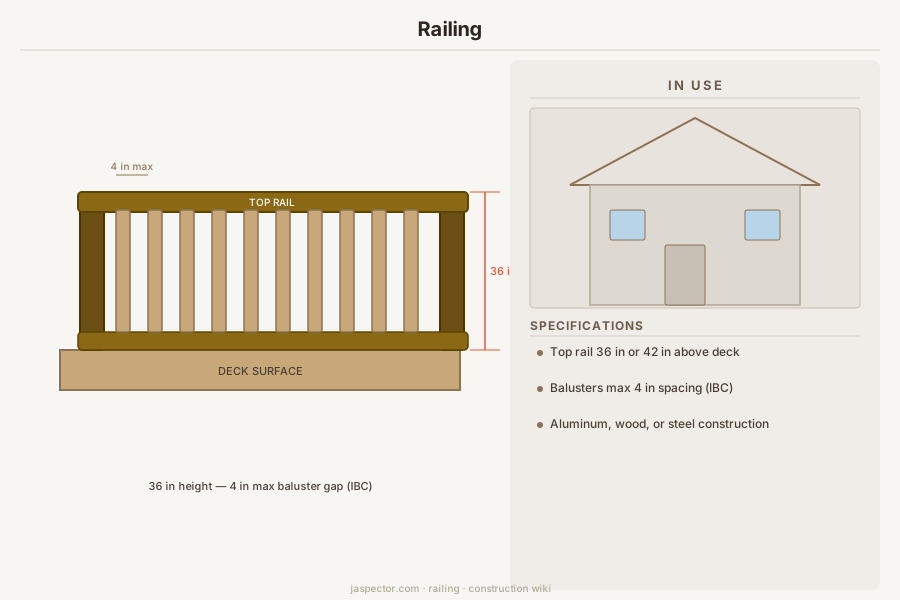
What It Is
In residential construction, railing can refer to the full guard or stair rail assembly, including posts, rails, and infill. Its job is to resist lateral force, provide a handhold where required, and keep openings small enough to reduce fall risk.
Types
Common types include interior stair railings, deck guardrails, porch railings, wall-mounted handrails, cable rail systems, glass guardrails, and metal or wood picket assemblies. Some are primarily graspable handrails, while others function as guards at open edges.
Where It Is Used
Railings are used anywhere there is a change in elevation that creates a fall hazard or where building code requires a handhold on stairs. You see them on stair runs, landings, decks, porches, balconies, lofts, and ramps.
How to Identify One
Look for a continuous rail or barrier mounted at the edge of a walking surface or along a stair. Loose posts, rotted bottom rails, wobble when pushed, oversized openings, or peeling coatings on exterior systems all suggest repair is needed.
Replacement
Replacement may involve one damaged section or the entire assembly if posts, anchorage, and spacing are no longer code-compliant. Exterior railings often fail first at fasteners and post bases, so those areas deserve close inspection before cosmetic work.
Frequently Asked Questions
Railing — FAQ
- What is the difference between a handrail and a guardrail?
- A handrail is the graspable part you hold while using stairs. A guardrail is the larger protective barrier that prevents falls from an open side. Many residential stair assemblies include both functions in one coordinated system.
- How do I know if my deck railing is unsafe?
- Push on the top rail and posts firmly; there should not be obvious sway or looseness. Check for rot at post bases, rusted connectors, and gaps wide enough for a child to slip through. Any movement at the ledger or stair connection also deserves prompt attention.
- Can I just replace a few balusters or one loose section?
- Sometimes yes, if the posts and anchors are still sound and the repair keeps spacing and height compliant. If multiple parts are loose, the problem is often deeper than the visible damaged piece. In that case, replacing the whole assembly can be the safer and more durable option.
- Do railing repairs usually require a permit?
- Minor repairs sometimes do not, but full replacement often does because the finished assembly must meet current code. Local rules vary, especially for decks and exterior stairs. It is worth checking before ordering custom parts.
Have a question about your project? Get personalized answers from our team — $9/mo.
MembershipAlso in Structural
- Access Panel Access & Openings
- Attic Hatch Access & Openings
- Construction Adhesive Adhesives & Sealants
- J-Bolt Anchorage
- Expansion Anchor Anchors & Fasteners
- Molly Bolt Anchors & Fasteners
- Baffle (Attic Rafter Vent) Attic & Roof
- Attic Hatch Cover Attic Access