Rafter — Sloped Roof Framing Member Explained Guide
A rafter is a sloped structural framing member that runs from the roof ridge down toward the exterior wall to support the roof.
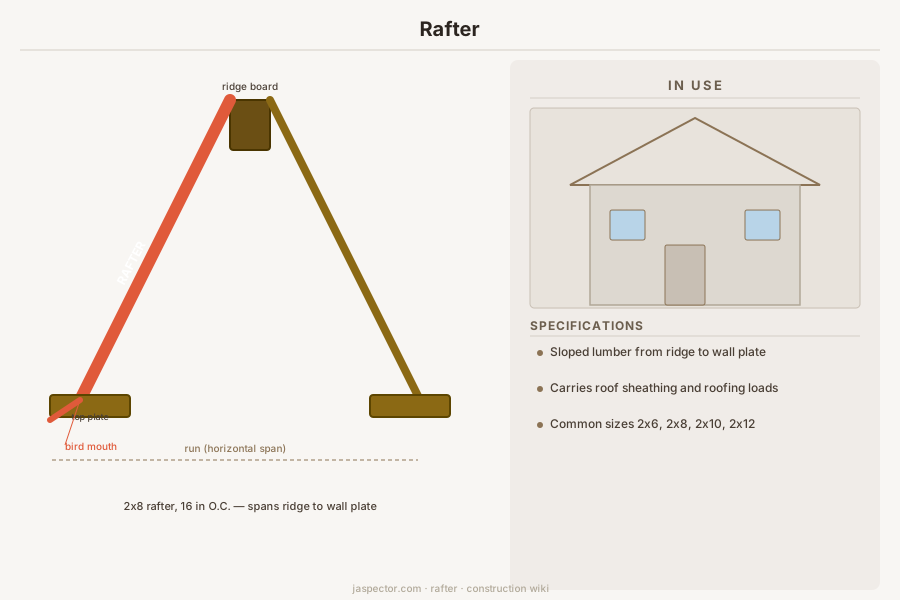
What It Is
Rafters form the skeleton of many pitched roofs. They carry the weight of roof sheathing, roofing, snow, and wind loads down to the walls below.
Types
Common forms include dimensional-lumber rafters, engineered rafters, and paired rafters joined at a ridge board. Some roofs also use hip rafters, valley rafters, and jack rafters for more complex roof shapes.
Where It Is Used
Rafters are used in stick-framed roofs over houses, garages, porches, and additions. They are found above the ceiling plane in attics or vaulted ceilings and are visible from below in some exposed-framing designs.
How to Identify One
In an attic, a rafter is the repeating sloped member under the roof deck, distinct from horizontal ceiling joists or trusses. Sagging roof lines, cracks, insect damage, rot at the eaves, or field cuts that weaken the lumber are warning signs.
Replacement
Replacement or repair usually involves sistering damaged lumber, correcting the cause of moisture intrusion, and restoring load paths at the ridge and wall plate. Because rafters are structural, significant damage should be evaluated before finishes or roofing are replaced.
Frequently Asked Questions
Rafter — FAQ
- What is the difference between a rafter and a truss?
- A rafter is one member in a site-built roof frame, while a truss is a factory-built engineered assembly made of many members. Rafters allow more open attic alterations, but they rely on ridge, collar, and ceiling framing working together. Trusses generally should not be cut without engineering.
- Can a cracked rafter be repaired?
- Often yes, especially if the crack is limited and the roof has not deformed badly. A contractor may sister new lumber alongside the damaged section and fasten it to sound framing. The repair has to address the cause, such as a roof leak or overload, or the problem will return.
- Why do rafters rot near the edge of the roof?
- The ends near the eaves are where roof leaks, ice dams, and poor ventilation often show up first. Wet insulation and blocked soffit vents can keep that area damp for long periods. Once rot starts, the wood loses strength and usually needs repair rather than surface treatment alone.
- Do rafters matter during a reroof?
- Yes. Exposed framing during reroofing makes it easier to spot sagging, insect damage, or rot before new materials cover the problem again. If the framing is compromised, fixing it first protects the new roof investment and helps the roof deck stay flat.
Have a question about your project? Get personalized answers from our team — $9/mo.
MembershipAlso in Structural
- Access Panel Access & Openings
- Attic Hatch Access & Openings
- Construction Adhesive Adhesives & Sealants
- J-Bolt Anchorage
- Expansion Anchor Anchors & Fasteners
- Molly Bolt Anchors & Fasteners
- Baffle (Attic Rafter Vent) Attic & Roof
- Attic Hatch Cover Attic Access