PSL (Parallel Strand Lumber) — Beam Uses and Replacement
A PSL (parallel strand lumber) is an engineered wood beam made from long veneer strands bonded with adhesive under heat and pressure, all oriented parallel to the length of the beam.
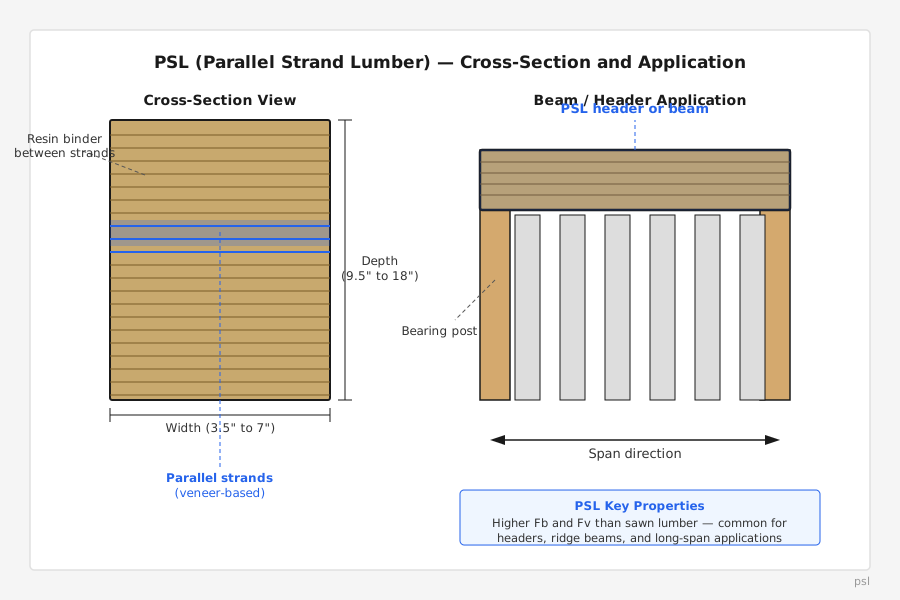
What It Is
Parallel strand lumber is manufactured by slicing Douglas fir or southern yellow pine veneer into strands approximately 1/2 inch wide and up to 8 feet long, coating them with waterproof structural adhesive, and pressing them into billets under high heat and pressure with all strands running parallel to the long axis. This orientation gives PSL very high bending strength (Fb values typically 2,900 psi) and shear strength compared to sawn lumber of the same dimension.
Billets are produced in large cross-sections, commonly up to 7 inches wide and 18 inches deep, and can be cut to custom lengths at the mill. The manufacturing process eliminates the natural defects found in sawn lumber, such as knots, slope of grain, and checks, resulting in consistent and predictable engineering properties that allow tighter design margins.
Types
PSL is one of several structural composite lumber products. Related products include LVL (laminated veneer lumber), LSL (laminated strand lumber), and OSL (oriented strand lumber). Among structural composite lumber products, PSL typically has the highest bending and shear values, making it the preferred choice for long-span beams and headers carrying heavy loads.
Standard PSL products include Parallam PSL from Weyerhaeuser, which is the most widely available brand. Column-grade PSL is manufactured in square or near-square cross-sections for use as load-bearing posts. Beam-grade PSL is produced in rectangular cross-sections optimized for bending. Some manufacturers offer fire-retardant-treated PSL for applications where a 1-hour or 2-hour fire rating is required without enclosure in gypsum.
Where It Is Used
PSL is commonly used as ridge beams in cathedral ceiling construction, main carrying beams spanning basement or crawl space widths, long-span headers over garage doors and wide window openings, columns and posts supporting concentrated loads, and exposed beams in timber-frame and heavy-timber style construction where the distinctive flecked appearance is an aesthetic feature.
In residential remodeling, PSL beams are frequently specified when removing a load-bearing wall to create an open floor plan, because their high allowable bending stress allows shorter beam depths that maintain headroom. A 5-1/4-by-11-7/8-inch PSL beam can often replace a much deeper sawn-lumber built-up beam in the same application.
How to Identify One
PSL has a distinctive dense, flecked appearance with long parallel strands visible on cut ends and faces. It is darker and denser than LVL, which has a plywood-like laminated face with visible veneer plies. The surface of PSL looks like tightly packed wood splinters running in one direction, giving it a unique texture unlike any other engineered wood product.
Grade stamps and span tables are printed on or stapled to the member. The stamp includes the manufacturer name, product designation, allowable design values, and the evaluation report number from the code agency. PSL is noticeably heavier than sawn lumber of the same dimensions, weighing approximately 3.5 pounds per board foot.
Replacement
Replace PSL when it shows checking or end splits deeper than 1/4 of the member depth, delamination of the strand layers, crushing at bearing points, or structural failure signs such as visible deflection beyond allowable limits. Replacement members must match the original design values; size alone is not sufficient. Verify grade, Fb, and modulus of elasticity (E) with the engineer of record or a published span table.
When replacing a PSL beam, temporary shoring must support all loads above before the existing member is removed. The new beam must bear on adequate support at each end, with bearing length calculated per the manufacturer tables to prevent crushing at the reaction points.
Frequently Asked Questions
PSL (Parallel Strand Lumber) — FAQ
- What is the difference between PSL and LVL?
- Both are engineered wood beams but manufactured differently. LVL is made from rotary-peeled veneer plies glued together like plywood oriented end-to-end. PSL is made from long parallel strands and typically has higher bending and shear capacity. PSL also tends to be denser and heavier.
- Can PSL be used outdoors?
- Standard PSL is rated for dry-service conditions. Exposed or wet-service applications require products specifically rated for that exposure. Untreated PSL should not be left exposed to weather without protection.
- How far can a PSL beam span?
- Span depends on depth, width, load, and spacing. PSL is often chosen precisely because it can span farther than sawn lumber of the same depth. Always use published span tables or have an engineer size the member for the specific load condition.
- Does PSL need to be painted or sealed?
- PSL does not require paint for structural performance in dry interior conditions. However, it will absorb moisture if exposed and can develop surface checks over time. Many builders seal cut ends on-site and prime or paint it if aesthetics matter.
- Is PSL more expensive than LVL?
- Yes, PSL typically costs more per linear foot than LVL of comparable dimensions because of its more complex manufacturing process. It is specified when the higher design values justify the cost, such as long spans or heavy loads where LVL would require a deeper or wider section.
Have a question about your project? Get personalized answers from our team — $9/mo.
MembershipAlso in Structural
- Access Panel Access & Openings
- Attic Hatch Access & Openings
- Construction Adhesive Adhesives & Sealants
- J-Bolt Anchorage
- Expansion Anchor Anchors & Fasteners
- Molly Bolt Anchors & Fasteners
- Baffle (Attic Rafter Vent) Attic & Roof
- Attic Hatch Cover Attic Access