Porcelain Tile — Home Identification and Replacement Guide
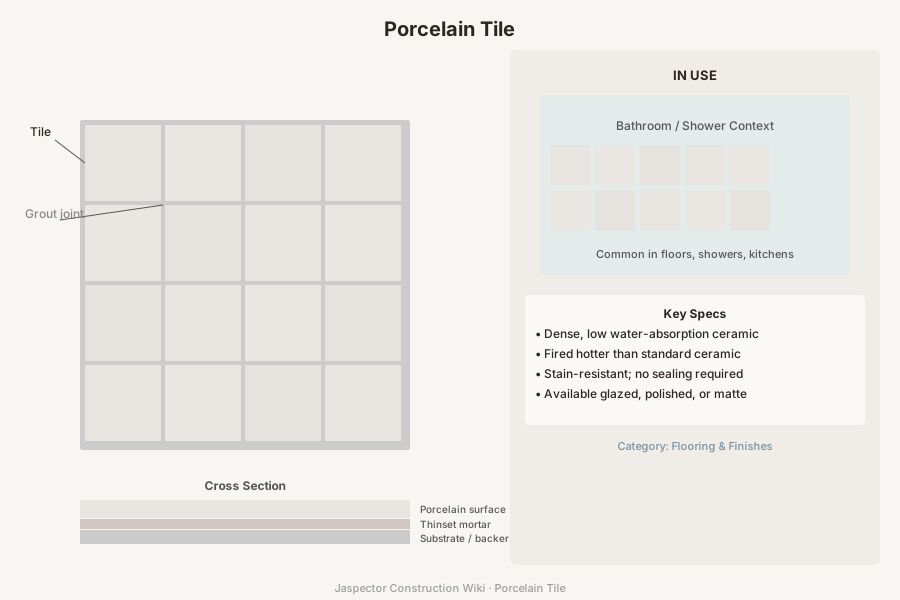
Porcelain tile is a dense ceramic tile fired at high temperature to create a hard, low-absorption surface for floors, walls, and wet areas.
What It Is
Porcelain uses refined clay blends fired hotter than many standard ceramic tiles. The result is a durable, stain-resistant surface that performs well in bathrooms, kitchens, and other demanding locations.
Types
Common types include glazed porcelain, unglazed porcelain, polished porcelain, through-body porcelain, and exterior-rated porcelain pavers. Surface texture and slip resistance vary significantly by product.
Where It Is Used
Porcelain tile is used on bathroom floors, shower walls, kitchen floors, entryways, backsplashes, and some patios. Its low water absorption makes it useful in wet and freeze-prone settings when rated for the application.
How to Identify One
Porcelain tile usually feels dense and hard, with clean cut edges and minimal water absorption. Packaging or box markings often identify it specifically as porcelain rather than standard ceramic.
Replacement
Replace porcelain tile when pieces crack, loosen, chip badly, or sound hollow because the bond below has failed. In wet areas, the substrate and waterproofing should be checked before assuming the tile is the only issue.
Frequently Asked Questions
Porcelain Tile — FAQ
- What does porcelain tile do?
- Porcelain Tile is used to provide a durable hard finish on floors, walls, and wet-area surfaces. In a home, it matters because tile failure can point to substrate movement or moisture issues below the surface.
- Where is porcelain tile usually found?
- It is usually found on bathroom floors, showers, kitchens, entries, and some exterior-rated patio surfaces. Homeowners most often notice it when inspecting or repairing the surrounding system.
- How do I know if porcelain tile needs replacement?
- Replacement is usually needed when tiles crack, loosen, or repeatedly fail because the bond underneath is compromised. Visible wear, leaks, movement, or poor performance are the usual warning signs.
- Can I repair or replace porcelain tile myself?
- Small tile replacements are possible for careful homeowners, but matching finish and fixing the underlying cause matter most. If the work affects concealed plumbing, gas, structural support, roofing, or electrical controls, hiring the right pro is the safer path.
Have a question about your project? Get personalized answers from our team — $9/mo.
MembershipAlso in Exterior
- Extension Ladder Access & Safety
- Concealed Hinge Cabinet Hardware
- Board and Batten Cladding
- EIFS (Exterior Insulation Finish System) Cladding
- Hardboard Siding Cladding
- Shake Siding Cladding
- Siding Cladding
- Stone Veneer Cladding