Pipe Boot — Home Identification and Replacement Guide
A pipe boot is the flashing collar that seals around a roof pipe penetration to prevent rain, snowmelt, and debris from entering the building where the pipe passes through the roof deck.
What It Is
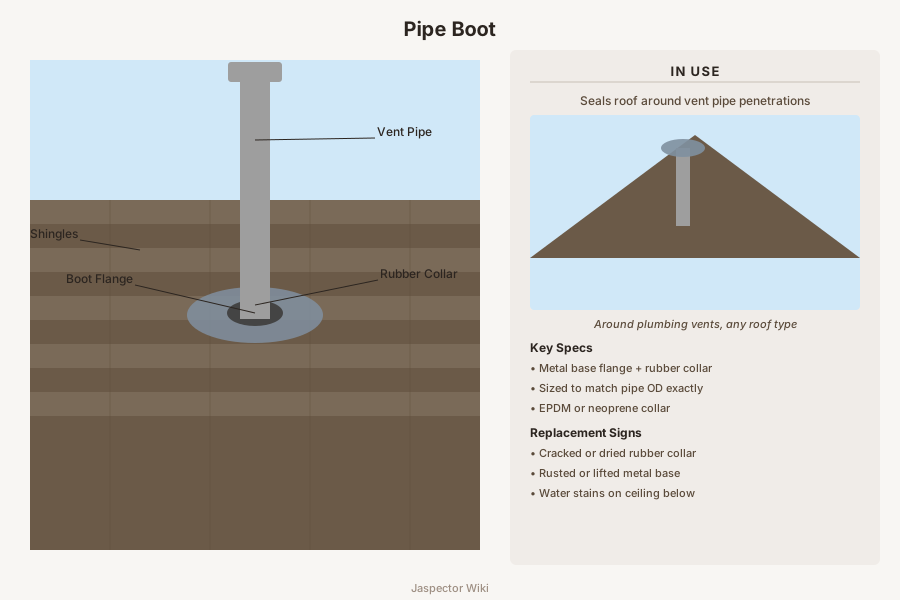
A pipe boot consists of two main parts: a flexible or formed sleeve that grips the pipe and a flat base flange that integrates with the surrounding roofing material. The sleeve seals around the pipe diameter, while the base flange tucks under the upslope shingles and lays over the downslope shingles so water sheds across it without finding a path inside.
The boot is one of the most failure-prone points on a residential roof because the flexible material is constantly exposed to UV radiation, temperature cycling, and stress where the rigid pipe meets the moving roof deck. A typical neoprene boot lasts 10 to 15 years, often much shorter than the shingles around it, meaning boots frequently need replacement during a roof's lifetime.
Types
Neoprene pipe boots are the most common and least expensive option, with a rubber cone over a galvanized or aluminum base flange. They work well for standard plumbing vent stacks where pipe temperatures stay below about 180 degrees Fahrenheit, but the neoprene degrades quickly in direct sun.
Silicone pipe boots have superior UV and heat resistance and are used around furnace or water heater exhaust flues or in climates with intense sun exposure. They cost more but can last two to three times longer than neoprene.
All-metal roof jacks use a soft lead collar hand-formed around the pipe. The lead conforms to the diameter and is very durable, though it must be installed carefully to avoid cracking.
Retrofit split boots slide around an existing pipe without removing it or lifting shingles. They split open on one side, wrap around the pipe, and bond with adhesive. While convenient, they generally do not last as long as a one-piece boot.
Where It Is Used
Pipe boots are found around plumbing vent stacks, the most common roof penetration on residential buildings. A typical house has two to five vent pipes, each requiring its own boot. They also appear around mechanical exhaust pipes and radon mitigation pipes.
Pipe boots are used on asphalt shingle, metal, tile, and low-slope membrane roofs, though the installation method varies by material. On metal roofs, the flange must account for panel ribs and thermal movement. On flat roofs, the boot integrates with the membrane system rather than shingle courses.
How to Identify One
From the ground, look for pipes protruding from the roof, each surrounded by a cone-shaped rubber or metal collar with a flat base. Binoculars help spot signs of failure. Cracked, dried, or curled rubber is the most common visible problem. Lifted base edges, rust stains, and gaps where the collar has pulled away from the pipe are also warning signs.
From the attic, a failing boot shows up as water stains, damp insulation, or daylight visible around the penetration. The leak may appear away from the pipe since water can travel along framing before dripping.
Replacement
Replace a pipe boot when the rubber splits, hardens, or pulls away from the pipe, or when the metal base rusts through. Replacement involves lifting the surrounding shingles, removing the old boot, sliding the new one over the pipe, and weaving the flange back into the shingle courses. The upslope shingles must overlap the top of the flange, and the flange must overlap the downslope shingles.
Roofing sealant is applied to nail heads and flange edges but should not serve as the primary waterproofing. Because this work requires safe roof access and correct flashing technique, many homeowners hire a roofer for the job.
Frequently Asked Questions
Pipe Boot — FAQ
- What does pipe boot do?
- Pipe Boot is used to seal the roof opening around a vent or pipe penetration. In a home, it matters because a small flashing failure at the roof can lead to hidden attic or ceiling water damage.
- Where is pipe boot usually found?
- It is usually found on the roof around plumbing vent pipes and similar penetrations. Homeowners most often notice it when inspecting or repairing the surrounding system.
- How do I know if pipe boot needs replacement?
- Replacement is usually needed when the boot cracks, rusts, or visibly pulls away from the pipe or roofing. Visible wear, leaks, movement, or poor performance are the usual warning signs.
- Can I repair or replace pipe boot myself?
- Mechanically, replacing a pipe boot is straightforward, but safe roof access and correct shingle integration are the real challenges. If you are comfortable working on the roof and can properly weave the flange into the shingle courses, it is a manageable repair. Otherwise, a roofer can typically handle it in under an hour.
- How long does a pipe boot last?
- A standard neoprene pipe boot lasts roughly 10 to 15 years depending on sun exposure and climate. Silicone boots can last 20 years or more. Because the boot often wears out well before the surrounding shingles, it should be inspected periodically even on a newer roof.
Have a question about your project? Get personalized answers from our team — $9/mo.
MembershipAlso in Roofing
- Asphalt Shingle Types: 3-Tab vs. Architectural Asphalt Shingles
- How Long Asphalt Shingles Last Asphalt Shingles
- Asphalt Shingle Installation: What to Expect Asphalt Shingles
- Gable Vent Attic Ventilation
- Soffit Vent Attic Ventilation
- Turbine Vent Attic Ventilation
- Chase Cover Chimney System
- Chimney Cap Chimney System