Pier — Uses, Identification, and Replacement Guide
A pier is a vertical concrete, masonry, or other structural support that carries loads from a foundation, beam, column, or deck post down into the ground or supporting surface.
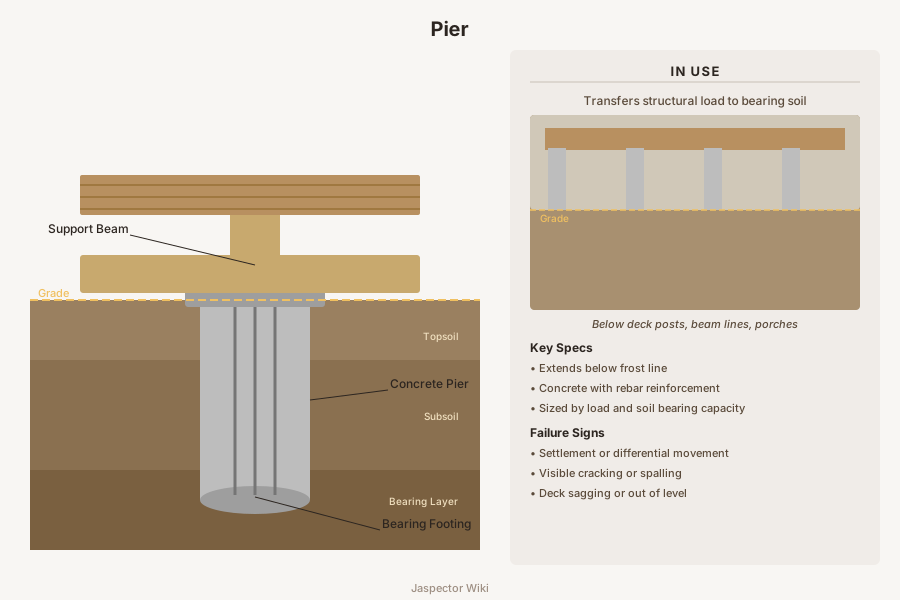
What It Is
A pier concentrates structural load at a specific point instead of supporting a full wall continuously. In residential work, piers are common under decks, porches, beams, and some raised foundations.
Types
Common residential types include poured concrete piers, masonry piers, precast deck piers, helical piers, and foundation repair piers. The correct type depends on soil, load, and whether the work is new or retrofit.
Where It Is Used
Piers are used below deck posts, porch columns, crawl-space beams, and structural repair systems. Some homes also rely on pier-and-beam foundations supported at multiple points.
How to Identify One
A pier is a vertical support element rather than a slab or footing. It may appear as a round concrete shaft, a square block stack, or a proprietary metal foundation support.
Replacement
Replace or repair a pier when it settles, rotates, cracks significantly, or no longer bears properly under the supported framing. Movement above, such as sagging beams or out-of-plumb posts, is often the first clue.
Frequently Asked Questions
Pier — FAQ
- What does pier do?
- Pier is used to carry structural loads down to stable support below. In a home, it matters because movement at a pier can affect the framing, floor level, or deck stability above it.
- Where is pier usually found?
- It is usually found below deck posts, porch supports, beam lines, and some raised foundations or repair systems. Homeowners most often notice it when inspecting or repairing the surrounding system.
- How do I know if pier needs replacement?
- Replacement or repair is usually needed when the support settles, cracks severely, or no longer holds the structure level. Visible wear, leaks, movement, or poor performance are the usual warning signs.
- Can I repair or replace pier myself?
- Because piers affect structural support and often require excavation or jacking, repairs are rarely a casual DIY task. If the work affects concealed plumbing, gas, structural support, roofing, or electrical controls, hiring the right pro is the safer path.
Have a question about your project? Get personalized answers from our team — $9/mo.
MembershipAlso in Structural
- Access Panel Access & Openings
- Attic Hatch Access & Openings
- Construction Adhesive Adhesives & Sealants
- J-Bolt Anchorage
- Expansion Anchor Anchors & Fasteners
- Molly Bolt Anchors & Fasteners
- Baffle (Attic Rafter Vent) Attic & Roof
- Attic Hatch Cover Attic Access