Picture Molding - Historic Trim and Art Hanging Guide
Picture molding is a narrow trim molding installed high on a wall to support hanging hooks and wires without driving fasteners directly into finished plaster or decorative wall surfaces.
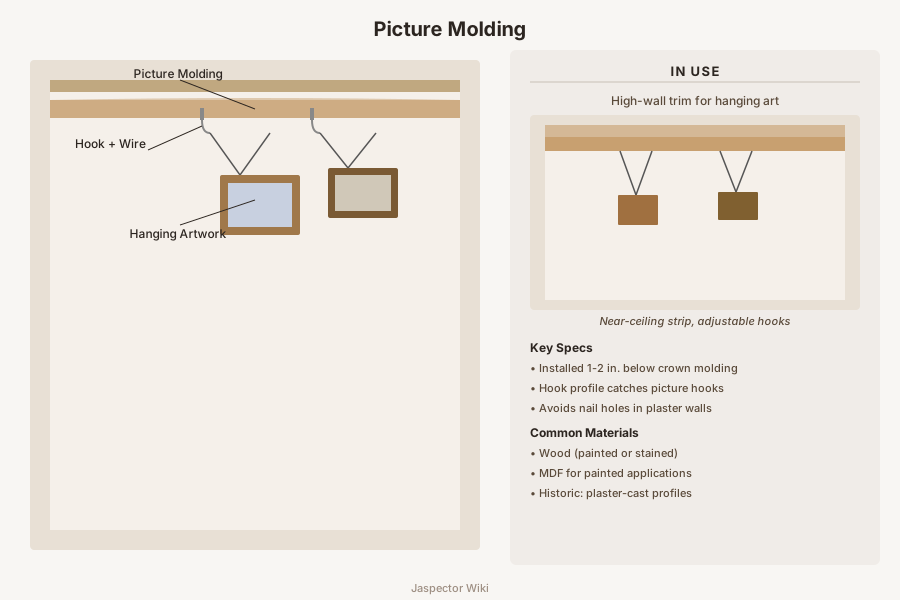
What It Is
Picture molding, also called picture rail, is a horizontal trim piece installed near the ceiling line so artwork, mirrors, and framed photographs can hang from adjustable hooks that ride on the molding's curved lower edge. The system was developed in the 19th century to protect plaster walls from repeated nail holes.
The molding is installed 1 to 3 inches below the ceiling or below the crown molding. It runs continuously around the room, and S-shaped or flat hooks slip over the rounded lower lip to support picture wire at any point along the wall, allowing artwork to be repositioned without disturbing the finish.
Today it serves both functional and decorative roles. It is distinct from panel molding, which is applied in rectangular frames lower on the wall, and from chair rail, which sits at roughly 32 to 36 inches above the floor.
Types
Traditional profiles feature a pronounced rounded or hooked lower edge designed for standard picture hooks. These are typically 1-1/2 to 2-1/4 inches tall and about 3/4 inch thick. Common species include poplar, oak, and pine, with poplar being the most available paint-grade option.
Simplified modern profiles omit the deep hook groove and serve primarily as a decorative band. They can accept adhesive-backed hooks but do not support heavy loads like a traditional profiled rail.
MDF picture molding is a budget-friendly alternative that comes pre-primed and machines to clean profiles, though it is less durable than solid wood in high-humidity rooms.
Custom-milled profiles are necessary for historic restoration when the original shape does not match stock options. A millwork shop can replicate the profile from a sample piece.
Where It Is Used
Picture molding is found in older houses built from the 1850s through the 1940s, particularly in Victorian, Craftsman, and Colonial Revival interiors. It appears most often in parlors, dining rooms, libraries, and stair halls where artwork display was part of the design.
In contemporary construction, it is used in period-style builds, historic district homes where review boards require traditional details, and rooms with plaster or tile walls where drilling is difficult. Tall-ceilinged rooms of 9 feet or more benefit most because the rail-and-wire system looks proportional to the wall height.
How to Identify One
Look for a slim horizontal molding running continuously near the top of the wall, a few inches below the ceiling. The distinguishing feature is the lower edge profile: a rounded or hooked lip that overhangs slightly, creating a channel for hooks.
In homes with many paint layers, the hook profile may be partially filled. Running a finger along the underside reveals whether a functional groove is present. A molding that is flat on the bottom at the wall-ceiling junction is more likely a cap molding or frieze board.
Replacement
Replace picture molding when sections are missing, split, warped, or removed during wall repairs. In homes with original trim, matching the profile matters so new sections blend with surviving molding. A sample piece can be taken to a supplier for matching.
Stock profiles are available at most lumber yards. Cut the new piece to length, prime and paint to match, and nail into wall studs with finish nails. The molding must be fastened into framing, not just plaster, because it supports the weight of hung artwork. Pre-drilling prevents splitting in hardwood. Fill nail holes and touch up paint to complete the repair.
Frequently Asked Questions
Picture Molding — FAQ
- What is picture molding used for?
- Picture molding is used to hang artwork from hooks and wires without putting nails into the wall surface. It also acts as a decorative trim detail in older and traditional rooms.
- Is picture molding the same as crown molding?
- No. Crown molding bridges the wall-to-ceiling transition, while picture molding sits below that line and is shaped to support hanging hardware.
- Can you still hang pictures from picture molding today?
- Yes. Specialty hooks and cords are still available, and many historic homeowners use them for plaster walls. The molding has to be secure enough to carry the weight of what is being hung.
- How do I know if picture molding should be replaced?
- Replacement is common when sections are missing, loose, or too damaged to profile-match with filler and paint. In older homes, salvage or custom-milled replacement may be the best visual match.
- Does picture molding add value to a historic room?
- It can. In the right house, preserving original trim details helps maintain period character and often looks better than stripping the room down to plain drywall.
Have a question about your project? Get personalized answers from our team — $9/mo.
MembershipAlso in Interior
- Euro Hinge Cabinet Hardware
- Soft-Close Hinge Cabinet Hardware
- L-Bead Drywall & Plaster
- Skirt Board Stairs & Railings
- Stair Nose Stairs & Railings
- Panel Molding
- Wainscot Panel Wall Finishes & Trim