Panel Molding - Decorative Interior Wall Trim Guide
Panel molding is a decorative trim profile used to create framed wall panels, wainscot layouts, and other raised or applied millwork patterns on interior walls.
What It Is
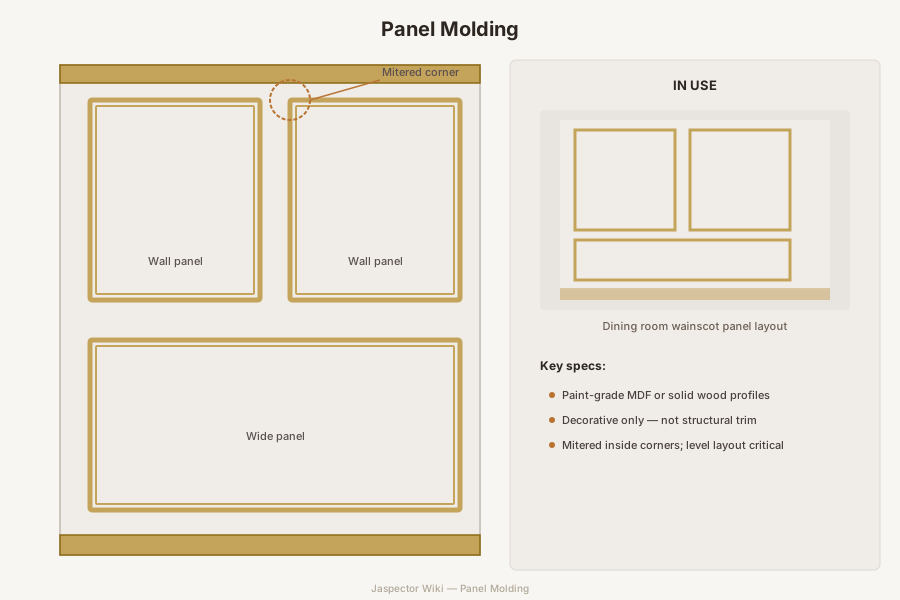
Panel molding is narrow trim applied directly to a wall, door, or cabinet face to create the look of inset or raised panels. It is mostly decorative, but it also helps define proportion and rhythm in traditional and transitional interiors.
The molding is usually installed in rectangular or square layouts with careful spacing, level lines, and clean miters. Unlike crown or baseboard, it does not cover a joint at the floor or ceiling. Its job is visual composition.
Types
Common options include simple colonial panel molding, more ornate carved profiles, flexible molding for curved walls, and paint-grade MDF or finger-jointed stock for budget installs. Solid wood is used when stain finish or sharper detail matters.
Where It Is Used
Panel molding is used on dining room walls, stair halls, formal living spaces, powder rooms, and feature walls. It is also used on cabinet faces, fireplace surrounds, and door panels when a room calls for more traditional trim detail.
How to Identify One
Look for thin trim pieces laid out in geometric frames on a flat wall surface rather than at a room edge. The molding usually sits proud of the drywall and is joined with mitered inside corners.
Replacement
Replace panel molding when it is cracked, water-damaged, poorly aligned, or being removed during a remodel. Matching the existing profile is the hardest part, so repairs often involve custom milling or replacing an entire wall section for visual consistency.
Frequently Asked Questions
Panel Molding — FAQ
- What is panel molding used for?
- Panel molding is used to create decorative framed layouts on walls, doors, and built-ins. It gives a flat surface the look of traditional millwork without rebuilding the wall itself.
- Is panel molding structural?
- No. It is finish trim, not framing. Its purpose is appearance, not support.
- How do I know if panel molding needs replacement?
- Replacement makes sense when the trim is split, swollen from moisture, badly dented, or impossible to match after partial damage. If joints are opening because the wall moved, the wall condition should be checked too.
- Can panel molding be added to plain drywall?
- Yes. That is one of its most common uses. The wall needs to be reasonably flat so the trim sits tight and the layout lines stay clean.
- Is panel molding expensive to install?
- Material cost can be moderate, but labor rises quickly because layout, cutting, and finish work have to be precise. Large rooms and ornate profiles cost more than simple paint-grade patterns.
Have a question about your project? Get personalized answers from our team — $9/mo.
MembershipAlso in Interior
- Euro Hinge Cabinet Hardware
- Soft-Close Hinge Cabinet Hardware
- L-Bead Drywall & Plaster
- Skirt Board Stairs & Railings
- Stair Nose Stairs & Railings
- Picture Molding
- Wainscot Panel Wall Finishes & Trim