Overflow Plate — Bathtub Overflow Cover and Linkage
An overflow plate is a cover plate mounted on the interior wall of a bathtub over the overflow opening that conceals the drain passage and, on many tubs, operates the stopper linkage through a lever or knob on its face.
What It Is
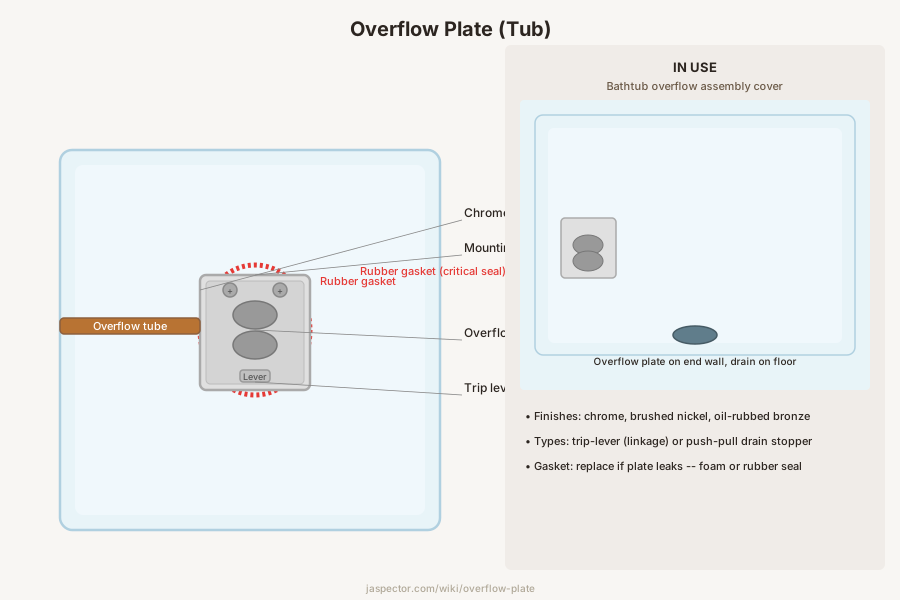
The overflow plate is the visible trim component of the overflow drain assembly. It is secured to the tub wall with one or two screws and covers the overflow opening, which is the secondary drain passage that prevents the tub from flooding when the main drain is plugged and the water level rises.
Beyond its cosmetic function, the plate plays a structural role in the assembly. It compresses the rubber gasket between the fitting and the tub wall, maintaining the watertight seal that prevents water from migrating behind the tub surface. On trip-lever tub drains, the plate also carries the lever mechanism whose linkage runs through the overflow tube down to a plunger at the drain.
Corrosion, stripped mounting screws, a broken lever, or deterioration of the gasket behind the plate can each cause problems ranging from cosmetic wear to active water intrusion behind the tub wall.
Types
Fixed overflow plates cover the overflow opening with no moving parts and are used on tubs where the stopper is located at the drain opening in the tub floor. Trip-lever overflow plates have a toggle lever on the face that connects to an internal rod and plunger mechanism controlling the tub drain from above. Cable-operated overflow plates use a flexible cable instead of a rigid linkage. All types are available in multiple finishes including chrome, brushed nickel, matte black, and oil-rubbed bronze, and the mounting hole pattern and linkage style must match the existing waste-and-overflow body.
Where It Is Used
Overflow plates are installed on any bathtub that includes an overflow drain opening — typically alcove tubs, drop-in tubs, and undermount soaking tubs with an overflow provision. The plate mounts on the interior tub wall a few inches below the rim at the faucet end.
How to Identify One
The overflow plate is the round or oval plate on the inside of the tub wall, mounted with one or two visible screws. If it has a small lever on the face, it controls a trip-lever drain stopper mechanism inside the overflow tube. A plain plate with no lever is a fixed overflow cover used with a floor-mounted stopper.
Replacement
Replace an overflow plate when the finish is corroded or damaged, when the lever mechanism no longer operates the drain stopper, when a gasket failure causes leaking behind the tub, or when updating fixture finishes. Cosmetic replacement requires only matching the mounting hole spacing and choosing a compatible finish. Functional replacement when the linkage is broken may require pulling and adjusting the internal rod assembly. A cracked or displaced gasket behind the plate that allows water intrusion behind the tub wall should be repaired promptly to prevent structural damage.
Frequently Asked Questions
Overflow Plate — FAQ
- What does the overflow plate do on a bathtub?
- It covers the overflow opening that prevents the tub from flooding and holds the rubber gasket in place to keep water from getting behind the tub wall. On trip-lever drains it also carries the lever that operates the internal stopper mechanism through the overflow tube.
- Why is water leaking around my overflow plate?
- The usual cause is a failed or displaced gasket behind the overflow opening, not the plate itself. The rubber gasket degrades over time or can be dislodged when the plate is removed and reinstalled. The plate must be removed to replace the gasket and restore the seal.
- Can I replace just the overflow plate without replacing the whole drain assembly?
- Yes, when the internal tube and drain body are in good condition. The replacement plate must match the mounting hole pattern and, for trip-lever drains, the linkage length and style. If the internal plunger or rod is corroded or broken, replacing more of the waste-and-overflow set is the better approach.
- Why does my trip-lever overflow plate no longer open the drain?
- The internal linkage may be disconnected, misadjusted, or blocked by buildup inside the overflow tube. Removing the plate reveals the top of the rod assembly, which can often be cleaned, adjusted, or reconnected without replacing the entire waste-and-overflow assembly.
- Does the finish of the overflow plate have to match the faucet?
- It does not have to, but a mismatched finish is visually noticeable in a bathtub. Most manufacturers offer overflow plates in the same finishes as their faucet and drain trim lines, making it straightforward to replace or update both at the same time for a consistent appearance.
Have a question about your project? Get personalized answers from our team — $9/mo.
MembershipAlso in Plumbing
- ADA Shower Seat Accessibility
- Fold-Down Seat Accessibility
- Backflow Preventer Backflow & Cross-Connection
- Pressure Vacuum Breaker Backflow Prevention
- Toilet Bath Fixtures
- Toilet Bowl Bath Fixtures
- Toilet Tank Bath Fixtures
- Toilet Tank Gasket Bath Fixtures