Outside Corner — Exterior Corner Trim and Bead Guide
An outside corner is the finished corner trim or bead that protects and defines an exposed exterior corner where two finished surfaces meet.
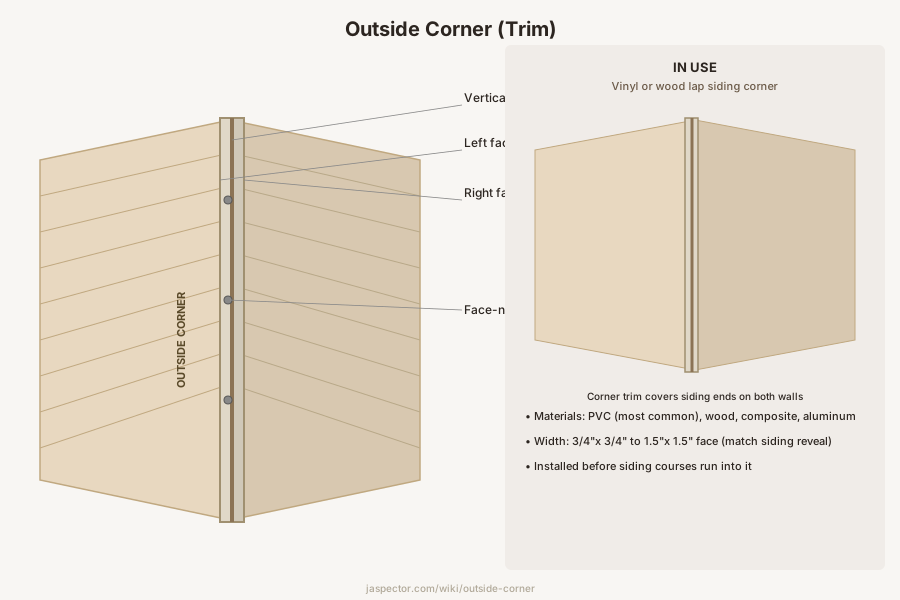
What It Is
An outside corner is a shaped trim piece or reinforcing profile installed over a projecting corner so the edge stays straight, durable, and visually clean. In residential work, the term can refer to a trim molding, a siding corner profile, or a corner bead used on an exterior finished surface system.
These corners take more abuse than flat wall areas because they are easy to bump, weather, and chip. If the corner profile loosens or cracks, the damage is often visible quickly and can let water reach the edge of the finish system behind it.
Types
Common types include metal or vinyl corner bead for exterior finish systems, PVC or composite outside-corner trim pieces, and manufacturer-specific corner profiles for siding and panel systems. Some corners are square, while others are bullnose or decorative to match the trim style.
The exact profile depends on the wall material and how the corner is finished. A siding corner piece is different from a stucco or exterior panel corner bead, even though both serve the same basic purpose of protecting the exposed edge.
Where It Is Used
Outside corners are used at exposed wall corners, column wraps, exterior trim returns, and other places where two finished faces meet at a projecting angle. You commonly see them on siding systems, exterior trim details, porch enclosures, and finished utility or outbuilding walls.
How to Identify One
Look for the trim or reinforced profile running vertically along an exposed outside corner rather than flat across the wall. It usually creates a crisp line where the two wall faces meet and may be made of metal, vinyl, PVC, wood, or composite material depending on the assembly.
Damage often shows up as dents, cracked finish, open joints, rust stains, or a visibly crooked corner line. If a corner keeps cracking after patching, the underlying outside-corner piece may be loose or bent.
Replacement
Replacement is needed when the corner is bent, rusting, split, pulling away, or allowing finish cracks and water entry. The repair may involve removing surrounding finish material so the new corner piece can be fastened and blended back in properly.
Minor cosmetic patching can hide a damaged corner briefly, but it will not hold if the corner profile underneath is loose. Durable replacement depends on matching the profile type and reinstalling the finish system correctly around it.
Frequently Asked Questions
Outside Corner — FAQ
- What does an outside corner do?
- It protects a projecting wall edge and gives the corner a straight finished appearance. Without it, exposed finish edges chip more easily and can look uneven or unfinished.
- Why does my exterior corner keep cracking?
- The corner piece underneath may be loose, bent, rusting, or moving with the wall assembly. Surface filler alone usually fails again because the underlying profile is no longer stable.
- Is an outside corner the same as a corner board?
- Not always. A corner board is a specific exterior trim board used with siding, while an outside corner can also mean a bead or profile used on other finished corner systems. The shared idea is that both protect and finish an exposed exterior corner.
- Can one damaged outside corner be repaired by itself?
- Usually yes, but the surrounding finish often has to be opened up to do it correctly. The scope depends on the material because siding, stucco, and trim systems all tie into the corner differently.
Have a question about your project? Get personalized answers from our team — $9/mo.
MembershipAlso in Exterior
- Extension Ladder Access & Safety
- Concealed Hinge Cabinet Hardware
- Board and Batten Cladding
- EIFS (Exterior Insulation Finish System) Cladding
- Hardboard Siding Cladding
- Shake Siding Cladding
- Siding Cladding
- Stone Veneer Cladding