Mortar Bed — Thick Setting Base for Tile or Stone Work
A mortar bed is a layer of cement-based mortar used as a setting bed under tile or stone to create a stable, level, and durable surface.
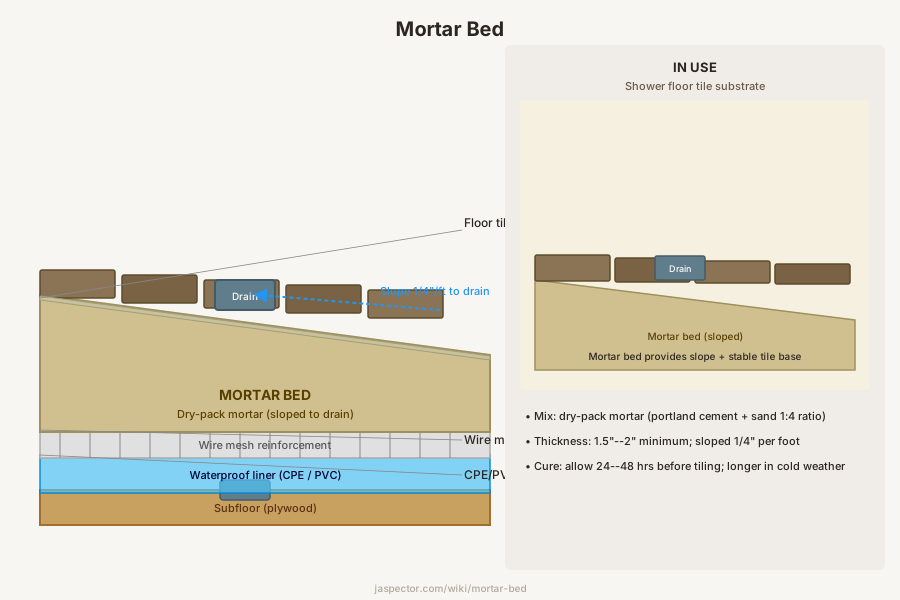
What It Is
A mortar bed is thicker and more structural than a thin layer of tile adhesive. It is used to flatten irregular substrates, create slope toward a drain, support heavy finishes, and separate the tile assembly from minor substrate variation when the system is designed for that purpose.
Traditional mortar beds are common in shower pans, tile floors, some exterior tile work, and stone installations. The bed may be bonded directly to the substrate, reinforced over a cleavage membrane, or shaped to specific elevations depending on the assembly.
Types
Common types include bonded mortar beds, unbonded or floating mortar beds, reinforced mortar beds, and dry-pack shower mud beds. Some are designed primarily for leveling flat floors, while others are specifically shaped to provide drainage under tile in a shower or wet area.
The exact mix matters. Deck mud, wall mud, and richer setting mortars are not interchangeable in every application because workability, shrinkage, and compressive behavior differ.
Where It Is Used
Mortar beds are used under tile and stone floors, in custom shower pans, on some patios and balconies, and under stone thresholds or specialty assemblies where a thicker setting base is needed. They are especially useful when the substrate is uneven or when precise slope and flatness are required.
How to Identify One
A mortar bed is usually hidden under the finished tile or stone, but it may be visible at transitions, floor penetrations, or demolition openings. It looks like a dense sand-and-cement layer thicker than thinset. In a traditional shower, the sloped bed sits below the tile and above or around the waterproofing assembly depending on the system.
Replacement
Failed mortar beds are usually removed rather than patched in isolated spots because cracks, poor slope, or loss of bond often affect the assembly beyond the visible defect. Replacement may require removing the finished tile, rebuilding the substrate, re-establishing waterproofing, and then installing a new bed to the correct thickness and slope.
Frequently Asked Questions
Mortar Bed — FAQ
- Is a mortar bed the same as thinset?
- No. Thinset is a relatively thin bonding mortar used to adhere tile to a prepared surface, while a mortar bed is a thicker layer used to flatten, support, or slope the tile assembly. They serve different roles and are not interchangeable.
- Why would a shower mortar bed need to be replaced?
- Common reasons include poor slope to the drain, a failed waterproofing layer, persistent cracking, or a saturated bed that never dries properly. If the shower smells musty or holds water in corners, the problem may be deeper than the surface tile.
- Can cracked tile mean the mortar bed underneath failed?
- Yes, it can. Cracked tile may result from movement, poor support, or a mortar bed that has lost bond or fractured. The tile alone is not enough to diagnose the problem, but repeated cracking in the same area is a warning sign.
- Can homeowners install a mortar bed themselves?
- Experienced DIYers sometimes can on small floors, but the margin for error is not large. Shower work is less forgiving because slope, thickness, and waterproofing details all have to be correct for the assembly to last.
Have a question about your project? Get personalized answers from our team — $9/mo.
MembershipAlso in Structural
- Access Panel Access & Openings
- Attic Hatch Access & Openings
- Construction Adhesive Adhesives & Sealants
- J-Bolt Anchorage
- Expansion Anchor Anchors & Fasteners
- Molly Bolt Anchors & Fasteners
- Baffle (Attic Rafter Vent) Attic & Roof
- Attic Hatch Cover Attic Access