Modified Bitumen - Low-Slope Roofing Membrane Guide
Modified bitumen is a low-slope roofing membrane made from asphalt reinforced with polymers and sheet backing for durability, flexibility, and waterproofing.
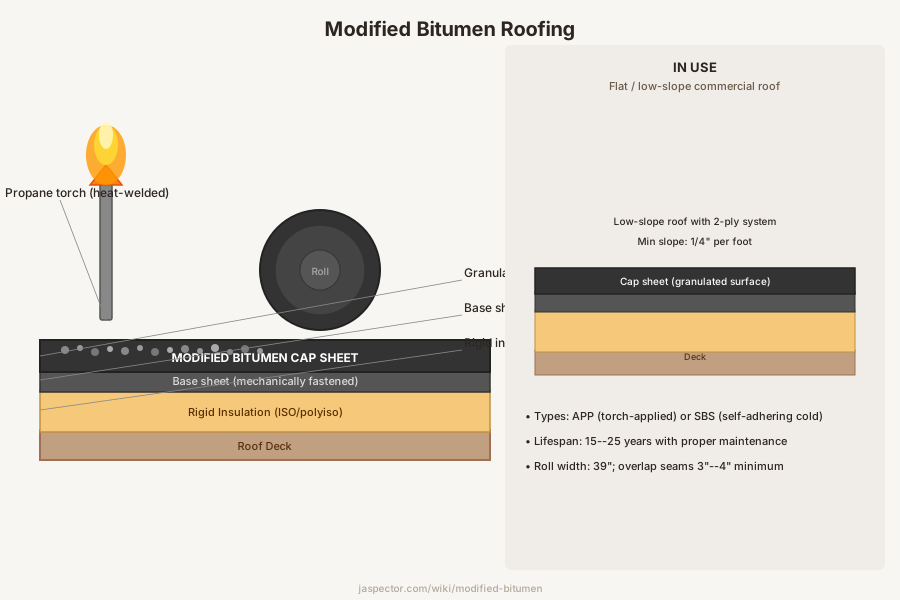
What It Is
Modified bitumen roofing is a rolled membrane system used on low-slope and nearly flat roofs. It combines asphalt with modifiers such as APP or SBS so the membrane stays more flexible, more durable, and less prone to cracking than older built-up roofing alone.
The sheets are manufactured in layers with reinforcement mats, then installed in one or more plies over a prepared roof deck or cover board. Seams are sealed with heat, cold adhesive, or self-adhered backing depending on the product. The finished roof is designed to resist standing water, sun exposure, and normal foot traffic from maintenance work.
Types
SBS modified bitumen is rubberized and more flexible in cold weather, which makes it useful where movement and temperature swings are a concern. APP modified bitumen is more plastic-like and is commonly heat welded with a torch. Self-adhered systems avoid open flame and are often used on occupied residential or light commercial buildings.
Cap-sheet color and surfacing also vary. Granulated cap sheets provide UV protection on exposed roofs, while smooth sheets are often used where a coating or additional surfacing will be added.
Where It Is Used
Modified bitumen is used on low-slope roof sections over porches, additions, garages, apartment buildings, and commercial roofs. In residential work, it often appears where shingles are not appropriate because the roof pitch is too low for reliable drainage.
How to Identify One
A modified bitumen roof usually appears as rolled membrane seams across a flat or low-slope roof. The top surface may have mineral granules similar to shingles or a smooth black, gray, or coated finish. Seams are visible in straight runs, and roof penetrations are flashed with matching membrane accessories.
Replacement
Modified bitumen should be replaced when seams open, blistering spreads, the membrane becomes brittle, or leaks show that repairs are no longer localized. Small seam failures can often be patched, but widespread age-related cracking or trapped moisture usually means the membrane has reached the end of its service life. Replacement is normally handled by a roofing contractor because substrate condition, drainage, and flashing details matter as much as the membrane itself.
Frequently Asked Questions
Modified Bitumen Roofing — FAQ
- How long does a modified bitumen roof last?
- A well-installed modified bitumen roof often lasts about 15 to 25 years, depending on climate, drainage, foot traffic, and maintenance. Poor drainage and neglected seam repairs shorten that lifespan quickly.
- What is the difference between modified bitumen and rolled roofing?
- Modified bitumen is a heavier, reinforced membrane system designed for longer service on low-slope roofs. Basic rolled roofing is thinner, simpler, and usually treated as a lower-cost material with a shorter life.
- Can a modified bitumen roof be repaired instead of replaced?
- Yes, isolated seam splits, punctures, and flashing defects are often repairable. Once the membrane is brittle, blistered across large areas, or leaking in multiple locations, replacement is usually the more durable fix.
- Do I need a permit to replace modified bitumen roofing?
- Many jurisdictions require a permit for full roof replacement, especially when decking or insulation is involved. Small patch repairs may not, but the local building department determines that threshold.
Have a question about your project? Get personalized answers from our team — $9/mo.
MembershipAlso in Roofing
- Asphalt Shingle Types: 3-Tab vs. Architectural Asphalt Shingles
- How Long Asphalt Shingles Last Asphalt Shingles
- Asphalt Shingle Installation: What to Expect Asphalt Shingles
- Gable Vent Attic Ventilation
- Soffit Vent Attic Ventilation
- Turbine Vent Attic Ventilation
- Chase Cover Chimney System
- Chimney Cap Chimney System