Mirror — What It Is, Types, and When to Replace It
A mirror is a reflective glass panel mounted on a wall to provide a reflected image for grooming, visual reference, or to increase the apparent size and light of a room.
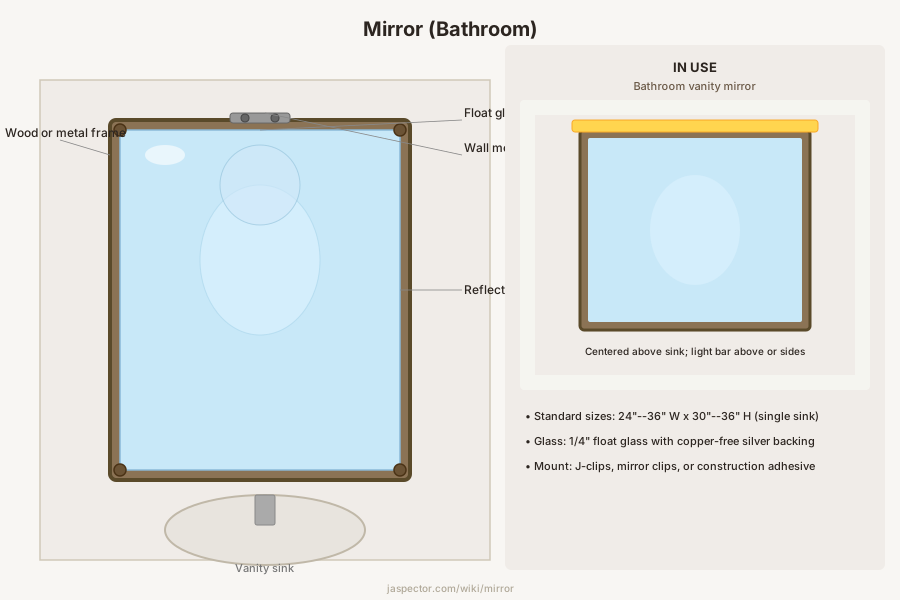
What It Is
Mirrors used in homes consist of a glass substrate coated on the back with a thin reflective layer — typically silver or aluminum — protected by a backing coat. The glass panel is cut to size and may have polished, beveled, or straight-cut edges.
In bathrooms, mirrors are installed above vanities to provide a grooming surface and to bounce light from the vanity fixture. In living spaces, large mirrors are used as design elements to visually expand a room, reflect natural light, or serve as focal points on feature walls.
Mirrors are mounted using mirror clips, adhesive, mirror mastic, a recessed frame, or a hanging system depending on the size, weight, and the wall material behind them.
Types
Common residential mirror types include frameless vanity mirrors, framed decorative mirrors, full-length floor mirrors, backlit mirrors, and medicine cabinets with mirrored doors. Smart mirrors with integrated lighting and displays are a newer category.
Where It Is Used
Mirrors are used above bathroom vanities, in dressing areas, on closet doors, in entryways, in gym spaces, and as decorative wall elements in living and dining rooms.
How to Identify One
A mirror is a glass panel with a reflective back coating. Tapping a mirror with a fingertip and watching the gap between the reflected fingertip and the actual fingertip can indicate glass thickness; a first-surface mirror has no gap. Standard bathroom mirrors have a small gap because the reflective coating is behind the glass.
Replacement
Mirrors are replaced when the silvering deteriorates (visible as dark spots or cloudiness at the edges — called desilvering), when the glass cracks, or when a bathroom remodel calls for a new size or style. Desilvering typically starts at the edges where moisture reaches the backing coat.
Frequently Asked Questions
Mirror — FAQ
- Why does my bathroom mirror have dark spots around the edges?
- Dark or cloudy spots at the mirror edges are caused by desilvering, where moisture penetrates the backing coat and damages the reflective layer. It usually starts at the edges because the protective coating is thinnest there. Once desilvering begins it typically spreads, and replacement is usually the practical solution.
- How is a large bathroom mirror mounted safely?
- Large mirrors are typically mounted with mirror mastic adhesive, mirror clips, a hanging cleat, or a combination of clips and adhesive. The method depends on mirror weight, wall material, and whether studs or solid blocking are available for fastener support.
- Can a cracked mirror be repaired?
- A cracked mirror is generally replaced rather than repaired. Hairline cracks can sometimes be stabilized with resin injection to reduce visibility, but structural cracks compromise the glass and are a safety concern if the mirror is wall-mounted.
- What size mirror should go above a vanity?
- A common rule is to keep the mirror width at or slightly less than the vanity width, and to center the mirror between the top of the vanity and the ceiling, leaving adequate clearance for lighting above. The exact size depends on ceiling height, fixture placement, and personal preference.
- Do bathroom mirrors need to be moisture-rated?
- Standard mirrors can be used in bathrooms, but mirrors installed in or directly adjacent to a shower enclosure should be specified for wet or damp locations. Frameless mirrors with sealed edges hold up better than framed mirrors where moisture can collect behind the frame.
Have a question about your project? Get personalized answers from our team — $9/mo.
MembershipAlso in Finish
- Mirror Clip
- Robe Hook Bathroom Hardware
- Soap Dish Bathroom Hardware
- Soap Dispenser Bathroom Hardware
- Toilet Paper Holder Bathroom Hardware
- Towel Bar Bathroom Hardware
- Towel Hook Bathroom Hardware
- Towel Ring Bathroom Hardware