Mineral Wool - Insulation, Fire, and Sound Control Guide
Mineral wool is a fibrous insulation material used to reduce heat transfer and improve fire and sound performance in walls, floors, ceilings, and mechanical assemblies.
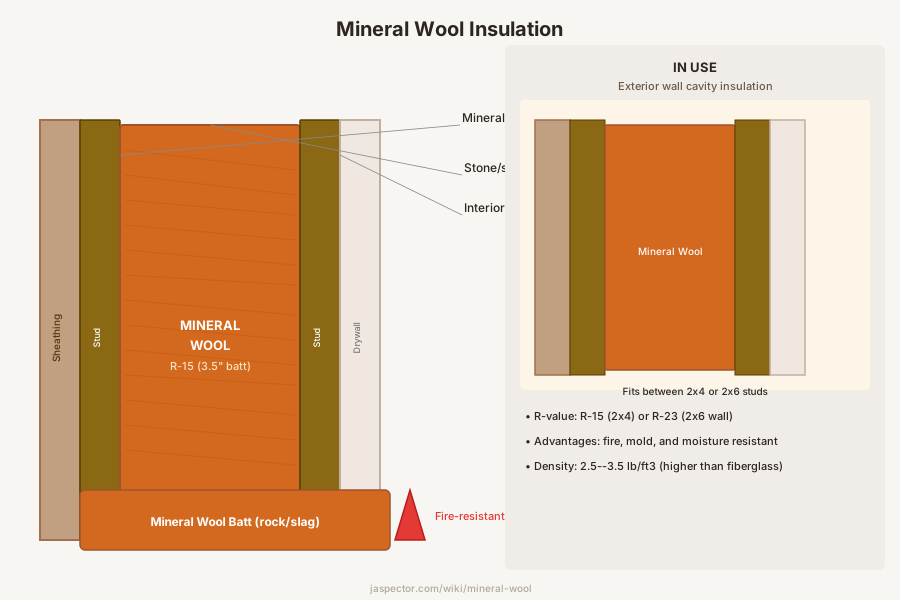
What It Is
Mineral wool is made from spun mineral fibers and is sold as batts, boards, and loose-fill products. It is denser than many fiberglass products, which helps it stay in place and improves sound control in wall and floor assemblies.
It is also valued for its noncombustible properties and moisture tolerance. That does not make it waterproof, but it generally handles incidental dampness better than paper-faced insulation products and dries without the same loss of shape.
Types
Common forms include batt insulation for framing cavities, rigid boards for exterior or commercial assemblies, and loose-fill products for some specialty uses. Product density and facing vary by application.
Where It Is Used
Mineral wool is used in exterior walls, interior sound-control partitions, floor systems, basement ceilings, fire-resistance assemblies, and around some mechanical equipment. Contractors also use it in areas where heat, sound, and fire performance all matter.
How to Identify One
Mineral wool usually appears as a dense brown, gray, or greenish fibrous insulation with a more rigid feel than standard fiberglass batts. It often cuts cleanly, sheds less fluff than fiberglass, and fits tightly between framing members.
Replacement
Replacement is needed when the material is contaminated, heavily soaked, physically damaged, or removed during renovation. In many cases the insulation itself survives well, so the larger question is whether the surrounding assembly still needs new air sealing, vapor control, or fire-stopping details.
Frequently Asked Questions
Mineral Wool — FAQ
- Is mineral wool better than fiberglass insulation?
- Mineral wool is often better for sound control, fire resistance, and staying in place in wall cavities. Fiberglass can still be the lower-cost option, so the best choice depends on the assembly goals and budget.
- Can mineral wool get wet?
- It can get wet, but it usually tolerates incidental moisture better than many faced insulation products and can dry without collapsing the same way. If it is heavily soaked, contaminated, or part of a mold problem, replacement may still be necessary.
- Where is mineral wool commonly used in a house?
- It is commonly used in exterior walls, between floors, in basement ceilings, around mechanical rooms, and in interior walls where sound control matters. It is also used in some fire-resistance details and around penetrations with the correct system design.
- Does mineral wool need a permit to replace?
- Not by itself in many small projects, but permits can be required if the insulation work is part of larger wall, ceiling, or fire-rated assembly changes. The permit question usually depends on the overall renovation, not the insulation product alone.
Have a question about your project? Get personalized answers from our team — $9/mo.
Membership