Masonry Anchor — Brick Tie and Veneer Wall Connection
A masonry anchor is a metal fastener or tie that connects two masonry wythes, or ties masonry cladding to a structural backup wall, so the assembly can resist wind, seismic, and gravity loads.
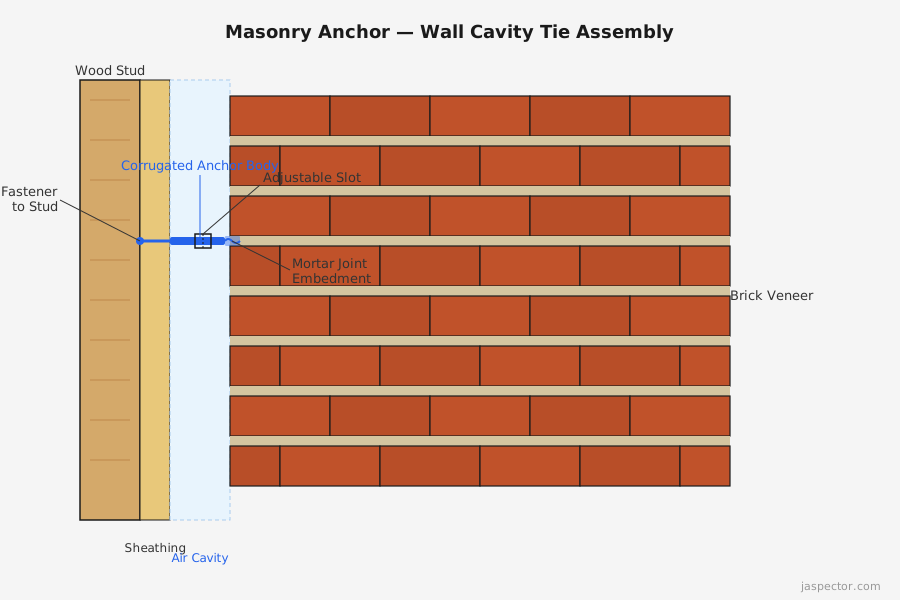
What It Is
Masonry anchors transfer lateral loads between an outer masonry wythe and an inner backup system, whether that backup is a second masonry wythe, a CMU core, steel studs, or wood framing. Unlike a standard anchor bolt that is cast into concrete, a masonry anchor is typically embedded in the mortar joint of the outer wythe and mechanically fastened or embedded into the backup on the other end.
Proper spacing, embedment depth, and material type are all code-specified because these connectors keep the veneer from separating from the building under wind uplift or seismic movement. The International Building Code and TMS 402 require anchors at a maximum spacing of 16 inches vertically and 32 inches horizontally, yielding roughly one anchor per 3.5 square feet of wall area. Corroded or missing anchors are a leading cause of brick-veneer failure, particularly in older homes where plain carbon steel ties were used without galvanizing.
The air space between the veneer and the backup, typically 1 inch to 4-1/2 inches, must be bridged by the anchor while still allowing the two wall layers to move independently under thermal expansion and structural deflection. This is why adjustable two-piece anchors have become the preferred choice in modern construction.
Types
The most common residential type is a corrugated or bent metal brick tie that clips into a mortar joint and nails or screws to a stud. These one-piece ties are inexpensive and fast to install on low-rise wood-framed homes. Adjustable two-piece anchors consist of a plate or channel fastened to the backup and a separate wire tie embedded in the mortar joint, allowing independent vertical movement between the veneer and backup. They are the preferred choice in high-wind or seismic zones and on tall buildings.
Expansion-anchor style inserts are used for post-installed connections into existing solid masonry when original anchors have failed. Helical screw-type remedial anchors are drilled through the veneer and into the backup framing to re-anchor bulging or separating brick sections without dismantling the wall.
Where It Is Used
Masonry anchors appear in any cavity wall or veneered wall assembly. They are found in residential brick-veneer homes tied to wood or steel stud framing, in commercial CMU construction with metal stud backup, in stone cladding systems anchored to concrete or steel, and in block infill walls in steel-framed buildings. They are also used to connect retaining wall wythes and to anchor masonry facades to existing concrete walls during renovation.
In seismic zones, anchors must meet additional ductility and load-capacity requirements specified in ASCE 7 and TMS 402. High-wind coastal regions impose similar enhanced anchor spacing and corrosion-resistance requirements.
How to Identify One
Adjustable anchors are visible as small metal tabs projecting from the face shell of a block or from the back of a brick during construction. In an existing finished wall they are hidden, but their presence can be confirmed by probing mortar joints or reviewing the original building drawings. Corroded anchor ties that have expanded with rust can cause horizontal cracking along mortar joints at regular vertical intervals, typically every 16 inches corresponding to the anchor spacing.
A borescope inserted through a small drilled hole in a mortar joint can confirm the type, condition, and spacing of embedded anchors without removing brick. This is the standard diagnostic method used by masonry engineers evaluating older veneer walls.
Replacement
Replacing failed masonry anchors in an existing wall typically requires helical anchors drilled through the outer wythe and mechanically engaged into the backup, or supplemental structural adhesive anchors epoxied into drilled holes. Surface patching alone does not restore the structural connection. Replacement scope depends on anchor spacing requirements in the applicable building code, the extent of existing corrosion, and whether the veneer has displaced enough to require partial dismantlement and rebuilding.
Frequently Asked Questions
Masonry Anchor — FAQ
- What is the purpose of a masonry anchor?
- A masonry anchor ties an outer masonry wythe or veneer to the backup structure so that wind, seismic, or gravity loads are shared safely between the two elements. Without functional anchors, a brick or stone veneer can bow, crack, or fall away from the building.
- How often do masonry anchors need to be replaced?
- Carbon steel anchors in cavity walls can begin to corrode within 20 to 40 years, depending on the wall type and how much moisture enters the cavity. Stainless steel or hot-dip galvanized anchors last considerably longer. When horizontal cracks appear in mortar joints at regular intervals, anchor corrosion should be suspected and a masonry contractor should inspect.
- Do masonry anchor replacements require a permit?
- Yes, in most jurisdictions structural masonry repair that involves re-anchoring a veneer is a structural alteration that requires a permit and, often, engineer involvement. The work falls under the building code provisions for masonry or existing structures.
- What does masonry anchor replacement cost?
- Post-installed helical anchor repairs run roughly $30 to $80 per anchor installed, plus mobilization and staging. A full reanchoring of a large brick-veneer wall can cost several thousand dollars to tens of thousands depending on access difficulty, scaffold requirements, and the number of anchors needed.
- Can I tell from the outside if my brick anchors have failed?
- Horizontal cracks in mortar joints at regular vertical spacings, bulging or bowing veneer sections, and sections of brick that sound hollow when tapped are all signs of anchor failure or corrosion. A masonry specialist can do a more thorough evaluation with probes or by pulling a small section of brick.
Have a question about your project? Get personalized answers from our team — $9/mo.
MembershipAlso in Masonry
- Epoxy Anchor
- Wall Tie
- Arch Brick Brick Masonry
- Brick Ledge Brick Masonry
- Corbel Brick Masonry
- Face Brick Brick Masonry
- Tuckpointing Mortar Brick Masonry
- Smoke Chamber Chimney Masonry