Manifold — Multi-Outlet Plumbing Distribution Fitting
A manifold is a distribution fitting with multiple outlets that divides one supply line into several controlled branches for plumbing, PEX water, radiant heat, or gas piping.
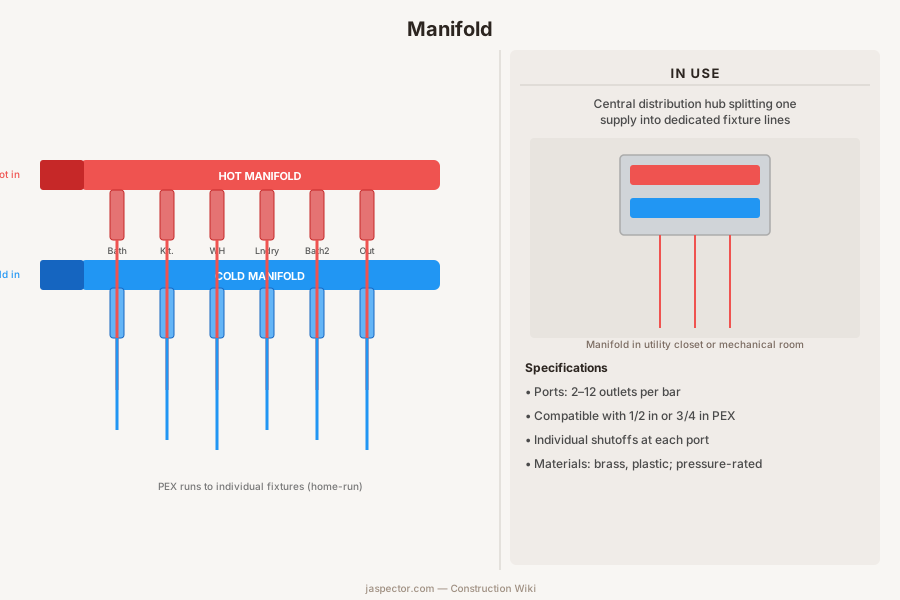
What It Is
Instead of feeding fixtures through a series of tees, a manifold creates a central distribution point. One main supply enters the manifold body, and several branch lines leave it, often with individual shutoff valves or balancing controls at each outlet.
In homes, manifolds are most common in PEX plumbing systems, hydronic radiant floor heating, irrigation, and some gas piping layouts. The advantage is organization: each branch can often be isolated independently, which simplifies repairs, balancing, and future changes.
Types
PEX plumbing manifolds distribute hot or cold domestic water to separate fixtures or fixture groups. Radiant heating manifolds include flow meters, balancing valves, and return connections for multiple floor loops. Gas manifolds divide a fuel supply to several appliances, and irrigation manifolds connect one supply to multiple zone valves.
Some manifolds are simple brass or polymer blocks with outlet ports only. Others include integrated shutoffs, labels, mounting brackets, purge valves, or mixing controls depending on the system they serve.
Where It Is Used
A manifold is usually installed in a utility room, mechanical closet, basement, crawl space access area, or near the point where the supply enters the home. Radiant floor manifolds are often recessed in a wall cabinet. PEX water manifolds are commonly located near the water heater so hot and cold branches can be organized in one serviceable location.
How to Identify One
A manifold looks like a header or bar with several evenly spaced outlet connections in a row. You may see colored PEX tubes, loop labels, shutoff handles, or small gauges attached to it. If many branch lines start from one compact assembly instead of from repeated tees in the piping, you are looking at a manifold.
Replacement
Replacement depends on what the manifold serves. A water or radiant manifold can often be swapped section by section if there is enough slack and isolation valves are available, but repiping may be needed when connections are rigid or corroded. Gas manifold work should be done by a licensed contractor because leaks must be pressure-tested before the system is put back into service.
Frequently Asked Questions
Manifold — FAQ
- Why would a house have a plumbing manifold instead of traditional tee branches?
- A manifold system gives each fixture or zone its own branch line from a central point. That makes shutoffs easier, can reduce hidden fittings inside walls, and helps future repairs because one run can often be isolated without shutting down the entire house.
- Can one bad branch on a manifold affect the others?
- Usually not in the same way a clog in a shared branch can. Each outlet is typically independent, so a leak or repair on one branch can often be isolated at the manifold. Low pressure across several branches at once suggests a supply or sizing issue instead.
- Do manifold systems need maintenance?
- They do, but not much. Homeowners should keep the area accessible, check occasionally for drips at fittings, and make sure shutoff handles still turn freely. Radiant manifolds may also need air purging or balancing service if loops stop heating evenly.
- Can I add another outlet to an existing manifold?
- Sometimes, but it depends on spare ports, pressure capacity, and code requirements for the system type. With PEX or irrigation it may be straightforward if the manifold was designed for expansion. Gas and hydronic modifications should be evaluated by a licensed installer before anything is added.
Have a question about your project? Get personalized answers from our team — $9/mo.
MembershipAlso in Plumbing
- ADA Shower Seat Accessibility
- Fold-Down Seat Accessibility
- Backflow Preventer Backflow & Cross-Connection
- Pressure Vacuum Breaker Backflow Prevention
- Toilet Bath Fixtures
- Toilet Bowl Bath Fixtures
- Toilet Tank Bath Fixtures
- Toilet Tank Gasket Bath Fixtures