Main Breaker — Primary Panel Disconnect and Protection
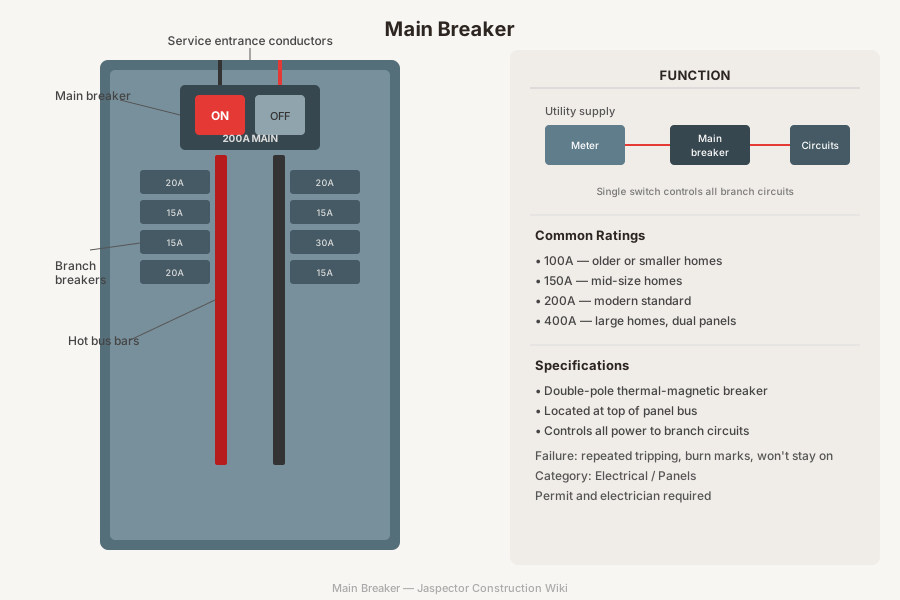
A main breaker is a large circuit breaker at the top of a panel that controls all power entering the home and serves as the primary overcurrent protection for the entire electrical system.
What It Is
The main breaker is the single switch that can disconnect all circuits in the panel at once. It is rated to match the service capacity of the home, most commonly 100 amps or 200 amps in residential work. When tripped or switched off, it cuts power to every branch circuit fed by that panel, making it the primary shutoff point for electrical emergencies.
The main breaker also protects the panel bus bars and wiring from drawing more current than the service entrance conductors can safely carry. Without a properly rated main breaker, an overload on multiple circuits could overheat the panel before any individual breaker trips. The main breaker uses a thermal-magnetic trip mechanism -- a bimetallic strip that responds to sustained overloads and an electromagnetic element that responds instantly to short circuits.
The NEC requires a means of disconnect for every service, and the main breaker fulfills this requirement when it is located at the service equipment. In homes with 400-amp service, two 200-amp main breaker panels may be installed side by side, each functioning as its own service disconnect.
Types
The most common residential main breakers are double-pole thermal-magnetic breakers rated at 100 A, 125 A, 150 A, or 200 A. They occupy the top two bus stab positions and are physically larger than branch breakers, typically measuring about 2 inches wide and 3 inches tall. Some panels use a main lug configuration instead, where the main disconnect is located elsewhere, such as at the meter base or a separate disconnect switch.
Bolt-on main breakers attach directly to the bus bars with bolts rather than clips, providing a more secure connection in panels that experience vibration. Some newer panels feature integrated surge protection within the main breaker assembly, combining overcurrent and surge functions in a single device.
Where It Is Used
The main breaker is located at the top or bottom of the main electrical panel, which is typically installed in the garage, basement, utility room, or on an exterior wall. The NEC requires the service disconnect to be readily accessible and as close to the point of service entrance as practical. Sub-panels may also have a main breaker if required by the installation or if the panel is located in a separate building.
In newer construction, the main breaker may be located in an outdoor meter-main combination unit that houses both the meter socket and the service disconnect in a single enclosure, with feeders running to an interior distribution panel.
How to Identify One
It is the largest breaker in the panel, usually positioned at the very top of the bus and labeled with the amperage rating in large print. It is a double-pole device that is wider and taller than the branch breakers below it. The handle is often marked ON and OFF, and the amperage rating such as 200A is stamped or printed on the handle face. A sticker or label on the panel door also identifies the main breaker rating.
Replacement
Replacement is needed when the breaker trips repeatedly without an identifiable overload, shows burn marks or a burning smell, will not stay in the ON position, or when the service is being upgraded to a higher amperage. The main breaker must be an exact match for the panel manufacturer and model, as breakers are not interchangeable between brands. A licensed electrician and an electrical permit are required for replacement, and the utility must be coordinated to de-energize the service entrance conductors that remain live above the main breaker.
Frequently Asked Questions
Main Breaker — FAQ
- What does the main breaker amperage rating mean?
- It indicates the maximum current the breaker will allow before tripping. A 200-amp main breaker means the panel can supply up to 200 amps across all branch circuits combined before the main breaker opens to protect the wiring.
- Can I turn off the main breaker to work on a circuit?
- Turning off the main breaker de-energizes all branch circuits, but the service entrance conductors feeding the main breaker remain live. Only the utility company or a meter disconnect can remove all power from the panel.
- Why does my main breaker keep tripping?
- The total load on the panel may be exceeding the main breaker rating, or the breaker itself may be failing. An electrician can measure the actual load and determine whether the issue is overload, a failing breaker, or a wiring problem.
- Is a main lug panel the same as a main breaker panel?
- No. A main lug panel has no main breaker inside it and relies on an upstream breaker or disconnect for overcurrent protection. A main breaker panel includes its own main disconnect at the top of the panel.
- Do I need a permit to replace a main breaker?
- Yes. Replacing the main breaker involves working on the service entrance portion of the electrical system, which requires an electrical permit and inspection in virtually all jurisdictions.
Have a question about your project? Get personalized answers from our team — $9/mo.
MembershipAlso in Electrical
- Range Outlet Appliance Circuits
- Appliance Whip Appliance Connections
- Dishwasher Cord Appliance Connections
- Dryer Cord Appliance Connections
- Range Cord Appliance Connections
- Generator Backup Power
- Transfer Switch Backup Power
- Box Cover Boxes