L-Bead - Drywall Edge Trim for Clean Finish Use Guide
An L-bead is a drywall or plaster trim piece that creates a clean finished edge where wall finish stops at an exposed opening or termination.
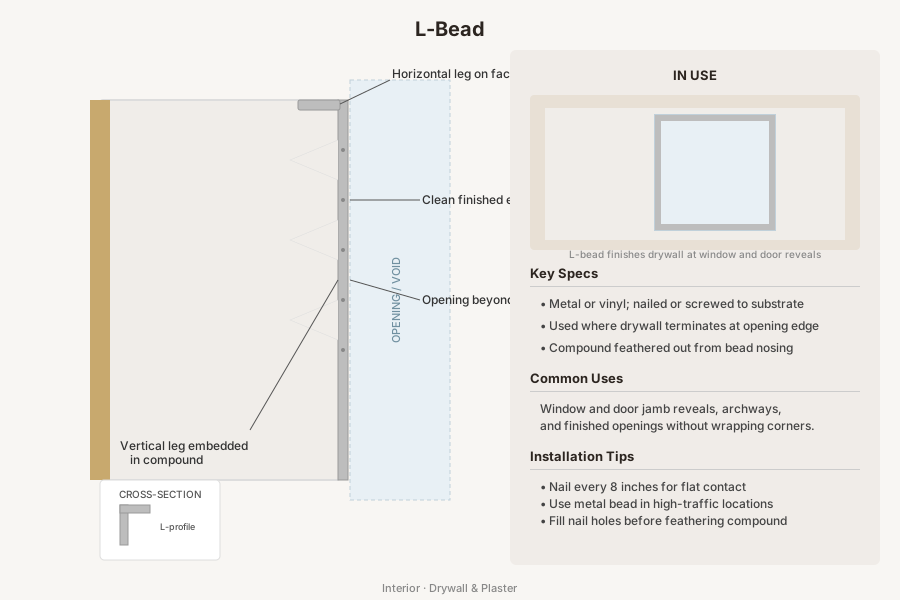
What It Is
L-bead is shaped like the letter L, with one leg fastened against the substrate and one finished edge that defines the termination line. The fastening leg is perforated so joint compound keys into it. It is used where drywall or plaster needs a straight, durable edge without wrapping a corner with standard corner bead.
Exposed finish edges are prone to cracking and chipping if left unsupported. A raw-cut drywall edge is soft gypsum core with a paper face that crumbles under light contact. L-bead gives the wall finish a crisp stop at window returns, wall ends, access openings, and transitions to other materials.
L-bead is available in sizes to match common drywall thicknesses, most often 1/2 inch and 5/8 inch. Selecting the correct size ensures the finished edge sits flush with the board face. The overall profile width is usually about 1 inch to 1-1/4 inches.
Types
Metal L-bead is made from galvanized steel or aluminum and is the traditional choice for commercial drywall work. It is rigid, holds a straight line over long runs, and is attached with drywall screws, staples, or crimps. It works well where durability matters but can telegraph a shadow line if finishing coats are not feathered properly.
Vinyl L-bead is lighter, flexible, and resistant to moisture and corrosion. It is commonly used in residential work, especially in humid areas like bathrooms where galvanized metal might rust behind the finish.
Tear-away L-bead includes a temporary masking strip that peels off after the caulk or compound is applied, creating a perfectly clean line where drywall meets a door frame, window frame, or other surface.
Perforated profiles for veneer plaster systems have a wider flanged leg designed to bond into a thin plaster coat over blueboard substrate.
Where It Is Used
L-bead is used at drywall terminations, window and door returns, partition ends, access panels, and transitions where gypsum meets another surface. It is common in both residential drywall and plaster work. In kitchens and bathrooms, it often appears where drywall meets a tile backsplash or shower niche edge.
In commercial construction, L-bead is specified wherever a partition wall stops short of the ceiling or at soffits, column wraps, and bulkheads where drywall terminates against concrete, steel, or exposed structure.
L-bead is often used together with J-bead, which serves a similar purpose but wraps around the board edge to conceal the raw gypsum core on both sides. Choosing between them depends on whether the back of the board will be visible.
How to Identify One
Look for a narrow straight trim line at the edge of drywall where the finish stops cleanly instead of wrapping the corner. Before finishing, the profile appears as a small L-shaped trim fastened along the exposed edge. After taping and painting, the bead is hidden under joint compound and paint, but a sharp, straight edge at a drywall termination almost always indicates some type of bead underneath.
If the edge is cracking in a straight line or a thin metal or plastic strip is visible through chipped compound, that is the bead showing through. Rust stains bleeding through paint at a termination edge usually indicate a metal L-bead that has been exposed to moisture behind the wall.
Replacement
Replacement is needed when the bead bends, rusts, separates from the wall, or the edge repeatedly cracks. Repair means scoring the paint line, cutting back loose compound, and removing the damaged section. The new bead is fastened in place and finished with at least two coats feathered 6 to 8 inches from the edge.
For spot repairs, cutting the old bead with aviation snips and splicing in a new piece works well. The splice should be butted tightly and finished with a thin compound layer. On longer runs, replacing the full length produces a cleaner result because even small bends in the original bead telegraph through the finish over time.
Frequently Asked Questions
L-Bead — FAQ
- What is the difference between L-bead and corner bead?
- Corner bead protects an outside corner where finish wraps around both faces. L-bead finishes a single exposed edge where the wall surface stops.
- Where is L-bead typically installed?
- It is commonly used at drywall endings, window returns, access panel openings, and places where drywall meets another material without turning the corner.
- Why is the edge of my drywall cracking near trim?
- The edge may be unsupported, the wrong trim profile may have been used, or the bead may have come loose. Movement at the adjacent frame can also crack the finish if the detail was not designed for it.
- Can damaged L-bead be patched?
- Small finish cracks can sometimes be patched, but a bent or loose bead usually needs replacement. If the trim itself is damaged, more compound alone will not keep the edge straight for long.
- What is the difference between L-bead and J-bead?
- L-bead sits against one face of the drywall edge, while J-bead wraps around the edge and conceals the raw gypsum core on both sides. J-bead is often used where the back of the board will be visible, such as at the edge of a soffit open to a room below.
Have a question about your project? Get personalized answers from our team — $9/mo.
MembershipAlso in Interior
- Euro Hinge Cabinet Hardware
- Soft-Close Hinge Cabinet Hardware
- Skirt Board Stairs & Railings
- Stair Nose Stairs & Railings
- Panel Molding Trim & Millwork
- Picture Molding Trim & Millwork
- Wainscot Panel Wall Finishes & Trim