Kitchen Cabinet — Built-In Kitchen Storage Unit Guide
A kitchen cabinet is a built-in box-and-face-frame or frameless storage unit installed as a base or wall cabinet in a kitchen.
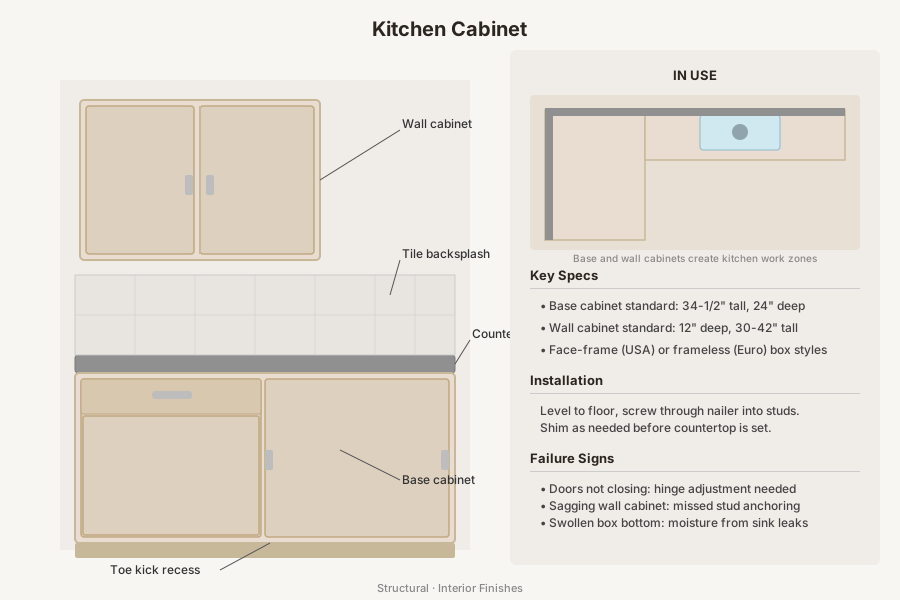
What It Is
Kitchen cabinets form the main storage and support system around countertops, sinks, appliances, and work areas. Each cabinet is a box assembly with sides, back, bottom, shelves, and a face frame or frameless front, then finished with doors and drawers as needed.
Cabinets are not just furniture set in place. Base cabinets support countertops and sinks, wall cabinets store lighter items above the counter, and tall cabinets can house pantries, ovens, or utility storage. Their layout affects both appearance and how the kitchen functions day to day.
Types
The main residential types are base cabinets, wall cabinets, and tall pantry or utility cabinets. Construction can be face-frame or frameless, and materials commonly include plywood, particleboard, MDF, or solid-wood components with laminate, paint, or veneer finishes.
Cabinets also vary by door style, drawer hardware, and whether they are stock, semi-custom, or custom units. A sink base cabinet is a specialized version with an open interior designed to fit plumbing connections.
Where It Is Used
Kitchen cabinets are used along walls, in corners, around refrigerators and ovens, and sometimes in islands or peninsulas. They create the storage and work zones for food prep, dishes, cookware, and pantry goods.
They are usually anchored to wall framing, leveled as a system, and coordinated with countertops, backsplash, appliances, and flooring. Because they tie so many components together, cabinet problems can affect doors, drawers, countertop support, and appliance fit.
How to Identify One
A kitchen cabinet is the fixed storage box unit behind the visible doors and drawers. Base cabinets sit on the floor under the countertop, while wall cabinets are mounted above the counter and tall cabinets extend from floor toward ceiling height.
Signs of trouble include swollen side panels, delaminating finishes, loose hinges, sagging shelves, drawer slides that fail, water damage under the sink, and cabinet boxes that pull away from the wall. Cosmetic wear is common, but movement or moisture damage is more serious.
Replacement
Replacement is common when cabinet boxes are water-damaged, structurally weak, badly out of level, poorly laid out, or too worn to justify refacing. Homeowners may also replace cabinets during remodels to improve storage, appliance fit, or kitchen workflow.
Replacing kitchen cabinets usually involves removing countertops, disconnecting plumbing or appliances where necessary, repairing wall surfaces, and reinstalling adjacent finishes to fit the new layout. If only doors and drawer fronts look dated but the boxes are sound, refacing or repainting can be a less disruptive alternative.
Frequently Asked Questions
Kitchen Cabinet — FAQ
- What is the difference between a base cabinet and a wall cabinet?
- A base cabinet sits on the floor and usually supports the countertop. A wall cabinet hangs above the work surface and is built shallower so it does not crowd the user below.
- Do swollen kitchen cabinets always mean a leak?
- Usually they mean the cabinet material was exposed to moisture for too long, even if the active leak has stopped. Around sinks, dishwashers, and refrigerator water lines, swelling is a strong clue that hidden water damage needs to be traced before cosmetic repairs.
- Can I replace only one kitchen cabinet?
- Yes, if you can match the cabinet size, door style, finish, and adjoining countertop conditions. In practice, single-cabinet replacement is easiest for damaged sink bases and hardest when the existing line is older or custom-sized.
- Is it better to reface or replace kitchen cabinets?
- Refacing makes sense when the cabinet boxes are solid, level, and the layout still works well. Replacement is the better choice when the boxes are damaged, the storage plan is poor, or you need to change the countertop and appliance layout anyway.
Have a question about your project? Get personalized answers from our team — $9/mo.
MembershipAlso in Structural
- Access Panel Access & Openings
- Attic Hatch Access & Openings
- Construction Adhesive Adhesives & Sealants
- J-Bolt Anchorage
- Expansion Anchor Anchors & Fasteners
- Molly Bolt Anchors & Fasteners
- Baffle (Attic Rafter Vent) Attic & Roof
- Attic Hatch Cover Attic Access