Jamb — Vertical Frame Member for Doors and Windows
A jamb is the vertical side member of a door or window frame that forms the opening and supports attached hardware or trim.
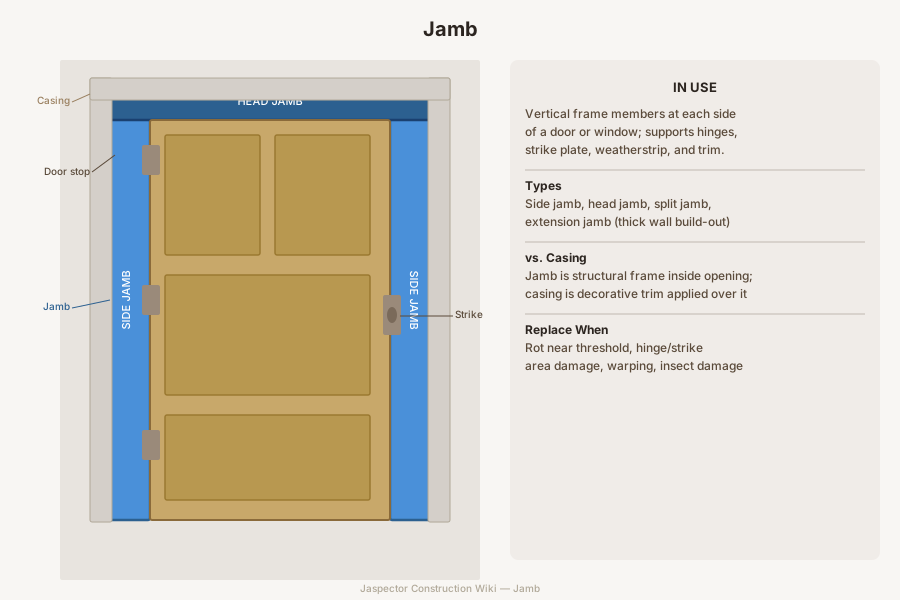
What It Is
The jamb is one of the main frame pieces surrounding a door or window unit. In a door assembly, the side jambs work with the head jamb across the top to create the opening where the slab closes, latches, and swings.
Jambs establish alignment, spacing, and the mounting surface for hinges, strike plates, weatherstripping, and interior trim. If a jamb is out of plumb, split, or rotted, the whole opening can bind, leak air, or fail to latch correctly.
Types
Common types include side jambs, head jambs, split jambs, flat jambs, and extension jambs used to bridge thicker wall assemblies. Materials include solid wood, finger-jointed wood, composite, vinyl, and metal depending on the door or window system.
Where It Is Used
Jambs are used in exterior doors, interior doors, windows, patio doors, and many access panels or utility openings. Any framed opening with a finished frame member around the perimeter uses some form of jamb.
How to Identify One
Open a door and look at the vertical frame piece directly opposite the door edge or behind the hinges. On a window, the jamb is the interior depth of the frame lining the sides of the opening between the sash area and room trim.
Replacement
Replacement is needed when a jamb has rot, insect damage, deep splits, severe warping, or stripped hardware locations. Minor damage can often be repaired, but extensive exterior-door jamb decay usually calls for replacing the affected frame section or the entire prehung unit.
Frequently Asked Questions
Jamb — FAQ
- What is the difference between a jamb and casing?
- The jamb is the structural frame member inside the opening, while casing is the decorative trim applied around it. If you remove the casing, the jamb still remains as part of the door or window frame.
- Can a rotted door jamb be repaired?
- Small damaged areas can sometimes be stabilized with epoxy or a patch section. If the rot extends near the threshold, hinges, or strike area, replacement is usually the longer-lasting fix.
- Why does my door rub against the jamb?
- Rubbing usually means the frame is out of alignment, the house has shifted, or the hinges have loosened. Swelling from moisture can also tighten the clearance between the slab and the jamb.
- What is an extension jamb?
- An extension jamb is an added frame piece that brings the jamb depth out to meet a thicker wall finish. It is common when trim needs to cover drywall, plaster, or tile that sits proud of the basic frame.
- Does replacing a jamb mean replacing the whole door?
- Not always. A damaged jamb section can sometimes be replaced while keeping the existing slab, but the repair has to preserve hinge and latch alignment. If the frame is badly twisted or water-damaged, a full prehung replacement is often easier.
Have a question about your project? Get personalized answers from our team — $9/mo.
MembershipAlso in Structural
- Access Panel Access & Openings
- Attic Hatch Access & Openings
- Construction Adhesive Adhesives & Sealants
- J-Bolt Anchorage
- Expansion Anchor Anchors & Fasteners
- Molly Bolt Anchors & Fasteners
- Baffle (Attic Rafter Vent) Attic & Roof
- Attic Hatch Cover Attic Access