Interior Door — Interior Room Door Repair Basics Guide
An interior door is a door assembly used between rooms inside the home rather than at an exterior opening.
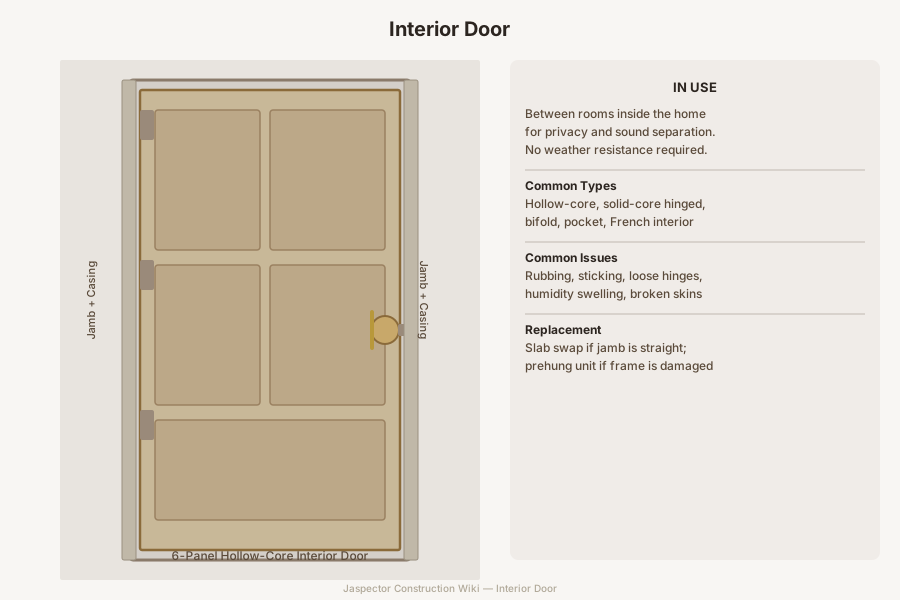
What It Is
Interior doors provide privacy, sound separation, and room-to-room access without needing the weather resistance of an exterior door. The assembly may include the slab, frame, hinges, latch, stop, and casing, depending on whether it is a slab-only or prehung installation.
Because interior doors are lighter and less weather-exposed, common problems are usually alignment, hardware wear, swelling from humidity, or cosmetic damage. Function still matters, especially in bedrooms, bathrooms, closets, and utility spaces.
Types
Common types include hollow-core and solid-core hinged doors, bifold closet doors, pocket doors, and French-style interior doors with glass. Homes may also use prehung units for new work or slab replacements for existing frames.
Where It Is Used
Interior doors are used at bedrooms, bathrooms, closets, pantries, laundry rooms, offices, and room openings throughout the house. They are meant for conditioned interior spaces rather than weather exposure.
How to Identify One
An interior door is typically lighter than an entry door and lacks a threshold, weatherstripping, and exterior-grade sealing details. It is installed entirely within the conditioned part of the home between interior rooms.
Replacement
Replacement is common when the door is warped, damaged, hollow-core skins are broken, or the frame and slab no longer align well. A simple slab swap works only if the hinge locations, size, and jamb condition all match closely.
Frequently Asked Questions
Interior Door — FAQ
- What is the difference between a solid-core and hollow-core interior door?
- Solid-core doors feel heavier and block sound better, while hollow-core doors are lighter and usually less expensive. For bedrooms, offices, and bathrooms, many homeowners prefer solid-core for a quieter feel.
- Why is my interior door rubbing or sticking?
- Common causes include loose hinges, minor settling, humidity-related swelling, or a door that was never fit correctly. The fix may be as small as hinge adjustment or as involved as planing and rehanging.
- Can I replace just the interior door slab?
- Yes, if the existing jamb is straight and the slab can be machined to match the hinge and latch locations exactly. If the frame is damaged or out of square, a prehung replacement is usually cleaner.
- Do interior doors need fire ratings?
- Most do not, but some doors between the house and an attached garage or around certain utility spaces may need a rated assembly. That depends on code requirements and the specific location.
Have a question about your project? Get personalized answers from our team — $9/mo.
MembershipAlso in Structural
- Access Panel Access & Openings
- Attic Hatch Access & Openings
- Construction Adhesive Adhesives & Sealants
- J-Bolt Anchorage
- Expansion Anchor Anchors & Fasteners
- Molly Bolt Anchors & Fasteners
- Baffle (Attic Rafter Vent) Attic & Roof
- Attic Hatch Cover Attic Access